Greenland United but Lonely Against the Colonial Powers

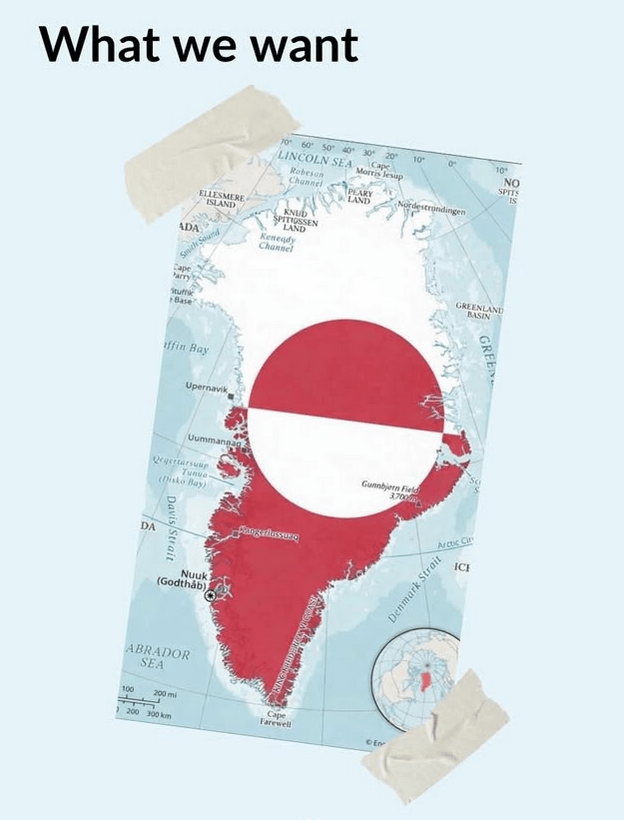
Post widely shared by Greenlanders on social networks to challenge the imperialist and colonial declarations of the United States. © Aka Hansen

Originally published in French in Mediapart. The translation was generated with DeepL.

After the abduction of Nicolas Maduro, President Trump quickly designated the next targets of his imperialist fury. Among these, Greenland, a former US ambition and a constant obsession for Donald Trump. Faced with this new attack, guided by fury as much as a security and mining fantasy, Greenland is once again united in its anti-colonial voice, surrounded by “allies” entangled in the affirmation of an international law with variable geometry.

The desires of President Donald Trump in Greenland have taken credibility in recent days following the kidnapping of Venezuelan President Nicolas Maduro and Cilia Flores on 3 January, illustrating a reaffirmation of an imperialist and interventionist aim free from international law. So, will Greenland soon be renamed “Red, White and Blueland” as Trump proposed? Or are there ears ready to hear the aspirations of a territory always under Danish tutelage more quick to rename itself Nunarput (“our country/territory”) or Inuit Nunaat (“the country/territory of the Inuit”)?

Following the intervention in Venezuela, Kate Miller, the wife of the deputy chief of staff of the White House shared a photo of Greenland against a background of the American flag with the caption “SOON” (SOON). Deputy Chief of Staff Stephen Miller himself claimed that Greenland should be part of the United States. The White House would actively develop acquisition plans, including diplomatic, economic and military measures, calling the autonomous territory a “national security priority” and thus reviving an idea long considered rhetorical. This Trumpian obsession goes back to the first administration but gains in acuity following the US intervention in Venezuela, and while the use of the U.S. military “is still an option” according to the White House.

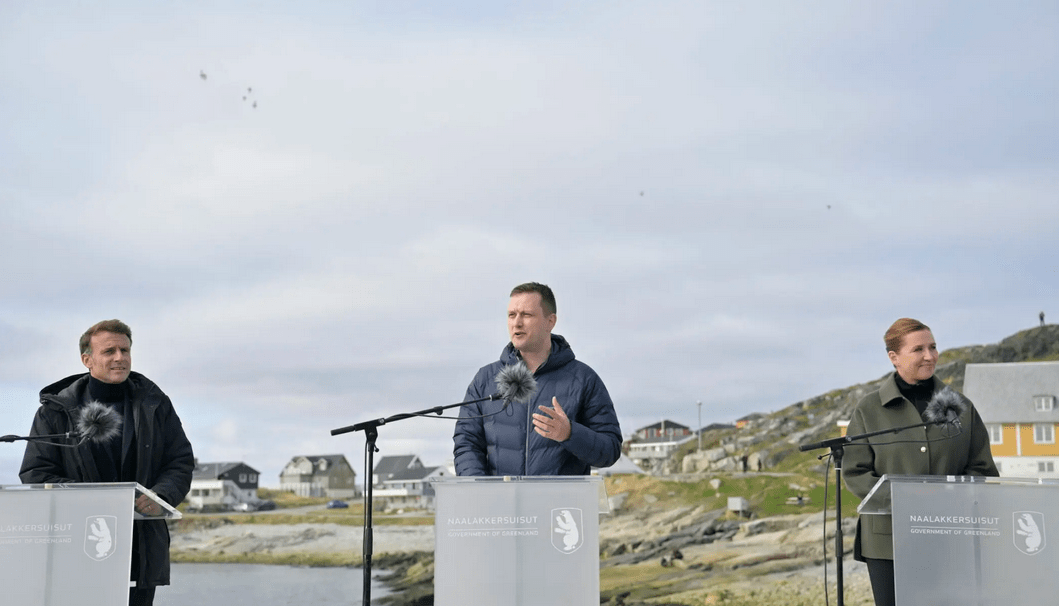
Silent and then conciliatory after the kidnapping of Nicolas Maduro, Emmanuel Macron and six other leaders and heads of government of NATO member countries signed a joint declaration stating that “it is up to Denmark and Greenland, and on their own, to decide the issues concerning Denmark and Greenland.” The foreign ministers of the Nordic countries (Finland, Sweden, Norway and Iceland) also defended the self-determination of Greenland and Denmark, after obviously not finding the right words to condemn the US violations of international law. As the Danish media outlet Altinget points out, the weakening of European positions vis-à-vis international law, makes any position of support for Greenland inaudible: “international law in Ukraine cannot be defended and its collapse in Venezuela or Gaza cannot be accepted. We cannot talk about sovereignty in the Baltic Sea and ignore it in the Caribbean.” This did not prevent the Danish Prime Minister, Mette Friedriksen, to indicate that any military action would mean the end of NATO: “The international community as we know it, the democratic rules of the game, NATO, the most powerful defensive alliance in the world, all this would collapse if one NATO country decided to attack another.”

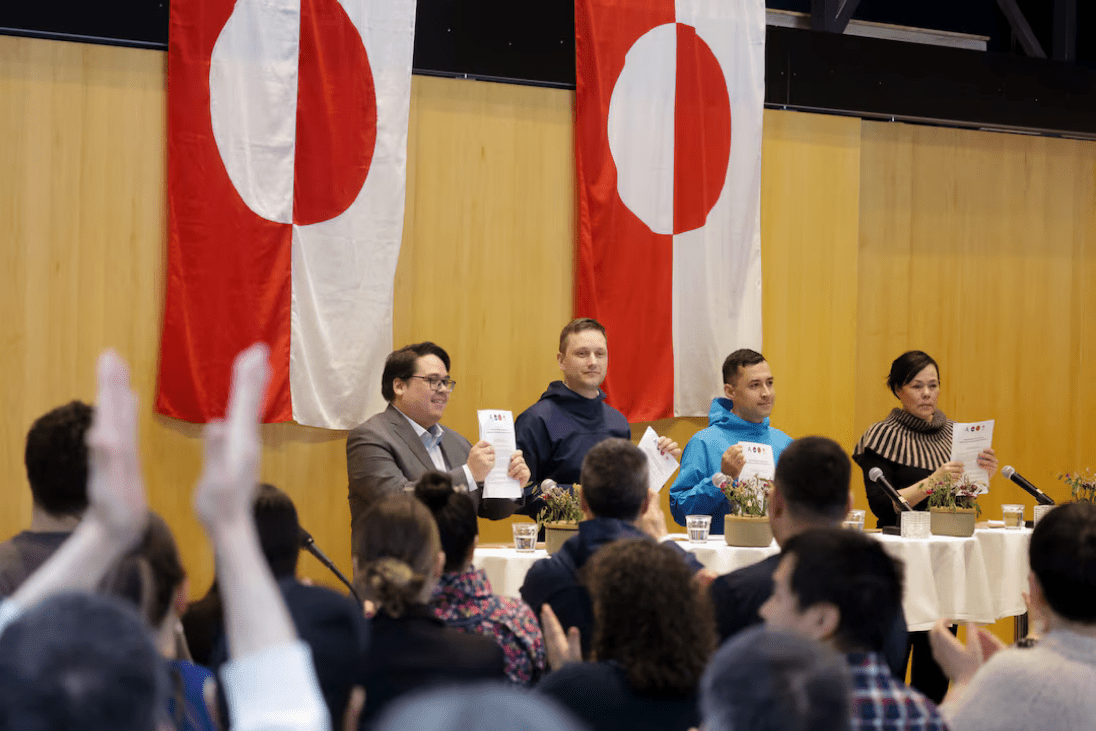
But Trump does not only play with the nerves of Europeans as François Bougon points out on Mediapart, he also plays and especially with those of Greenlanders, among whom the desire for independence has never been so shared. Naalakkersuisut President Jens-Frederik Nielsen said in a statement to Trump that: “This is not how we address a people who have repeatedly shown responsibility, stability and loyalty. Too much, that’s too much. No more pressure. No more insinuations. No more annexation fantasies. We are open to dialogue. We are open to discussion.” In a joint statement, all the Greenlandic parties at the Inatsisartut, the national parliament, showed their unity: “as leaders of the Greenlandic parties, we would like to stress once again our wish to see the loss of respect for our country cease to the United States’ disrespect for our country,” they say. Before repeating a formula that has become a refrain in recent months: “We don’t want to be American, we don’t want to be Danish, we want to be Greenlanders.” A position widely, if not unanimously, shared in the country, as I recalled in a previous post. This weekend, this refrain was taken up during a new demonstration in the capital, Nuuk. While responses to US threats have remained largely rhetorical, Greenland MP Aaja Chemnitz at the Folketing, the Danish parliament, is now calling on Greenland and Denmark to take concrete steps, including military measures, regarding the preparation and protection of Greenland.

Earlier in December, Donald Trump appointed a new special envoy to Greenland, the Republican governor of Louisiana state, Jeff Landry. The latter had written on X that it is an honour for him to assume the mission of integrating Greenland into the United States, while the latter has already been present on the territory since the Second World War and that he has a military base in the north of the territory.
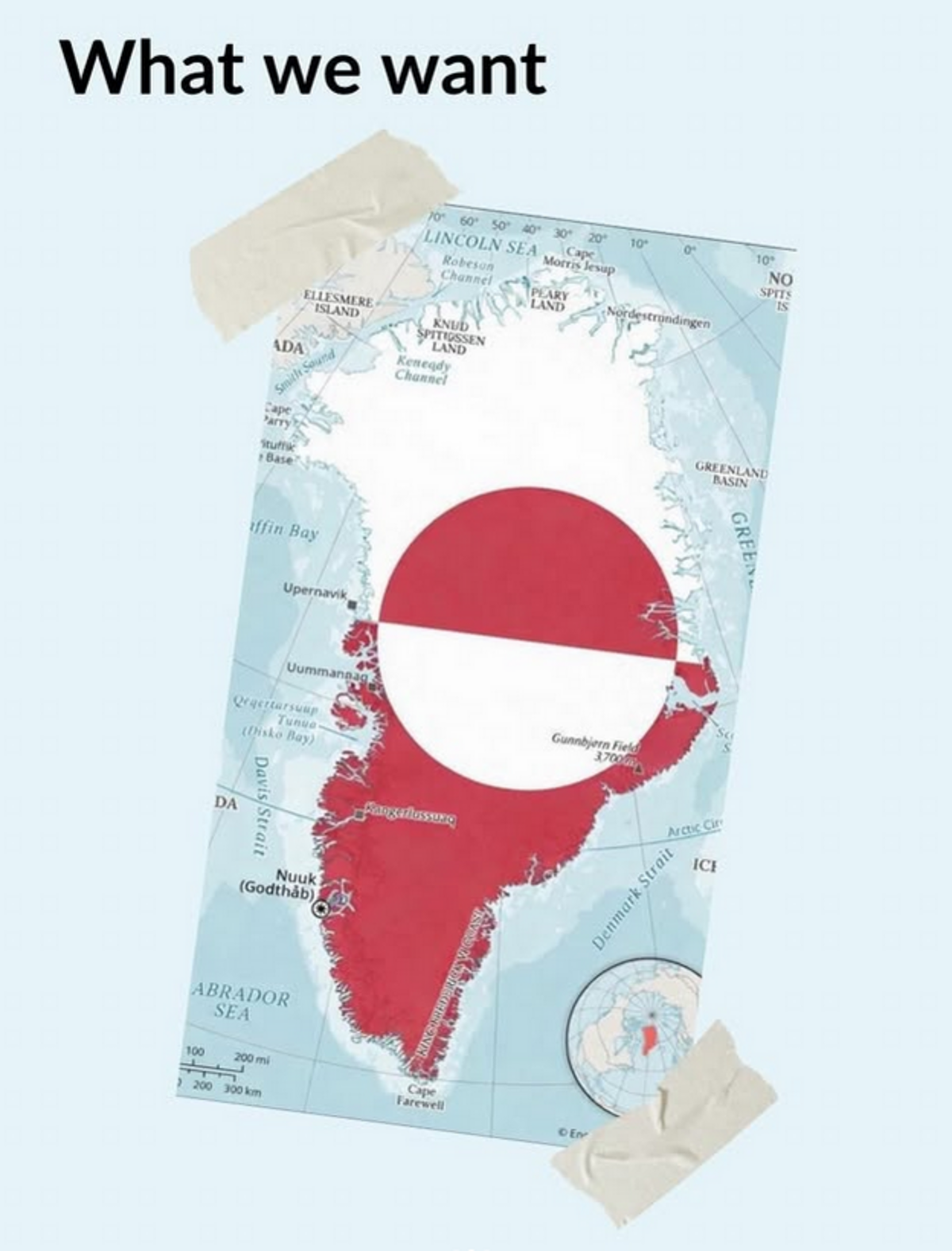
Illustration 1

Assembly widely taken up by Greenlanders on social networks to challenge the imperialist and colonial declarations of the United States. © Aka Hansen

In Greenland nothing new: an old American interest

Greenland’s geostrategic position, located between Europe and North America, attracted the attention of the United States very early on. As early as 1867, President Andrew Johnson proposed a first offer to buy the territory, followed in 1946 by that of Harry Truman, who offered 100 million dollars in Copenhagen (Pouilliute, 2025). Already in 2019, President Donald Trump had revived this ambition, again facing the categorical refusal of the Danish authorities.

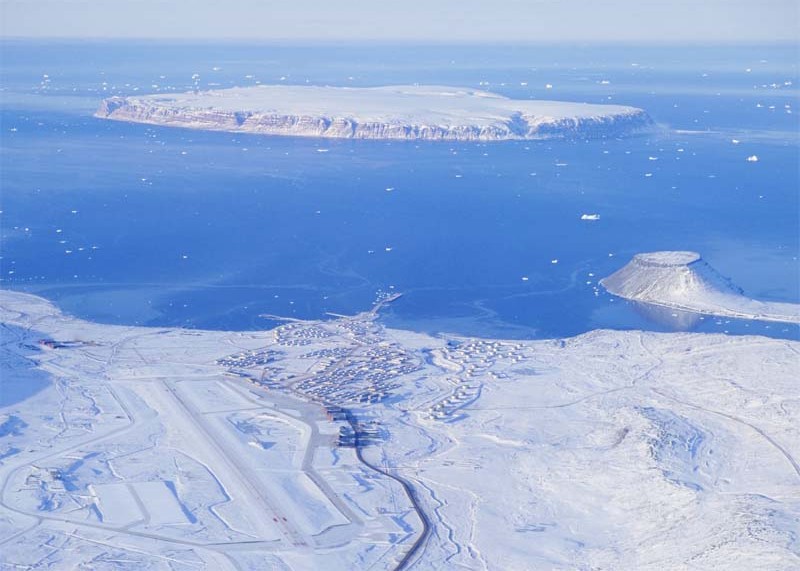
The US presence in Greenland materialized during the Second World War. In 1941, a treaty allowed the United States to establish military bases on the territory, while Denmark was occupied by Germany. This treaty was updated by a bilateral agreement in 1951, after Denmark joined NATO. This agreement is still the foundation of the US military presence in the territory. The Pituffik base, built in this context, is the only permanent American base in Greenland. It now plays a key role in the U.S. anti-missile system and in its Arctic maritime defence system.

In contrast to Donald Trump’s statements in recent years, diplomatic and military relations between the United States and Denmark and Greenland have strengthened. In 2020, the United States reopened its consulate in Nuuk, after nearly seven decades of absence. First installed in the Arctic command center of the Danish army, this diplomatic representation symbolized Washington’s renewed interest in the Arctic and for increased dialogue with Greenland. In the same year, a cooperation agreement was signed between the United States, Denmark and Greenland, including the management of the services of the Pituffik base. In 2014, the United States unilaterally awarded the contract to a U.S. company, at the expense of a Danish-Greenlandic company, causing strong local reactions. The 2020 agreement now provides that these contracts will have to be awarded to Greenland companies.

The new bilateral defense agreement signed in December 2023 between Copenhagen and Washington provides for the possibility of parking American soldiers and storing equipment on Danish soil. While it explicitly excludes Greenland and the Faroe Islands, it allows unimpeded access by U.S. forces to several bases in mainland Denmark, including Karup, Skrydstrup and Aalborg. More recently, the United States is currently considering transferring Greenland from the European Command (EUCOM) to the Northern Command (NORTHCOM), which, while symbolic, reinforces the perception of a US strategic repositioning in the region.

In this context of geopolitical recomposition, Denmark announced in January 2025 an investment plan of 14.6 billion Danish kroner (about 1.95 billion euros) to strengthen its military presence in the Arctic and the North Atlantic. The plan, developed jointly with the Greenlandic and Faroese governments, involves the acquisition of three Arctic ships capable of carrying drones and helicopters, the deployment of two long-range surveillance drones, and the strengthening of satellite capabilities and land-based sensors to improve situational awareness and intelligence in the region. However, this agreement is considered to be largely insufficient both to allow a defense that is not only dependent on the United States, but also to take the measure of the Greenlandic will to independence. The latter is based in part on the development of a mining sector, whose revenues would be able to replace the Danish subsidy. The current state of mining development in Greenland, as well as the critical and careful approach of Greenlanders to the development of extractivist infrastructure, makes Trumpian geological ambition sparking.

In the background, the mining fantasy

In 2009, with the entry into force of the Enhanced Autonomy Act, Greenland gained full control of its natural resources, including hydrocarbons and minerals, which were previously within Denmark’s jurisdiction. Since then, resource exploitation has often been promoted by the Greenlandic elites as a potential pillar of economic autonomy, with a view to future independence. Although criticized in the 1980s for its enclave character and negative social impacts, the extractive model was rehabilitated in the 2010s as an instrument of sovereignty (Bailleul, 2023). While in 1988, Greenland had introduced a zero-tolerance policy for uranium mines, in October 2013, the Greenlandic parliament lifted a ban on the extraction of radioactive materials, paving the way for uranium mining by mining companies. The development of the mining sector is now often presented by the authorities as an essential condition for economic independence, a prelude to political independence from the Kingdom of Denmark. The exploitation of these resources would reduce financial dependence on the Danish annual subsidy, which represents about 520 million euros/year, or about 16% of the territory’s GDP. Bailleul (2023) suggests that mining development is part of the construction of an “imagined community”, that is to say in “ideological representations supporting the idea of a homogeneous national people, with common traditions and values, essential for the construction and reproduction of nation-states” (p. 314). The lifting of the ban on the exploitation of uranium mines was instrumental, particularly in the development of the Kuannersuit mining project, led by the Australian company Greenland Minerals and Energy. However, the project was abandoned in 2021 (see a previous post on this subject). The refusal to develop certain mines with high immediate profitability, such as Kuannersuit, nevertheless shows that independence cannot be thought of in purely extractivist terms, and that the construction of such an imagined community is anchored in a long-term vision, ecologically and socially sustainable.

Today, Greenland has 25 of the 34 critical raw materials identified by the EU, attracting international lusts. However, in 2025, only seven mining licenses are active and only two mining operations are in operation in Greenland: the Nalunaq gold mine, near Nanortalik (southwestern Greenland), and the White Mountain /Itilleq anorthosite mine near Kangerlussuaq airport. If the Greenland subsoil attracts increasing attention from Denmark, but also from the European Union, which considers Greenland as a strategic partner, as evidenced by the agreement signed in 2023 as part of its search for autonomy from China, the incomes of mining today represent less than 1% of Greenland’s GDP, and a massive development in the short term is as much politically and economically soudable.

Just yesterday, Donald Trump said he wanted to acquire Greenland, favoring the diplomatic option without resolving himself to give up the option of force. If other scenarios are on the table, such as that of a status of free association with the United States, like what exists with some Pacific island nations, or more far-fetched the payment of 100 000 dollars to those who would accept to join the United States, there is little doubt about the rejection of Greenlanders to adhere to a colonialist and imperialist discourse. On Wednesday, Danish Foreign Minister Lars Løkke Rasmussen and Greenland Foreign Minister Vivian Motzfeldt will meet with US Secretary of State Marco Rubio in Washington. If neither the security of the United States nor the promise of a mining pactole are at stake, the Trumpian desires are certainly explained less by the “psychological necessity” that he evoked than by the red carpet that is unrolled to him. Because the option of weakening international law was chosen by the European continent, at least since the colonial and genocidal war in Gaza, and the “moral fault” renewed by the approval of the intervention in Venezuela, Greenland is now preaching its sovereignty, and that of the oppressed territories, increasingly alone in the North.

Tanguy Sandré

Note: Faced with the growing interest of journalists in the country, and facing both disrespectful and culturally inappropriate solicitations, Aka Hansen, an Inuit artist, has published a guide for journalists who come into contact with Greenland Inuit or on the spot. It is available here.


References

Bailleul, P. (2023). Making nation by the mine? Political history of the mining territories in Greenland. Inuit Studies, 47(1/2), 311–334. https://www.jstor.org/stable/27345308

Pungea, A. (2025). Greenland, a serious subject. National Defence Review, 879(4), 77–82. https://doi.org/10.3917/rdna.879.0077

From Venezuala to Greenland: Trump Imperialism… December’s Wrap Up

The desires of President Donald Trump in Greenland have taken credibility in recent days following the kidnapping of Venezuelan President Nicolas Maduro and his wife on January 3, illustrating a reaffirmation of an imperialist and interventionist aim freeing himself from international law. Following the intervention in Venezuela, Kate Miller, the wife of the deputy chief of staff of the White House shared a photo of Greenland against a background of the American flag with the caption “soon” (Sermitsiaq, January 4). Deputy Chief of Staff Stephen Miller himself claimed that Greenland should be part of the United States (Sermitsiaq, January 5). The White House would actively develop acquisition plans, including diplomatic, economic and military measures, calling the autonomous territory a “national security priority” and thus reviving an idea long considered rhetorical (High North News, January 7). This Trumpian obsession goes back to the first administration but gains in acuity following the US intervention in Venezuela, and while the use of the U.S. military “is still an option” according to the White House (BBC, January 7). At present, the existing defense agreements already allow the United States to increase its military presence, now limited to about 200 soldiers at the Pituffik base, in the northwest of the territory, which has a ballistic missile detection radar, as well as one of the control centers of the US military satellite network. Silent and then conciliatory after the abduction of Nicolas Maduro, Emmanuel Macron and six other leaders and heads of government of NATO member countries signed a joint declaration affirming that “it is up to Denmark and Greenland, and on their own, to decide on the issues concerning Denmark and Greenland” (SermitsiaqSermitsiaq, January 6). The foreign ministers of the Nordic countries (Finland, Sweden, Norway and Iceland) also defended the self-determination of Greenland and Denmark (Sermitsiaq, 6 January). Altinget underlines the weakening of European positions vis-à-vis international law: “We cannot defend international law in Ukraine and accept its collapse in Venezuela or Gaza. We cannot talk about sovereignty in the Baltic Sea and ignore it in the Caribbean.” (Altinget, January 5). Naalakkersuisut President Jens-Frederik Nielsen said in a statement to Trump that: “This is not how we address a people that has repeatedly shown responsibility, stability and loyalty. Too much, that’s too much. No more pressure. No more insinuations. No more annexation fantasies. We are open to dialogue. We are open to discussion.” (SermitsiaqSermitsiaq, January 4). Earlier in December, Donald Trump appointed a new special envoy to Greenland, the Republican governor of Louisiana state, Jeff Landry. The latter had written on X that it is an honour for him to assume the mission of integrating Greenland into the United States, already triggering a new round of condemnation from Danish, Greenlandic and European representatives (Sermitsiaq, 22 December). While responses to US threats have remained largely rhetorical, Greenland MP Aaja Chemnitz (IA) at the Folketing is now calling on Greenland and Denmark to take concrete steps, including military action, on the preparation and protection of Greenland (Sermitsiaq, 5 January). On the technological front, Starlink’s recent refusal to benefit European satellite solutions illustrates the growing politicization of digital infrastructures (Eye on the Arctic, December 10). In addition, on the climate front, the Arctic Report Card reports that the last ten years have been the ten warmest on record in the Arctic, while the Greenland ice sheet has continued to lose hundreds of billions of tonnes of ice (Hign North News, December 17). Finally, earlier this month, the Danish government announced that it had reached an agreement in Parliament to pay individual compensation to Greenlandic women who were victims of a forced birth control campaign (Eye on the Arctic, 10 December).

Macron in Nuuk, Cooperation within the Kingdom & Near-Ittoqqortoormiit Mining License… June’s Wrap-up

On a visit to Greenland ahead of the G7 in Kananaskis, Canada, the French President met with Danish Prime Minister Mette Frederiksen and Greenlandic Prime Minister Jens-Frederik Nielsen during a visit to Nuuk. Emmanuel Macron affirmed his support for Greenland and announced that France is ready to strengthen its commitment to the Arctic through joint exercises and economic and social partnerships (High North News, June 16). He also announced the opening of a French consulate general in Nuuk, while a European representation was inaugurated in March (Sermitsiaq, June 15). At the end of May, the heads of government of the eight Nordic countries met in Finland. While Greenland, the Faroe Islands, and Åland had been repeatedly excluded in recent months, the eight Nordic countries committed to including them in future Nordic ministerial meetings and to strengthening cooperation on civil preparedness and resilience (High North News, May 30). In mid-June, the heads of government of the Faroe Islands, Greenland, and Denmark convened for their biannual meeting in the Faroese capital, Tórshavn. Beyond increased pressures in the Arctic, the Faroe Islands and Greenland have engaged in dialogue for greater autonomy in foreign affairs, while the Danish prime minister has called for a “modernization of the Kingdom” and greater investment in Greenland (High North News, June 18; Eye on the Arctic, June 17). “We have made it clear that if Greenland wants to amend the Self-Government Act, including ensuring better economic frameworks for Greenland in relation to mineral extraction, we are ready to conclude this agreement on the Danish side,” said Mette Frederiksen (Sermitsiaq, June 17). The head of defense attended this biannual meeting for the first time (Altinget, June 18). In coordination with the Greenlandic government, the Danish armed forces will increase their presence in Greenland this summer, with a frigate and two helicopters now in place to strengthen military operations in the Arctic (High North News, June 11). At the same time, the Danish Parliament approved the installation of US military bases on Danish soil (Eye on the Arctic, June 12). Furthermore, at the NATO summit in The Hague, where the Greenlandic government wanted to meet with their US counterparts (Sermitsiaq, June 23), Denmark formally entered into a partnership with Canada, Germany, and Norway on maritime security and military cooperation in the North Atlantic (Sermitsiaq, June 25). Also in June, Greenland granted a 30-year permit to a European Union-backed project to mine molybdenum, a critical metal used in aerospace, energy, and defense, on which China has imposed export controls. The permit was granted to Greenland Resources, a Toronto-listed company backed by the European Raw Materials Alliance, which holds the license for the Malmbjerg project near Ittoqqortoormiit, the northernmost town on the east coast. The open-pit mine could supply about 25% of Europe’s molybdenum consumption (Sermitsiaq, June 19;  Eye on the Arctic , June 19). Regionally, the Kingdom of Denmark held its first session of the Arctic Council; “Engagement with indigenous peoples, focused on promoting knowledge sharing, is a cross-cutting priority for the Kingdom of Denmark,” said Kenneth Høegh, the Greenlandic SAO representing the Kingdom of Denmark (Eye on the Arctic, June 17). Finally, in Denmark, a new organization called Uagut (“us” in Greenlandic) was founded by Greenlanders in Denmark. This organization aims to give a voice to the approximately 17,000 Greenlanders living in Denmark and to combat discrimination against them (Sermitsiaq, June 22).

Arctic Council, US Intelligency, Protest for Eastern citizens… May’s Wrap-Up

On May 12, Greenland assumed the leadership of the Arctic Council on behalf of the Kingdom of Denmark. After a long power struggle between Nuuk and Copenhagen, Vivian Motzfeldt, Greenland’s foreign minister, took over the chairmanship of the Council after two years of Norwegian presidency marked by a desire to foster regional cooperation. “I must say that I think it is entirely appropriate that Greenland takes this on behalf of the Kingdom, as this is the Arctic part of the Kingdom of Denmark,” the Norwegian foreign minister said at the handover session in Tromsø (Altinget , May 13; Sermitsiaq, May 18). Ahead of the handover, the 14th meeting of the Arctic Council was held virtually. The eight member states of the Council and its six permanent participating organizations agreed on a joint statement, which reiterates the commitment to maintaining peace, stability and cooperation in the Arctic, and to maintaining the Arctic Council as the main tool for this commitment (High North News, May 13). The Kingdom of Denmark, whose Senior Arctic Official (SAO) will be Greenlandic Arctic Ambassador Kenneth Høegh, presented the roadmap for its presidency (2025-2027) which is divided into five themes: indigenous peoples and Arctic societies, sustainable economic development and energy transition, ocean, climate change in the Arctic and biodiversity (Sermitsiaq, May 12). In addition, Vivian Motzfeldt met with the EU’s foreign and security policy chief, Kaja Kallas. The raw materials sector was highlighted as an important area for developing cooperation, with Vivian Motzfeldt stressing that “in these difficult times Greenland is facing, it is important to approach reliable partners who share the same values” (Sermitsiaq, 18 May). The foreign minister also met with her French counterpart Jean-Noël Barrot, stating that “France was one of the first countries to significantly express its support for the Greenlandic population” (Sermitsiaq, 21 May); in January, Jean-Noël Barrot confirmed that France was at Denmark’s disposal if it requested support (Sermitsiaq, 22 May). While the Danish-American defense agreement providing for the possibility of stationing American soldiers on Danish soil at the Karup, Skrydstrup and Aalborg bases was discussed in the Folketing (Sermitsiaq, May 15), Foreign Minister Lars Løkke Rasmussen, like the Greenlandic Prime Minister, deemed “unacceptable” the United States’ desire to intensify its espionage activities in Greenland and Denmark, revealed by the Wall Street Journal (Wall Street Journal, May 6; Sermitsiaq, May 8; Sermitsiaq, May 15). The Pentagon is also considering transferring Greenland from the United States European Command (EUCOM) to the United States Northern Command (NORTHCOM). Beyond this unilateral and partly symbolic measure, the White House is also studying the possibility of offering Greenland a zone of free association with the United States, a status hitherto reserved for small island nations in the Pacific Ocean, notably the Marshall Islands and Micronesia (Reuters , May 9). In early May, Nordic defense ministers signed a revised memorandum of understanding on cooperation at a meeting in Rovaniemi. The new version incorporates the significant development of NORDEFCO (Nordic Defense Cooperation) in recent years, particularly following Russia’s war against Ukraine and Finland’s and Sweden’s accession to NATO (High North News, May 12). Regionally, while Greenlandic authorities have repeatedly protested their underrepresentation in regional governance forums, Prime Minister Jens-Frederik Nielsen participated in the Nordic ministerial meeting (Sermitsiaq, May 26). Finally, demonstrations took place in Tasiilaq and Nuuk to denounce the plight of residents of the country’s east coast who face chronic underinvestment, political marginalization and numerous stigmatizations (Sermitsiaq, May 15; Sermitsiaq, May 22; Sermitsiaq, May 22). 

New Government, Visit of King Frederik X, Power Outage from Spain to Kalaallit Nunaat… April’s Wrap-Up

On April 7, the Inatsisartut, the Greenlandic parliament, officially swore in 33-year-old Jens-Frederik Nielsen as prime minister, leading a coalition that includes Demokraatit, Inuit Ataqatigiit, Siumut, and Atassut, excluding Naleraq, which advocates for faster independence. This broad coalition, which represents 75% of the vote, pledges to strengthen infrastructure, particularly on the east coast, improve the health system, and move toward independence, while deferring discussions on controversial issues such as taxation and the exploitation of natural resources to later agreements (KNR, April 7). Earlier, even before the inauguration of the new prime minister, Danish Prime Minister Mette Frederiksen visited Greenland to strengthen relations between the Danish and Greenlandic governments, after the United States significantly escalated its rhetoric regarding the country’s desire to take control of Greenland (DR, April 3; High North News, April 9). In this regard, following J.D. Vance at Pittufik in late March, Susannah Meyers, commander of the US space station, was fired due to a “lack of confidence in her ability to lead” following a critical email to the vice president (DR, April 11). Regionally, while Greenland suspended its participation in the Nordic Council last year, the Nordic governments are now considering granting full membership status to Greenland, the Faroe Islands, and Åland (Sermitsiaq, April 22). That said, like the former prime minister, Jens-Frederik Nielsen remains skeptical about the short-term possibility of seeing Greenland acquire an expanded role within the Council (Sermitsiaq, April 23). The latter also paid a visit to Copenhagen to strengthen relations with Denmark, stating that Greenland would never be for sale and criticizing disrespectful statements from the United States. Following his meeting with Mette Frederiksen, the latter indicated that Denmark was ready to renegotiate the autonomy agreement and also wishes to invest more in Greenland, while the possibility of a reconciliation commission was put forward (Sermitsiaq, April 27). Also in response to American ambitions, King Frederik X of Denmark visited Greenland at the end of April to reaffirm the historical ties between Denmark and his autonomous territory (Eye on the Arctic, April 29). Despite calls for independence and recent tensions, the king enjoys widespread popularity within the autonomous territory, which he knows well and visited several times before his inauguration (DR, April 29). In Copenhagen, the Danish parliament adopted the bill that puts an end to the use by municipalities of psychological tests (FKU) deemed discriminatory against Greenlandic families (Sermitsiaq, April 25). However, earlier in the month, the appeal of Keira Alexandra Kronvold, the Greenlandic mother who had brought these psychological tests to light, was rejected (Sermitsiaq, April 16). At the end of the month, following the massive power outage in Spain, telecommunications services were interrupted for a few hours in isolated communities in Greenland (Sermitsiaq, April 29). Since 2023, the ground station in Maspalomas, Gran Canaria, has played a central role in sending data to satellites that supply the communities of Qaanaaq and surrounding areas, Ittoqqortoormiit and Tasiilaq (Sermitsiaq, April 30). Furthermore, Greenland’s health system remains particularly vulnerable due to staff shortages, which led to the closure of two maternity wards in Qaqortoq and Sisimiut this month (Sermitsiaq , April 16). Finally, on the climate front, 2024 was the third warmest year ever recorded in the Arctic (Sermitsiaq, April 23). 


National and Municipal Elections, Protests Against Trump, JD Vance… March’s Wrap-Up


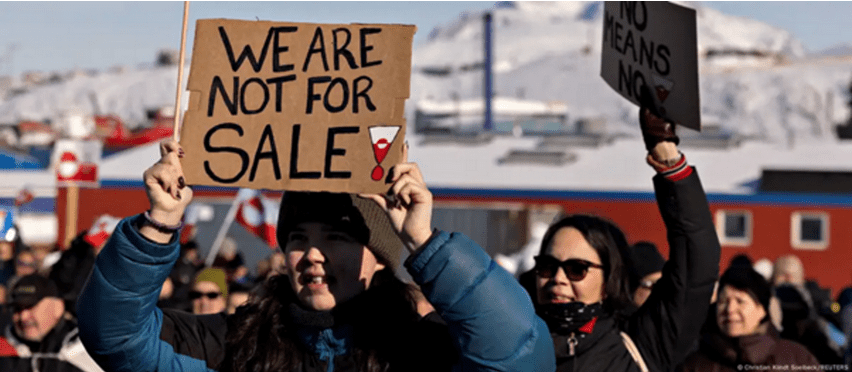
More than 28,000 Greenlanders voted in the March 11 elections to the Inatsisartut, the national parliament, with a turnout of 70.9% (+5 points compared with 2021). A total of six parties competed for the 31 seats in parliament. The social-liberal Demokraatit party (29.9%, 10 seats) (+20.9) came out on top, while the pro-independence Naleraq party won 24.5% of the vote (8 seats) (+12.5). The outgoing coalition of Inuit Ataqatigiit (IA) (15.3%, 7 seats) (-15.3) and Siumut (14.7%, 4 seats) (-14.7) was largely rejected by voters. For its part, Atassut, the only “unionist” party, won 2 seats (7.3% of the vote) (+0.4). Only Qulleq (1.1%), a newly-formed pro-mining, pro-oil extraction party complacent towards Donald Trump, failed to win a seat. The formation of the future government was entrusted to Demokraatit, and its leader Jens Frederik Nielsen, who brought together a broad coalition of all the parties sitting in parliament, with the exception of Naleraq. This coalition agreement, which covers the consolidation of an independence plan, the strengthening of transport, particularly on the east coast, and health, also proposes to defer the most divisive issues, particularly around taxation, raw materials and fisheries, to later agreements (KNR, March 28). On the foreign affairs front, Jens Frederik Nielsen clearly stated the government’s intention to turn its back on Denmark until it can become an independent country (Sermitsiaq, April 1), while he asserted: “Greenland will never be part of the United States. We want to trade. We want a strong national security partnership, of course, but with mutual respect. We will never be for sale and we will never be American” (Reuters, April 1). Parliament will meet on April 7 to approve the coalition agreement, which demonstrates a strong desire for unity in the face of recent external pressure (Sermitsiaq, March 28). Following the coalition agreement, Danish Prime Minister Mette Friederiksen began a three-day visit on April 2, during which she will meet the future Prime Minister (KNR, April 2). This visit has caused a stir within the coalition due to its timing, as the new government has not yet been approved by parliament (KNR, March 31). Earlier, on March 15, a historic demonstration took to the streets of Nuuk, the capital, as well as Sisimiut, the country’s second-largest city, and Qaanaaq, in the north-west of the country, not far from the US military base at Pituffik (formerly Thule) (Sermitsiaq, March 15). A demonstration where numerous signs addressed Trump: “No Means No!” [No means No!], “We Are Not For Sale!” [or “Make America Go Away!” [or “Make America Go Away!] A demonstration described as massive in a country of 57,000 inhabitants, during which many Greenlandic flags were waved by the demonstrators. The demonstration followed Donald Trump’s speech to Congress, in which he reiterated for the umpteenth time since his inauguration that the United States would take control of Greenland “one way or another”, making it clear that he had no intention of letting the autonomous Danish territory down (High North News, March 5). A demonstration with similar slogans also took place on March 31, in front of the American Embassy in Copenhagen (KNR, March 31). This followed on directly from the visit of a US delegation, comprising JD Vance’s wife Usha Vance, US National Security Advisor Mike Waltz, Energy Secretary Chris Wright and Utah Republican Senator Mike Lee, without an official invitation, which further strained diplomatic relations with the USA (KNR, March 28). Although the delegation only visited the US base at Pituffik, and not Nuuk and Sisimiut, Vice President JD Vance joined the delegation at the last minute from March 27 to 29. At a press conference, he declared that Denmark had not “done a good job” for the people of Greenland, nor had it done enough to ensure Greenland’s security (Sermitsiaq , April 1; The Guardian, March 31). Finally, elections for the country’s five municipalities were held on April 1. Siumut, which had largely lost the parliamentary elections, came out on top, while IA lost ground and Demokraatit benefited from the momentum of the parliamentary elections (Sermitsiaq, April 2). The election, which was marked by a feminization of political life (Altinget, April 2), also gave voice to issues that the legislative elections had neglected: the desire for decentralization, education issues and care for the elderly (KNR, April 1).


National Elections to Come, Independance, Cryolite Censured… February’s Wrap-Up

In response to U.S. moves on Kalaallit Nunaat, EU heads of state and government finally united in their clear and unequivocal support for Denmark (DR, February 3). Against this backdrop, the Inatsisartut, Kalaallit Nunaat’s parliament, has just passed a law banning political parties from receiving foreign or anonymous donations in order to “protect the integrity of the country” (Eye on the Arctic, February 5). On this subject, Kalaallit Nunaat’s Prime Minister, Mute B. Egede (Inuit Ataqatigiit, IA) has announced that general elections will be held on March 11. The main themes of the election campaign are expected to revolve around aspirations for independence, as well as relations with Denmark and the United States  (Eye on the Arctic, February 5). For Juno Berthelsen (Naleraq), “Trump’s comments and the US administration’s new line have definitely given the independence movement more momentum”. All national parties are in favor of independence, but differ on implementation. Kalaallit Nunaat’s current prime minister has said that if re-elected, he would call for an independence referendum (Eye on the Arctic, February 19). True to its position, the Naleraq party proposes immediate independence from Denmark. In a sign that independence is becoming an even more important issue for Kalaallit Nunaat’s political class, the national parliamentarian Kuno Fencker has left the party and joined Naleraq (DR, February 11), following in the footsteps of another key Siumut figure, Aki-Matilda Høegh-Dam, who has also left Siumut (KNR, February 7). Høegh-Dam, who previously saw independence as a long-term goal, said he now wanted to hold a vote on independence after next month’s general elections (Eye on the Arctic, February 7), before partially reversing this position (Sermitsiaq, February 26). Inatsisartut has also tightened the rules on property acquisition and land allocation, which will now be open only to people who have lived in Kalaallit Nunaat for two years and paid taxes in the country (Sermitsiaq, February 4). According to the documentary “The White Gold of Greenland”, broadcast and produced by DR, Danish Radio and Television, between 1854 and 1987, Denmark mined cryolite in Kalaallit Nunaat for a turnover of 400 billion kroner in today’s Denmark, provoking great indignation in Kalaallit Nunaat. For Siumut president Erik Jensen, the documentary shows that the desire for independence is not unrealistic: “It has reinforced our feeling that we can stand on our own two feet in Kalaallit Nunaat. That we’re not just an expense” (DR, February 10). Reversing the stigma, Kalaallit Nunaat’s prime minister invited us to ask: “What would Denmark have become without Kalaallit Nunaat?” (DR, February 9). For 130 years, cryolite was extracted from a mine in southwest Kalaallit Nunaat by Danish miners and shipped back to Denmark. For Sara Olsvig, President of the Inuit Circumpolar Council, “the documentary should give further impetus to Denmark’s journey towards a better understanding of itself as a colonial power” (Altinget, February 11). In Denmark, however, the documentary has triggered fierce criticism, particularly from the Conservative and Liberal parties, with Culture Minister Jakob Engel-Schmidt calling it “disinformation” (DR, February 12). Although several economists qualified the figures that had crystallized the criticism (DR, February 12), in the face of the controversy, DR finally decided to delete the controversial documentary and fire its editor-in-chief (Altinget, February 19). A “shameful” decision for the Kalaallit Nunaat’s Prime Minister (Sermitsiaq, February 20) and seen as “serious interference in the independent press, which could threaten press freedom” by the Greenland Media Association (Sermitsiaq, February 25). Nonetheless, the documentary contributes to documenting Denmark’s colonial history (DR, February 10; Altinget, February 27), and in particular the role of mining (Altinget, February), but also highlights a form of “denial” towards it (Altinget, February 27), and promises to be amply mobilized during the election campaign (DR, February 11). A new party, Qulleq, formed by former members of the Siumut and Naleraq parties, is expected to take part in the election campaign, having now collected enough voter declarations to give the party the right to run. The party intends to defend both a rapid independence of the country, and the acceleration of mining and oil exploitation (Sermitsiaq, February 7). Finally, Kenneth Høegh, head of Kalaallit Nunaat’s representation in Washington, is being considered as the next Arctic ambassador  (Sermitsiaq, February 21).

Donald Trump Expansionism, Kalaaleq Independence, Arctic Defense, Danish Racism… January’s Wrap-Up

As Donald Trump reiterated his desire to take over Greenland on the sidelines of his inauguration speech, Secretary of State Marco Rubio declared that the US President’s interest was “no joke” and a matter of “national interest” (Altinget, January 21; Eye on the Arctic, January 31). Donald Trump Jr.’s recent visit to Nuuk has put Greenland even more in the international spotlight. As a sign of unity, Greenland Prime Minister Múte B. Egede called for the Greenlandic flag to be raised on January 24 (Sermitsiaq, January 24), while he had repeatedly stressed that the island belonged to Greenlanders and was not for sale, that they would decide their own future and that they remained faithful to their quest for independence (KNR, January 8). This is what he hammered home during his appearance on the ultra-conservative US Fox News channel: “We don’t want to be Americans, and we don’t want to be Danes either. We will be Greenlanders,” he declared (Sermitsiaq, January 17). Echoing this, Danish Prime Minister Mette Frederiksen asserted that “Greenlanders must decide for themselves on the future of Greenland” (Berlingske, January 7), a point she reaffirmed in mid-January during a telephone exchange with the president-elect (Sermitsiaq, January 15). According to a poll for the Greenlandic newspaper Sermitsiaq, 85% of Greenlanders unequivocally reject the idea of an American Greenland (Altinget, January 31). Against the backdrop of US ambitions, a defense agreement was signed between the Danish, Faroese and Greenlandic governments, providing 1.6 billion euros for military capabilities, including three new Arctic patrol ships, two long-range drones and improved surveillance (Altinget, January 27). However, this agreement is considered to be largely inadequate both to enable a defense that does not depend solely on the United States (Altinget, January 29; Altinget, January 30), and to take account of Greenland’s desire for independence (Altinget, January 29). Siumut political spokeswoman Doris J. Jensen declared that Article 21 of the Self-Government Act, which leads to Greenlandic independence, must be activated immediately: “Activating Article 21 is not only a necessary first step, but also a clear demonstration that Greenland is ready to take responsibility for its own future” (DR, January 29). Greenland MP Aki-Matilda Høegh-Dam (Siumut) has also called for the creation of a “Greenland state with its own sovereignty” (Sermitsiaq, January 12). Meanwhile, the Danish government has just presented a plan to combat racism against Greenlanders, which has been criticized for not involving Greenland’s elected representatives (DR, January 15). That said, for Greenland MP Aaja Chemnitz (IA), “recently, it has been clearly demonstrated that racism against Greenlanders exists in certain circles and notably on social networks. It is therefore important that we recognize politically that racism exists and is deeply unacceptable” (Altinget, January 27). On this subject, Denmark has announced that it is abandoning the use of highly controversial “parental competence” (FKU) tests for Greenlandic families, following anger at the way in which these tests have been regularly used for people of Inuit origin, often resulting in the separation of children from their parents (see here) (The Guardian, January 20; Sermitsiaq, January 17). For Inuit filmmaker Aka Hansen, this decision is motivated above all by Denmark’s desire to rehabilitate the myth of “the good settler”, as emphasized by ICC President Sara Olvig (High North News, February 2), in the face of the US offensive. At the Arctic Frontiers conference in Tromsø, Norway, the Nordic Council of Ministers launched a new 4 million euro program to build resilience and support local Arctic communities (Eye on the Arctic, January 24). Last but not least, Greenland’s biggest influencer Qupanuk Olsen (1.5 million subscribers) announced her candidacy for the forthcoming Greenlandic parliamentary elections in the spring, representing the pro-independence Naleraq party (Sermitsiaq, January 15).

Accusations of Genocide, Trump’s Idea of US “Ownership and Control”, Kalaaleq Passport… December’s Wrap-Up

Against a backdrop of protests against the forced abduction of kalaallit children in Denmark, Kalaallit Nunaat’s Prime Minister Múte B. Egede described the campaign to sterilize kalaallit women and girls in the 1960-70s as “genocide for which Denmark should apologize” (DR, December 12). For the president of the Inuit Circumpolar Council, Sara Olsvig, “the individual human rights of girls and women have undoubtedly been violated”, and Denmark must finally take responsibility for its colonial behavior (Altinget, December 17). In a press release, Naleraq president Pele Broberg demanded that the government follow up its accusations with concrete legal measures (Sermitsiaq, December 22). While Donald Trump again raised the idea of US “ownership and control” of Kalaallit Nunaat (DR, December 23), Danish Defense Minister Troels Lund Poulsen announced new defense investments in the Arctic: two new Thetis-class inspection ships, two new long-range drones, two new sled teams for the Sirius patrol and more personnel at Arctic Command (DR, December 24). In Kalaallit Nunaat, Donald Trump’s announcement of the appointment of a new US ambassador to Denmark (Altinget, December 23) provoked strong reactions; for MP Aki-Matilda Høegh-Dam, who represents the kalaaleq party Siumut in the Danish Parliament, “Kalaallit Nunaat is not a commodity or a geostrategic trophy”; “Kalaallit Nunaat is ours. We are not for sale and never will be,” reaffirmed kalaaleq Prime Minister Múte B. Egede (Sermitsiaq, December 23). That said, against the backdrop of a highly deteriorated relationship between Denmark and Kalaallit Nunaat, the kalaaleq Prime Minister also intends to pave the way for further cooperation beyond Denmark, in particular with the USA: “Our foreign policy strategy also means that we cooperate more with our neighbors, because Kalaallit Nunaat must become an independent country”, he said (DR, December 13). Following the intensification of kalaaleq protest in recent months, the Ministry of Foreign Affairs announced that the kalaaleq government would now be responsible for appointing the Arctic ambassador (DR, December 20). Kalaaleq’s Minister of Self-Government and Foreign Affairs, Vivian Motzfeldt, will assume the chairmanship of the Arctic Council on behalf of the Kingdom of Denmark at the political level (Sermitsiaq, December 20). In addition, Kalaallit passports can now show Kalaaleq nationality, not just Danish, which is above all “a powerful symbol of our language, culture and history” for Kuno Fencker, MP for the Siumut party (Altinget, December 16). Finally, after several months in pre-trial detention in Nuuk, the Ministry of Justice decided not to grant Japan’s request for Paul Watson’s extradition, and to release him (Sermitsiaq, December 20).

Photo: IA Generated

Revue d’avril : Pituffik Space Base, Conseil de l’Arctique, plan de réduction de la dépendance des îles Féroé

English below

Au Nord du Groenland, la base militaire américaine Thule Air Base, au sud de Qaanaaq, vient d’être renommée Pituffik Space Base. « J’espère que cette journée servira d’exemple de la capacité des grandes nations à écouter leurs voisins, même les plus petits », a déclaré M. Motzfeldt, la ministre groenlandaise des Affaires étrangères, de l’Économie et du Commerce (Eye On The Arctic, 11 avril). Pour Sara Olsvig, présidente de l’Inuit Circumpolar Council (ICC), il s’agit d’un symbole important qui mérite d’être accompagné d’une reconnaissance accrue du déplacement forcé de 187 inughuits (inuits du Nord-Ouest du Groenland) lors de l’agrandissement de la base militaire en 1953 (Sermitsiaq, 6 avril ; Sermitsiaq, 7 avril). À l’instar des autres membres du Conseil de l’Arctique, Lars Løkke Rasmussen, le ministre des Affaires étrangères danois, a annoncé qu’il ne participerait pas physiquement à la réunion ministérielle qui se tient le 11 mai à Salekhard (Russie) ; Thomas Winkler, Ambassadeur de l’Arctique danois, ainsi que les représentants des gouvernements des îles Féroé et du Groenland, y participeront néanmoins à distance (Altinget, 17 avril). Le gouvernement des îles Féroé a mis en place un plan d’action visant à réduire sa dépendance vis-à-vis du Danemark d’ici quatre ans, la coalition au pouvoir vise une réduction de 25 millions de couronnes danoises par an de la subvention globale, qui devrait donc passer de 641 à 541 millions en 2026 (Sermitsiaq, 4 avril).

– April Review: Pituffik Space Base, Arctic Council, Faroe Islands dependency reduction plan

In North Greenland, the US military base Thule Air Base, south of Qaanaaq, has just been renamed Pituffik Space Base. “I hope that this day will serve as an example of how big nations can listen to their neighbours, even the smallest ones” said Motzfeldt, Greenland’s Minister of Foreign Affairs, Economy and Trade (Eye On The Arctic, 11 April). For Sara Olsvig, chair of the Inuit Circumpolar Council (ICC), this is an important symbol that deserves to be accompanied by greater recognition of the forced displacement of 187 Inughuit (Inuit from northwest Greenland) during the expansion of the military base in 1953 (Sermitsiaq, 6 April; Sermitsiaq, 7 April). Like the other members of the Arctic Council, Lars Løkke Rasmussen, the Danish Foreign Minister, has announced that he will not physically participate in the ministerial meeting in Salekhard, Russia, on 11 May; Thomas Winkler, the Danish Arctic Ambassador, as well as representatives of the Faroese and Greenlandic governments, will nevertheless participate from a distance (Altinget, 17 April). The Faroese government has put in place an action plan to reduce its dependence on Denmark within four years, with the ruling coalition aiming to reduce the overall subsidy by DKK 25 million per year, from DKK 641 million to DKK 541 million by 2026 (Sermitsiaq, 4 April).