Discriminatory Parenting Test, Translation at the Folketing, Inauguration of Nuuk Airport… November’s Wrap-Up

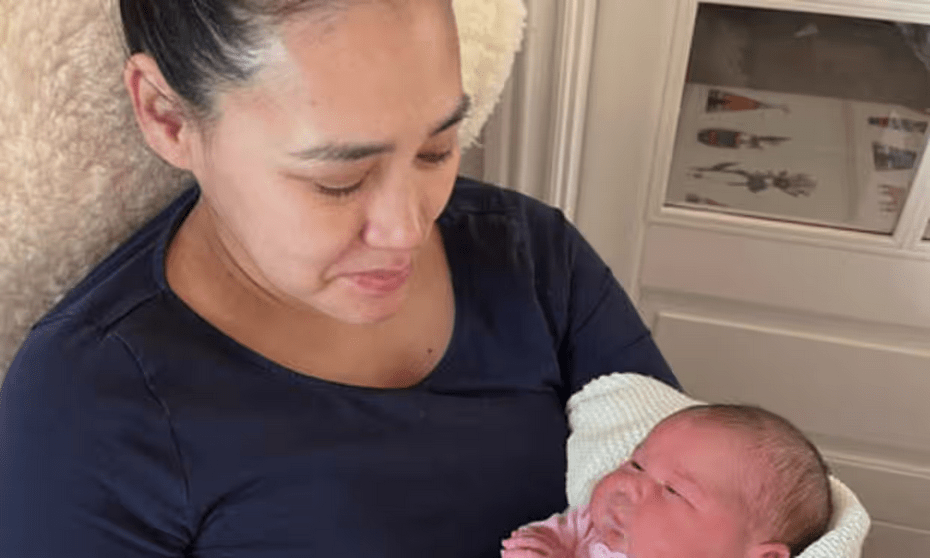
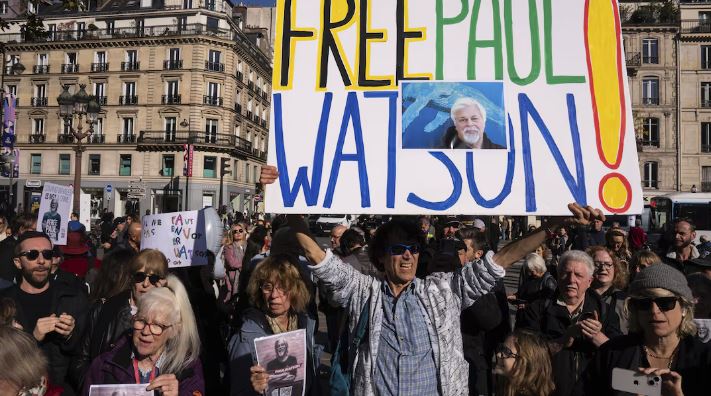
In Kalaallit Nunaat, tensions and demonstrations of support for Keira Alexandra Kronvold, a woman of kalaaleq origin, increased as her child was forcibly taken away by social services within hours of giving birth in Thisted, Denmark. The Danish Parenting Assessment Test (FKU), one of the psychometric tests widely used in Denmark to assess parenting skills, has been heavily criticized for reproducing racist discrimination. An extract from Keira Alexandra Kronvold’s file bears witness to this: “her origin would make it difficult for her to prepare the child for the social expectations and codes necessary in Danish society”. This is just one of many cases, since according to a 2022 report, children of kalaaleq origin living in Denmark are six times more likely to be placed in care than those of Danish origin (Sermitsiaq, November 20; The Guardian, November 25; DR, November 12). At the Folketing, the Danish parliament, the simultaneous translation hitherto rejected by the Speaker, Søren Gade, was tested for the first time during questions to the Prime Minister, Mette Frederiksen, who described the day as historic (Sermitsiaq, November 26; DR, November 26). Another “historic moment” for former Prime Minister Kim Kielsen was the inauguration of Nuuk International Airport, which now provides a direct link between Nuuk and Copenhagen, bypassing Kangerlussuaq (Sermitsiaq, November 28). At the end of November, Danish Defence Minister Troels Lund Poulsen visited Nuuk to meet Foreign Minister Vivian Motzfeldt to discuss the defence agreement and reaffirm a joint commitment to close cooperation on Arctic defence issues, with two priorities: to ensure that the Arctic remains a low-voltage zone, and to guarantee the participation of local businesses and the local population in the development of defence installations (Sermitsiaq, November 23; Eye on the Arctic, November 23). And while Kalaallit Nunaat has already decided to boycott the Nordic Council, the Faroe Islands have also threatened to leave the regional governance body. The Swedish presidency has not invited Kalaallit Nunaat and the Faroe Islands to a number of meetings, seeing this as a breach of equality between Council members, while an update of the treaties is called for so that Kalaallit Nunaat, the Faroe Islands and Åland join the Council as independent members (High North News, November 6). Finally, Paul Watson’s pre-trial detention has once again been renewed until December 18, pending a Danish response as to whether or not he should be extradited to Japan (Sermitsiaq, December 2).

Photo: Keira Alexandra Kronvold and her baby, who has been removed from her by the local municipality. Photograph: supplied (The Guardian).
Paul Watson’s Detention, Flights between Iqaluit-Nuuk and within the Arctic… October’s Wrap-Up

On October 23, the Kalaaleq Court decided to extend the detention of activist Paul Watson until November 13, pending the Danish government’s decision on Japan’s extradition request (AFP, October 24). The direct flights between Iqaluit and Nuuk, launched for the second year by Air Greenland after more than ten years, are a success. According to the figures, 70% of seats were occupied on this 37-seat weekly flight between June 26 and October 23 (Eye on the Arctic, October 24). An agreement has also been signed between Air Greenland and Icelandair at Arctic Circle to improve connections between Kalaallit Nunaat, Canada and the Faroe Islands. The agreement will come into effect next summer, and will enable passengers to book flights with both airlines on a single ticket. Keflavik airport in Iceland will be the departure point for these flights, linking Kalaallit Nunaat to Icelandair’s network of North American routes (Eye on the Arctic, October 23).

Author: Magali Vuillerme (translation). Photo: Associated Press/Louise Delmotte.

Revue de septembre : Rapport spécial de l’ONU, plurilinguisme au Folketing et Ocean Explorer

English below

Le rapporteur spécial sur les droits des peuples autochtones, José Francisco Calí Tzay a rendu son rapport à la suite de sa visite au Groenland en février dernier. Le rapport pointe notamment les discriminations subies par les groenlandaises et les groenlandais dans l’accès à leurs droits, ainsi que les politiques danoises particulièrement violentes (notamment la campagne de stérilisation des filles et des femmes dans les années 1960-70) qui ont suivies la période coloniale, qui s’est formellement achevée en 1953. Le rapporteur préconise d’engager “un processus de réconciliation afin d’aborder l’héritage du colonialisme et du racisme et, avec la participation des Inuit, d’élaborer des solutions et des politiques efficaces” (UN, 11 septembre). Un autre préconisation rejoint la demande exprimée au Folketing, le parlement danois, par Aki-Matilda Høegh-Dam de pouvoir s’exprimer en groenlandais et féroïens. A ce sujet, le président du Folketing, Søren Gade, qui s’était montré favorable à la mise à disposition d’interprètes, a finalement tranché, il s’agira pour les membres élus du Groenland et des îles Féroé de traduire eux-mêmes leurs discours au Folketing s’ils s’expriment dans leur langue maternelle. Certaines déclarations et rapports seront également traduits (DR, 21 septembre). Alors que le développement du tourisme de croisière s’est développé considérablement au Groenland ces dernières années et que le gouvernement groenlandais étudie la mise en place d’une taxe pour les passagers (KNR, 31 août), au début du mois de septembre, le navire de croisière Ocean Explorer s’est échoué avec 206 personnes à bord dans l’Alpefjord au nord-est du Groenland. Les passagers ont pu être secourus avec le concours du navire de recherche Tarajoq de l’Institut de la nature (DR, 14 septembre). “Les navires de croisière qui naviguent dans les eaux groenlandaises et dans les fjords ont tous obtenu l’autorisation de naviguer dans nos eaux” précise Vivian Motzfeldt, nouvelle ministre des affaires étrangères et de l’indépendance, “mais la situation qui s’est créée montre clairement que nous devons travailler pour garantir des exigences légales strictes, claires et sans ambiguïté à partir de la saison prochaine” (Sermitsiaq, 13 septembre).

– September review: UN Special Report, multilingualism at the Folketing and Ocean Explorer

The Special Rapporteur on the rights of indigenous peoples, José Francisco Calí Tzay, issued his report following his visit to Greenland last February. The report highlights the discrimination suffered by Greenlanders in accessing their rights, as well as the particularly violent Danish policies (notably the campaign to sterilize girls and women in the 1960s and 70s) that followed the colonial period, which formally ended in 1953. The rapporteur calls for “a process of reconciliation to address the legacy of colonialism and racism and, with the participation of the Inuit, to develop effective solutions and policies” (UN, September 11). Another recommendation is in line with Aki-Matilda Høegh-Dam’s request to the Folketing, the Danish parliament, to be able to express herself in Greenlandic and Faroese. Folketing President Søren Gade, who had been in favor of providing interpreters, has now decided that elected members from Greenland and the Faroe Islands will be able to translate their speeches to the Folketing themselves if they speak in their mother tongue. Certain statements and reports will also be translated (DR, September 21). While cruise tourism has grown considerably in Greenland in recent years, and the Greenlandic government is considering the introduction of a passenger tax (KNR, August 31), in early September the cruise ship Ocean Explorer ran aground with 206 people on board in the Alpefjord in northeast Greenland. The passengers were rescued with the help of the Nature Institute’s research vessel Tarajoq (DR, September 14). “Cruise ships operating in Greenlandic waters and fjords have all obtained permission to sail in our waters,” says Vivian Motzfeldt, the new Minister for Foreign Affairs and Independence, “but the situation that has arisen clearly shows that we must work to ensure strict, clear and unambiguous legal requirements from next season onwards” (Sermitsiaq, September 13).