Greenland Science Week, Ice Sheets, Indigenous Rights & Arctic Security… November’s Wrap Up

In Greenland, a major scientific conference, the Greenland Science Week, organized by the Arctic Hub, brought together 400 researchers from 20 countries. Several representatives of the new presidency of the Arctic Council—now largely based in Greenland—took part (High North News, 19 November). Greenland’s Minister for Foreign Affairs and Research, Vivian Motzfeldt, reiterated that research conducted in Greenland must primarily benefit local populations, integrate Indigenous knowledge, and ensure meaningful knowledge returns to the communities concerned (High North News, 13 November).

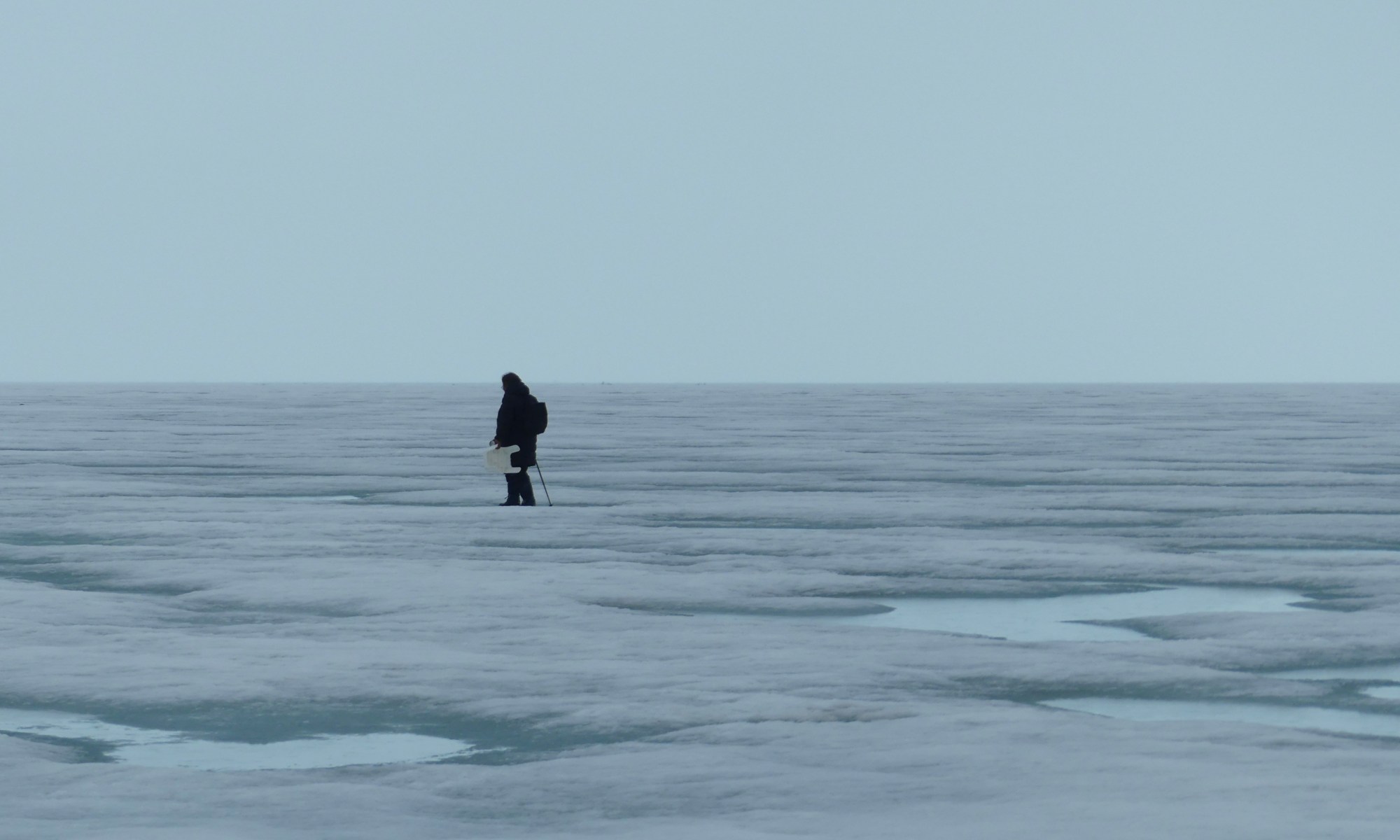
A new scientific report published ahead of COP30 warns of a rapid and potentially irreversible decline of the Greenland and Antarctic ice sheets, which could lead to sea-level rise far exceeding current estimates. The report cautions that even the +1.5°C target would not be sufficient to prevent major damage and calls for global emissions to be halved by 2030 to limit ice-sheet collapse and its global consequences (Eye on the Arctic, 13 November).

At COP, the Inuit Circumpolar Council (ICC) also denounced the interchangeable use of the terms “local communities” and “Indigenous peoples,” a practice which, according to the organization, obscures the specific rights of Indigenous peoples (Eye on the Arctic, 19 November). The ICC is also calling for direct access to funding, the integration of Indigenous knowledge, and a just energy transition (Eye on the Arctic, 13 November).

At the national level, former Greenlandic Prime Minister Múte B. Egede accused Denmark of having committed a “genocide” during the so-called spiral campaign of the 1960s–1970s, sparking controversy. He received the backing of his successor, Jens-Frederik Nielsen (Sermitsiaq, 21 November), despite a now-withdrawn threat of legal action (Sermitsiaq, 23 November) by former Danish minister Tom Høyen, who disputes the accusations.

At the European Parliament, a network of regionalist, separatist, and minority-focused parties across Europe invited two Faroese politicians and former Siumut party secretary in Greenland, Ole Aggo Markussen, to exchange views and expand their network. The group brings together Scottish, Catalan, Basque, Corsican, Flemish, and also Kanak independence movements (Altinget, 24 November).

Also at the European Parliament, a new resolution on the Arctic was adopted, warning against growing militarization and stressing the need for cooperation with Nordic partners, notably Norway. The text highlights the importance of the High North for Europe’s security, energy, connectivity, and geopolitical stability, placing the Arctic at the core of the EU’s diplomatic and security priorities (High North News, 1 December).

Finally, earlier this month, the new US ambassador to Denmark—co-founder of PayPal and a long-time friend of Elon Musk—took up his post in Copenhagen, identifying defense cooperation, trade ties, and Arctic security as priorities (Eye on the Arctic, 5 November). He nevertheless remained evasive about Trump’s ambitions, refusing to rule out past proposals by Donald Trump regarding US sovereignty over Greenland (DR, 18 November). In early December, representatives from Greenland, Denmark, and the United States are set to meet in Greenland to resume official trilateral talks (Sermitsiaq, 26 November).
Revue de juillet-août : élections au Siumut, recours sur l’uranium et températures records en juillet

English below

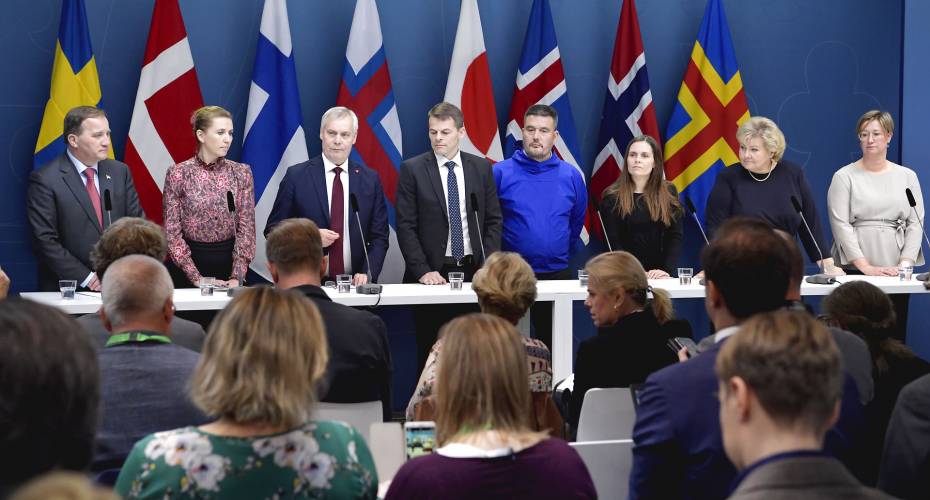
L’actuel président du Siumut, Erik Jensen, a été réélu au premier tour (39 voix sur 68) pour diriger le second plus grand parti du pays. En cas de victoire de l’un (Kim Kielsen) ou l’une de ses rivales (Aki-Matilda Høegh-Dam), de nouvelles élections nationales à la rentrée pouvaient être attendues, ainsi que des prises de positions plus tranchées sur l’indépendance ou encore l’uranium, sur lequel le parti n’a pas de position stable depuis 2013 (DR, 30 juillet). Le réélection d’Erik Jensen signe donc le choix du “pragmatisme” et de la stabilité au sein de la coalition (DR, 30 juillet ; Sermitsiaq, 31 juillet). En 2021, menée par le parti IA, la coalition avait décidé de stopper les projets d’exploration et d’exploitation d’uranium. La compagnie australienne Energy Transition Minerals, qui avait obtenu une permission d’exploration en 2007 et demandé un permis d’exploitation en 2019 pour la mine de Kuannersuit, dans le sud-ouest du Groenland, a décidé d’intenter un recours pour obtenir une compensation de 76,5 milliards de couronnes danoises auprès du Danemark et du Groenland (DR ; Sermitsiaq, 20 juillet). Mi-juillet s’est tenue un sommet entre le président américain et les premiers ministres des pays nordiques, auquel le président groenlandais, Muté B. Egede, et le dirigeant féroïen, Aksel V. Johannesen n’ont pas été invités (Politiken, 22 juillet). Ces derniers ont vivement critiqués les pays Nordiques pour leur absence de considération répétée à leur égard : “Si les pays nordiques ne veulent pas prendre la coopération avec nous au sérieux et veiller à ce que nous soyons impliqués et entendus lors des négociations, nous devons réévaluer notre participation et regarder plus à l’ouest, vers d’autres pays de l’Arctique, et voir si nous pouvons développer une collaboration dans laquelle nous sommes pris au sérieux”, a averti Muté B. Egede à Sermitsiaq (15 juillet). Ceci s’ajoute aux tensions déjà fortes avec le Danemark qui se succèdent depuis plusieurs mois (Altinget, 14 août). Les discussions entre le Danemark, les îles Féroé et le Groenland autour du renforcement de la coopération avec les États-Unis dans l’Arctique, décidés en juin dernier, seront sur la table des négociations dans les prochains mois (Altinget, 3 août). Sur le plan climatique, d’après le Danish Meteorological Institute (DMI), les températures du mois de juillet 2023 ont été supérieures de  4,4°C à la moyenne observée depuis 1991 au sommet de la calotte glaciaire (station Summit) (DR, 11 août), tandis que des records de fonte de l’inlandsis ont aussi été observés par la NASA au mois de juillet (Eye on the Arctic, 2 août). D’après une autre étude menée par l’Université d’Aalborg, la population de la communauté d’Ittoqqortoormiit, à l’est du Groenland, et bien qu’elle vive loin des sources de pollution par les PFAS, celle-ci présente des concentrations de ces substances dans le sang parmi les plus élevées au monde (Sermitsiaq, 12 juillet). Le gouvernement a déclaré prendre cette étude très au sérieux et a annoncé son intention de ratifier la Convention de Stockholm sur les polluants organiques persistants (POP) (Sermitsiaq, 24 juillet). Par ailleurs, le colonel Søren Andersen a été nommé général de division et nouveau commandant du Commandement de l’Arctique (Altinget, 9 août).

– July-August review: Siumut elections, uranium appeal and record temperatures in July

Siumut’s current president, Erik Jensen, was re-elected in the first round (39 votes out of 68) to lead the country’s second-largest party. In the event of victory for one (Kim Kielsen) or the other of his rivals (Aki-Matilda Høegh-Dam), new national elections in the autumn could be expected, as well as stronger positions on independence or uranium, on which the party has had no stable position since 2013 (DR, July 30). Erik Jensen’s re-election signals the choice of “pragmatism” and stability within the coalition (DR, July 30; Sermitsiaq, July 31). In 2021, led by the IA party, the coalition had decided to halt uranium exploration and mining projects. The Australian company Energy Transition Minerals, which had obtained exploration permission in 2007 and applied for a mining permit in 2019 for the Kuannersuit mine in south-west Greenland, decided to seek compensation of DKK 76.5 billion from Denmark and Greenland (DR; Sermitsiaq, July 20). In mid-July, a summit was held between the American president and the prime ministers of the Nordic countries, to which the Greenlandic president, Muté B. Egede, and the Faroese leader, Aksel V. Johannesen, were not invited. Egede and Faroese leader Aksel V. Johannesen were not invited (Politiken, July 22). The latter strongly criticized the Nordic countries for their repeated lack of consideration for them: “If the Nordic countries don’t want to take cooperation with us seriously and ensure that we are involved and heard in the negotiations, we need to re-evaluate our participation and look further west, to other Arctic countries, and see if we can develop a collaboration in which we are taken seriously”, warned Muté B. Egede in Sermitsia. Egede in Sermitsiaq (July 15). This comes on top of the already high tensions with Denmark that have been building up for several months (Altinget, August 14). Discussions between Denmark, the Faroe Islands and Greenland on closer cooperation with the United States in the Arctic, agreed last June, will be on the negotiating table in the coming months (Altinget, August 3). On the climate front, according to the Danish Meteorological Institute (DMI), temperatures in July 2023 were 4.4°C above the average observed since 1991 at the summit of the ice cap (Summit station) (DR, August 11), while record melting of the ice sheet was also observed by NASA in July (Eye on the Arctic, August 2). According to another study conducted by Aalborg University, the population of the community of Ittoqqortoormiit, in eastern Greenland, despite living far from sources of PFAS pollution, has some of the highest concentrations of these substances in their blood in the world (Sermitsiaq, July 12). The government has stated that it takes this study very seriously, and has announced its intention to ratify the Stockholm Convention on Persistent Organic Pollutants (POPs) (Sermitsiaq, July 24). Colonel Søren Andersen has been appointed Major General and new Commander of the Arctic Command (Altinget, August 9).

Revue de janvier : spiralkampagnen, constitution groenlandaise, première stratégie de recherche.

English below

Depuis les révélations de DR (6 mai 2022), les autorités groenlandaises tentent de faire la lumière sur la “spiralkampagnen”, une politique active de régulation de la population groenlandaise menée par les autorités danoises dans les années 1960-70. Par ailleurs, le Naalakkersuisut, le gouvernement national groenlandais, prépare un projet de constitution groenlandaise qui devrait être présenté en avril 2023, traçant les contours d’une potentielle indépendance groenlandaise (Altinget, 31 janvier 2023), et a exposé sa première stratégie de recherche, arguant de la nécessité de mettre la recherche au Groenland au service du peuple groenlandais (Naalakkersuisut, 9 janvier 2023). Dans les mois qui viennent sont aussi attendues la première stratégie groenlandaise en matière d’affaires étrangères, ainsi que la stratégie Arctique danoise (Altinget, 19 janvier 2023). Pour rappel, en mars 2022, la nouvelle stratégie de politique étrangère et de sécurité danoise a fait de l’Arctique l’une de ses priorités, confirmant aussi que le Danemark se positionne pour une présence accrue de l’OTAN en Arctique, et une collaboration plus étroite avec les États-Unis (Sermitsiaq, 12 février 2022). Pour finir, l’accord Canada-Danemark/Groenland de juin 2022 sur l’île Hans (Tartupaluk) vient solder le dernier conflit territorial lié à la souveraineté dans le cercle polaire arctique (The Arctic Institute, 24 janvier 2023).

– January Review: spiralkampagnen, Greenlandic constitution, first research strategy.

Since the revelations of DR (May 6, 2022), the Greenlandic authorities have been trying to shed light on the “spiralkampagnen”, an active policy of regulation of the Greenlandic population carried out by the Danish authorities in the 1960s-70s. In addition, Naalakkersuisut, the Greenlandic national government, is preparing a draft Greenlandic constitution to be presented in April 2023, outlining the contours of a potential Greenlandic independence (Altinget, January 31, 2023), and has outlined its first research strategy, arguing the need to put research in Greenland at the service of the Greenlandic people (Naalakkersuisut, January 9, 2023) In the coming months, the first Greenlandic foreign affairs strategy is also expected, as well as the Danish Arctic strategy (Altinget, 19 January 2023). As a reminder, in March 2022, the new Danish foreign and security policy strategy made the Arctic one of its priorities, also confirming that Denmark is positioning itself for an increased NATO presence in the Arctic, and closer collaboration with the United States (Sermitsiaq, 12 February 2022). Finally, the Canada-Denmark/Greenland agreement of June 2022 on Hans Island (Tartupaluk) resolves the last territorial dispute related to sovereignty in the Arctic Circle (The Arctic Institute, 24 January 2023).

“Un balcon sur le désastre” : le Groenland, nouvelle priorité de la récente stratégie arctique française ?

English below

La première stratégie polaire française, qui fait notamment suite à la feuille de route nationale sur l’Arctique, présentée par l’Ambassadeur des pôles et des enjeux maritimes, Olivier Poivre d’Arvor, fait du renforcement de la communauté scientifique française au Groenland l’une de ses priorités.

La France cherche à diversifier sa présence en Arctique, notamment sa présence permanente qui est actuellement matérialisée par la station franco-allemande AWIPEV au Svalbard. “Réengager la science française en Arctique” a été annoncée comme l’une des priorités de la première stratégie polaire française à horizon 2030, intitulée “Équilibrer les extrêmes”. Le Groenland, y est présenté comme “la région du globe où la signature du changement climatique est la plus visible et la plus dévastatrice”, le ”balcon de cette dramatique transformation”, et semble être l’un des territoires sur lesquels la France cherche à étendre son influence, en particulier à travers la recherche scientifique. Parallèlement à l’ouverture d’un bureau de la Commission européenne à Nuuk, la stratégie polaire vise “le développement d’autres installations de recherche pérennes”. S’appuyant sur la tradition polaire française au Groenland (les expéditions polaires françaises menées par Paul-Émile Victor ou encore les travaux de Jean-Malaurie), plusieurs modalités sont citées sans qu’aucune n’ait été approfondie : l’installation d’un bureau logistique, l’implantation dans une station déjà opérée par des universités, ou encore la création d’une infrastructure en lien avec les autorités et municipalités groenlandaises.

– “A balcony on the disaster”: Greenland, new priority of the recent French Arctic strategy?

The first French polar strategy, which follows the national roadmap on the Arctic, presented by the Ambassador for Poles and Maritime Issues, Olivier Poivre d’Arvor, makes the strengthening of the French scientific community in Greenland one of its priorities.

France is seeking to diversify its presence in the Arctic, including its permanent presence which is currently materialized by the Franco-German AWIPEV station in Svalbard. “Re-engaging French science in the Arctic” has been announced as one of the priorities of the first French polar strategy for 2030, entitled “Balancing the Extremes”. Greenland is presented as “the region of the globe where the signature of climate change is the most visible and devastating”, the “balcony of this dramatic transformation”, and seems to be one of the territories on which France seeks to extend its influence, particularly through scientific research. Along with the opening of a European Commission office in Nuuk, the polar strategy aims to “develop other permanent research facilities”. Based on the French polar tradition in Greenland (the French polar expeditions led by Paul-Émile Victor and the work of Jean-Malaurie), several options are mentioned, although none of them have been explored in detail: the installation of a logistics office, the establishment of a station already operated by universities, or the creation of an infrastructure in conjunction with the Greenlandic authorities and municipalities.

Sources : Gouvernement.fr.

Le 109th Airlift Wing de New York en soutien de la recherche au Groenland

English below

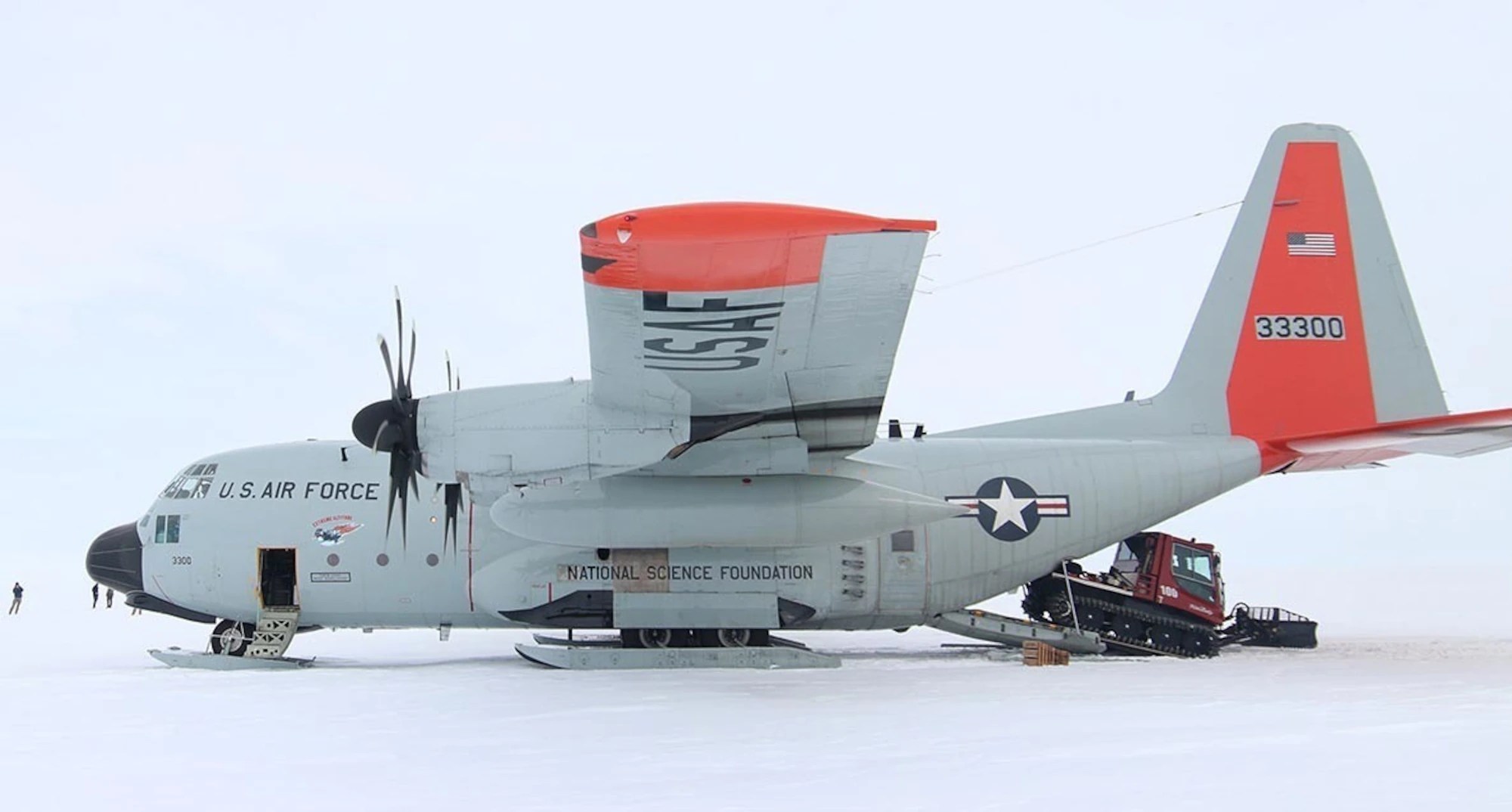
Le 109th Airlift Wing de New York devait mener, fin avril, une mission au Groenland afin de soutenir la Summit Station opérée par la National Science Foundation. 

Trois LC-130 Hercules “Skibirds” et environ 75 aviateurs du 109th Airlift Wing de la New York Air National Guard devaient se rendre au Groenland, via la base opérationnelle de Kangerlussuaq, à la fin du mois d’avril pour soutenir les recherches de la National Science Foundation (NSF). En 2021, les aviateurs de l’escadre ont transporté 590 tonnes de fret, 32 000 gallons de carburant et 910 passagers vers des stations scientifiques au Groenland. Ils ont effectué un total de 678 heures de vol. L’objectif principal est de former les aviateurs de la 109th AW et de soutenir la construction en cours à Summit Station, qui est exploitée par la NSF. Summit Station est la seule station d’observation à haute altitude, à haute latitude et ouverte toute l’année dans l’Arctique. 

– New York’s 109th Airlift Wing supports research in Greenland

The 109th Airlift Wing from New York was scheduled to conduct a mission to Greenland in late April to support the Summit Station operated by the National Science Foundation.

Three LC-130 Hercules “Skibirds” and approximately 75 airmen from the New York Air National Guard’s 109th Airlift Wing were scheduled to fly to Greenland, via Kangerlussuaq AFB, in late April to support National Science Foundation (NSF) research. In 2021, the wing’s aviators carried 590 tons of cargo, 32,000 gallons of fuel and 910 passengers to scientific stations in Greenland. They flew a total of 678 hours. The primary purpose is to train 109th AW Airmen and support ongoing construction at Summit Station, which is operated by NSF. Summit Station is the only high-altitude, high-latitude, year-round observation station in the Arctic. 

Sources : Air Force.