Researcher in Social & Transdisciplinary Sciences · Critical Environmental Justice & Ethnographies
Tag: Relation with Denmark
The relationship between Kalaallit Nunaat (Greenland) and Denmark is increasingly shaped by issues of decolonization, as Kalaallit Nunaat seeks to assert its Indigenous identity, reclaim control over resources, and reduce Denmark’s influence in pursuit of greater autonomy or potential independence.
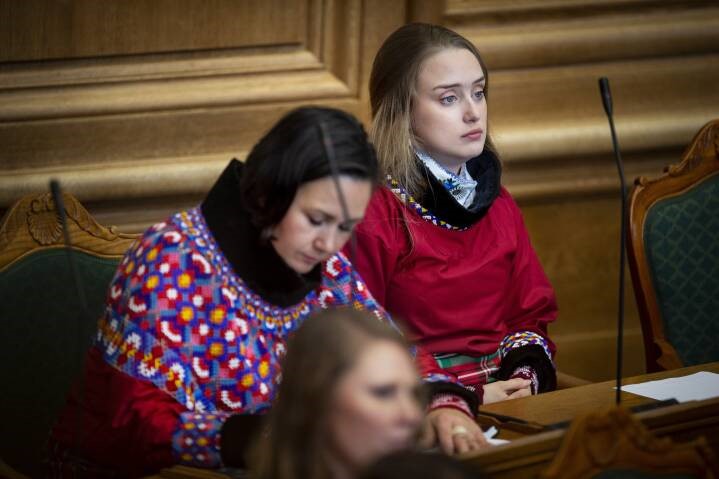
Le Contact Committee, établi en 2021 comme un forum d’échanges régulier entre le Danemark, le Groenland et les îles Féroé, s’est réuni à Nuuk au début du mois, et a notamment permis de mettre sur la table les tensions dano-groenlandaises exacerbées ces dernier mois (voir ici), de répondre aux exigences de transparence du parlement groenlandais vis-à-vis de la politique étrangère danoise ou encore d’avancer sur la mise en œuvre de l’accord de défense (DR, 6 juin ; DR, 7 juin). La première ministre danoise, Mette Frederiksen, dont le nom est de plus en plus cité comme potentielle future secrétaire générale de l’OTAN (Sermitsiaq, 5 juin), et le ministre des affaires étrangères, Lars Løkke Rasmussen, étaient notamment présents aux côtés de Múte B. Egede et son homologue féroïen, Aksel V. Johannesen. Après plusieurs mois de contestations concernant la nomination d’un ambassadeur de l’Arctique (voir ici), le gouvernement groenlandais a ouvert des discussions quant à la nomination d’un nouvel ambassadeur coopté par le Groenland et/ou par une distribution des postes plus favorables au Groenland à l’avenir (Sermitsiaq, 9 juin). En matière de défense, Troels Lund Poulsen, le ministre danois de la défense, a réaffirmé la centralité de l’Arctique tout en regrettant l’absence de stratégie commune précise à ce stade. L’Arctic capacity package de 2021 prévoyait de créer une formation à la défense sur le sol groenlandais, qui n’a pas été mise en œuvre. Dans l’accord de défense, qui a été présenté par le ministère de la défense à la fin du mois de mai, il est proposé de dépenser 143 milliards de couronnes jusqu’en 2033 (KNR, 7 juin). Sur le plan national, les élections à la tête du parti Siumut pourraient remettre en cause la coalition au pouvoir, et provoquer de nouvelles élections dans les semaines qui viennent, en particulier en cas de victoire d’Aki-Matilda Høegh-Dam (Sermitsiaq, 15 juin). Par ailleurs, cette dernière, élue au Folketing, le parlement danois, vient d’obtenir une réponse favorable de la part de la présidence du parlement à sa demande de reconnaître le féroïen et le groenlandais comme langues officielles au parlement (Sermitsiaq, 14 juin). Après les critiques de Múte B. Egede (voir ici), l’équipe de recherche qui mènera les investigations sur la spiralkampagnen a été mise en place, et devrait rendre ses résultats d’ici deux ans (Sermitsiaq, 30 mai). A ce sujet, la parlementaire groenlandaise au Folketing, Aaja Chemnitz a appelé le gouvernement danois à d’ores et déjà présenter des excuses (Sermitsiaq, 1 juin). En visite au Groenland, Mette Frederiksen, a déclaré : “Je n’ai aucun doute que de graves crimes et erreurs ont été commis dans les relations dano-groenlandaises au fil des ans, même si nous sommes aujourd’hui dans une situation complètement différente” (DK, 7 juin). A ce jour, 163 femmes concernées ont décidé de saisir la justice (Sermitsiaq, 24 juin). Un projet de recherche qui doit faire la lumière sur l’histoire du Danemark au Groenland a également été mise en place en fin de mois (DR, 22 juin). Enfin, suite à la démission de Kuupik Kleist de son poste de président de Inuit Circumpolar Council (ICC) Greenland, notamment en raison des coupes budgétaires décidées par l’Inatsisartut, le parlement groenlandais, Hjalmar Dahl a été élu à la tête de l’organisation qu’il avait déjà dirigée de 2018 à 2022 (Sermitsiaq, 19 juin).
– June review: Contact Committe, Siumut, Aki-Matilda Høegh-Dam and Danish-Greenish relations
The Contact Committee, established in 2021 as a forum for regular exchanges between Denmark, Greenland and the Faroe Islands, met in Nuuk at the beginning of the month, and provided an opportunity to discuss the Danish-Greenlandic tensions that have been exacerbated in recent months (see here), to respond to the Greenlandic parliament’s demands for transparency with regard to Danish foreign policy and to make progress on the implementation of the defence agreement (DR, 6 June; DR, 7 June). The Danish Prime Minister, Mette Frederiksen, whose name is being mentioned more and more as a potential future Secretary General of NATO (Sermitsiaq, 5 June), and the Minister for Foreign Affairs, Lars Løkke Rasmussen, were present alongside Múte B. Egede and her counterpart from Finland. Egede and his Faroese counterpart, Aksel V. Johannesen. After several months of disputes over the appointment of an Arctic ambassador (see here), the Greenland government has opened discussions on the appointment of a new ambassador co-opted by Greenland and/or a distribution of posts more favourable to Greenland in the future (Sermitsiaq, 9 June). On defence, Troels Lund Poulsen, the Danish Defence Minister, reaffirmed the centrality of the Arctic, while regretting the absence of a precise common strategy at this stage. The 2021 Arctic capacity package provided for the creation of defence training on Greenlandic soil, but this has not been implemented. In the defence agreement, which was presented by the Ministry of Defence at the end of May, it is proposed to spend 143 billion kroner until 2033 (KNR, 7 June). At national level, the Siumut party leadership elections could call into question the coalition in power, and provoke new elections in the coming weeks, particularly if Aki-Matilda Høegh-Dam wins (Sermitsiaq, 15 June). Moreover, Høegh-Dam, who was elected to the Folketing, the Danish parliament, has just received a favourable response from the parliamentary presidency to her request to have Faroese and Greenlandic recognised as official languages in parliament (Sermitsiaq, 14 June). Following criticism from Múte B. Egede (see here), the research team that will carry out the investigations into spiralkampagnen has been set up, and is expected to deliver its findings within two years (Sermitsiaq, 30 May). Greenland’s member of parliament in the Folketing, Aaja Chemnitz, has called on the Danish government to apologise (Sermitsiaq, 1 June). On a visit to Greenland, Mette Frederiksen said: “I have no doubt that serious crimes and mistakes have been committed in Danish-Greenlandic relations over the years, even though we are now in a completely different situation” (DK, 7 June). To date, 163 of the women concerned have decided to go to court (Sermitsiaq, 24 June). A research project to shed light on Denmark’s history in Greenland.
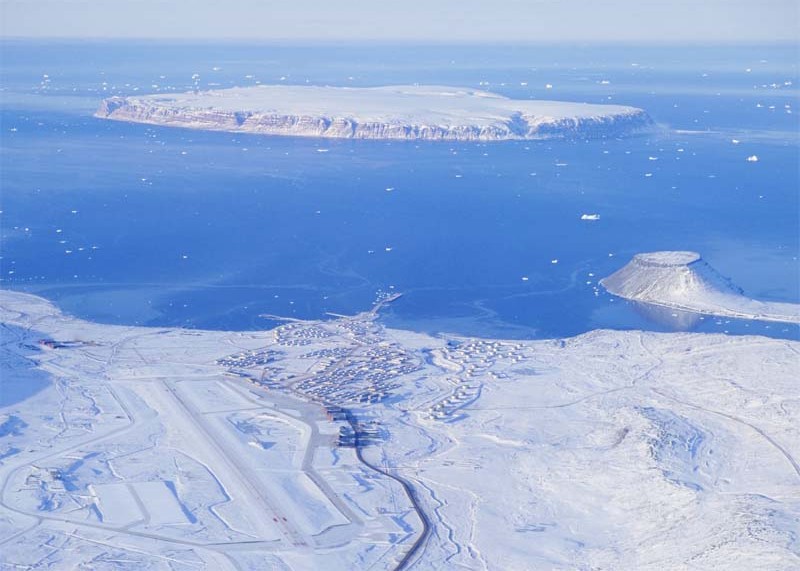
Au Nord du Groenland, la base militaire américaine Thule Air Base, au sud de Qaanaaq, vient d’être renommée Pituffik Space Base. « J’espère que cette journée servira d’exemple de la capacité des grandes nations à écouter leurs voisins, même les plus petits », a déclaré M. Motzfeldt, la ministre groenlandaise des Affaires étrangères, de l’Économie et du Commerce (Eye On The Arctic, 11 avril). Pour Sara Olsvig, présidente de l’Inuit Circumpolar Council (ICC), il s’agit d’un symbole important qui mérite d’être accompagné d’une reconnaissance accrue du déplacement forcé de 187 inughuits (inuits du Nord-Ouest du Groenland) lors de l’agrandissement de la base militaire en 1953 (Sermitsiaq, 6 avril ; Sermitsiaq, 7 avril). À l’instar des autres membres du Conseil de l’Arctique, Lars Løkke Rasmussen, le ministre des Affaires étrangères danois, a annoncé qu’il ne participerait pas physiquement à la réunion ministérielle qui se tient le 11 mai à Salekhard (Russie) ; Thomas Winkler, Ambassadeur de l’Arctique danois, ainsi que les représentants des gouvernements des îles Féroé et du Groenland, y participeront néanmoins à distance (Altinget, 17 avril). Le gouvernement des îles Féroé a mis en place un plan d’action visant à réduire sa dépendance vis-à-vis du Danemark d’ici quatre ans, la coalition au pouvoir vise une réduction de 25 millions de couronnes danoises par an de la subvention globale, qui devrait donc passer de 641 à 541 millions en 2026 (Sermitsiaq, 4 avril).
– April Review: Pituffik Space Base, Arctic Council, Faroe Islands dependency reduction plan
In North Greenland, the US military base Thule Air Base, south of Qaanaaq, has just been renamed Pituffik Space Base. “I hope that this day will serve as an example of how big nations can listen to their neighbours, even the smallest ones” said Motzfeldt, Greenland’s Minister of Foreign Affairs, Economy and Trade (Eye On The Arctic, 11 April). For Sara Olsvig, chair of the Inuit Circumpolar Council (ICC), this is an important symbol that deserves to be accompanied by greater recognition of the forced displacement of 187 Inughuit (Inuit from northwest Greenland) during the expansion of the military base in 1953 (Sermitsiaq, 6 April; Sermitsiaq, 7 April). Like the other members of the Arctic Council, Lars Løkke Rasmussen, the Danish Foreign Minister, has announced that he will not physically participate in the ministerial meeting in Salekhard, Russia, on 11 May; Thomas Winkler, the Danish Arctic Ambassador, as well as representatives of the Faroese and Greenlandic governments, will nevertheless participate from a distance (Altinget, 17 April). The Faroese government has put in place an action plan to reduce its dependence on Denmark within four years, with the ruling coalition aiming to reduce the overall subsidy by DKK 25 million per year, from DKK 641 million to DKK 541 million by 2026 (Sermitsiaq, 4 April).
Lida Skifte Lennert, ex-représentante groenlandaise à Bruxelles et au Danemark, sera la première diplomate groenlandaise à la représentation permanente du Danemark auprès de l’OTAN (Sermitsiaq, 20 mars ; DR, 21 mars). Par ailleurs, dans le cadre d’un remaniement large des ambassadeurs et ambassadrices danoises, l’actuel ambassadeur du Danemark dans l’Arctique, Thomas Winkler est remplacé par Tobias Elling Rehfeld, jusqu’ici ambassadeur en Afrique du Sud (Altinget, 3 mars).Le profil de ce dernier est critiqué pour son manque d’ancrage avec le Groenland ; pour plusieurs responsables politiques groenlandaises, cette nomination fait fi de l’histoire coloniale et de la nécessité de nommer des Groenlandaises et des Groenlandais en particulier sur les questions arctiques (Sermitsiaq, 15 mars ; Altinget, 20 mars). À la suite de la visite de l’envoyé spécial de l’ONU, Francisco Cali-Tzay, la création d’un registre inuk basé sur le principe d’auto-identification (déclaration de l’ONU sur les droits des peuples autochtones) est de nouveau dans le débat public (Sermitsiaq, 22 février). Au Folketing, le Parlement danois, le ministre danois des Affaires étrangères Lars Løkke Rasmussen, s’y est montré résolument défavorable (Sermitsiaq, 17 mars).
– March Review: NATO Representative, Contested Arctic Ambassador, Inuk Register.
Lida Skifte Lennert, former Greenlandic representative in Brussels and Denmark, will be the first Greenlandic diplomat at Denmark’s permanent representation to NATO (Sermitsiaq, 20 March; DR, 21 March). Also, in a wide-ranging reshuffle of Danish ambassadors, Denmark’s current ambassador to the Arctic, Thomas Winkler, is being replaced by Tobias Elling Rehfeld, previously ambassador to South Africa (Altinget, 3 March). The latter’s profile is criticised for his lack of connection with Greenland; for several Greenlandic politicians, this appointment ignores the colonial history and the need to appoint Greenlanders in particular on Arctic issues (Sermitsiaq, 15 March; Altinget, 20 March). Following the visit of UN special envoy Francisco Cali-Tzay, the creation of an Inuk register based on the principle of self-identification (UN Declaration on the Rights of Indigenous Peoples) is again in the public debate (Sermitsiaq, 22 February). In the Folketing, the Danish Parliament, the Danish Minister of Foreign Affairs Lars Løkke Rasmussen has been strongly against it (Sermitsiaq, 17 March).
L’ONU, par la voix du rapporteur spécial sur les droits des peuples autochtones, Cali Tzay, a pointé l’ampleur de la discrimination raciale structurelle et systématique exercée au sein du Royaume du Danemark sur les inuit du Groenland, soulignant des obstacles pour ceux et celles-ci de jouir pleinement de leurs droits humains (ONU, 10 février 2023). Parmi les illustrations récentes, le rapporteur souligne la campagne de stérilisation forcée des femmes groenlandaises, les cas d’enfants groenlandais enlevés à leurs familles au Danemark ou encore l’absence de consentement libre, préalable et éclairé concernant les projets touristiques et d’infrastructures. Sur le plan de la gouvernance arctique, Rasmus Leander Nielsen et Jeppe Strandsbjer, deux universitaires à l’Université de Nuuk, soulignent l’importance du Conseil de l’Arctique pour le Groenland, malgré la position très claire du gouvernement groenlandais dès le déclenchement de la guerre en Ukraine (Altinget, 22 février 2023). Cette position s’illustre dans les récents propos de la ministre des affaires étrangères groenlandaise, Vivian Motzfeldt, qui signifie que “le Groenland doit être prêt à accroître la présence militaire sur son territoire” (Sermitsiaq, 12 février 2023). Le ministre des affaires étrangères danois, Lars Løkke Rasmussen, entend renforcer l’implication du Groenland et des Îles Féroé dans la stratégie de défense du royaume (High North News, 10 février 2023). Enfin, de nouvelles évaluations suggèrent que l’entrée du Groenland dans l’Accord de Paris se fasse sur la base du modèle féroïen, qui pourrait notamment permettre aux secteurs des matières premières et du transport maritime de ne pas être couvert par des engagements contraignant (Sermitsiaq, 14 février 2023). Par ailleurs, au début du mois, l’accord Canada-Danemark/Groenland sur l’île Tartupaluk a été officiellement signé par le ministre des Affaires étrangères danois (Sermitsiaq, 16 février 2023).
– February Review: systemic discrimination, defense strategy and increased military presence, Paris Agreement, Tartupalik
The United Nations, through the voice of the Special Rapporteur on the rights of indigenous peoples, Cali Tzay, has pointed out the extent of structural and systematic racial discrimination exercised within the Kingdom of Denmark against the Inuit of Greenland, underlining the obstacles for them to fully enjoy their human rights (UN, 10 February 2023). Among the recent illustrations, the rapporteur highlights the campaign of forced sterilization of Greenlandic women, the cases of Greenlandic children kidnapped from their families in Denmark or the absence of free, prior and informed consent concerning tourism and infrastructure projects. In terms of Arctic governance, Rasmus Leander Nielsen and Jeppe Strandsbjer, two academics at the University of Nuuk, emphasize the importance of the Arctic Council for Greenland, despite the very clear position of the Greenlandic government at the outbreak of the war in Ukraine (Altinget, February 22, 2023). This position is illustrated by the recent words of Greenland’s foreign minister, Vivian Motzfeldt, who means that “Greenland must be prepared to increase the military presence on its territory” (Sermitsiaq, 12 February 2023). Danish Foreign Minister Lars Løkke Rasmussen intends to strengthen the involvement of Greenland and the Faroe Islands in the kingdom’s defense strategy (High North News, 10 February 2023). Finally, new assessments suggest that Greenland’s entry into the Paris Agreement should be based on the Faroese model, which could, among other things, allow the raw materials and shipping sectors to be exempt from binding commitments (Sermitsiaq, 14 February 2023). In addition, earlier this month, the Canada-Denmark/Greenland agreement on Tartupaluk Island was officially signed by the Danish Minister of Foreign Affairs (Sermitsiaq, 16 February 2023).
Depuis les révélations de DR (6 mai 2022), les autorités groenlandaises tentent de faire la lumière sur la “spiralkampagnen”, une politique active de régulation de la population groenlandaise menée par les autorités danoises dans les années 1960-70. Par ailleurs, le Naalakkersuisut, le gouvernement national groenlandais, prépare un projet de constitution groenlandaise qui devrait être présenté en avril 2023, traçant les contours d’une potentielle indépendance groenlandaise (Altinget, 31 janvier 2023), et a exposé sa première stratégie de recherche, arguant de la nécessité de mettre la recherche au Groenland au service du peuple groenlandais (Naalakkersuisut, 9 janvier 2023). Dans les mois qui viennent sont aussi attendues la première stratégie groenlandaise en matière d’affaires étrangères, ainsi que la stratégie Arctique danoise (Altinget, 19 janvier 2023). Pour rappel, en mars 2022, la nouvelle stratégie de politique étrangère et de sécurité danoise a fait de l’Arctique l’une de ses priorités, confirmant aussi que le Danemark se positionne pour une présence accrue de l’OTAN en Arctique, et une collaboration plus étroite avec les États-Unis (Sermitsiaq, 12 février 2022). Pour finir, l’accord Canada-Danemark/Groenland de juin 2022 sur l’île Hans (Tartupaluk) vient solder le dernier conflit territorial lié à la souveraineté dans le cercle polaire arctique (The Arctic Institute, 24 janvier 2023).
– January Review: spiralkampagnen, Greenlandic constitution, first research strategy.
Since the revelations of DR (May 6, 2022), the Greenlandic authorities have been trying to shed light on the “spiralkampagnen”, an active policy of regulation of the Greenlandic population carried out by the Danish authorities in the 1960s-70s. In addition, Naalakkersuisut, the Greenlandic national government, is preparing a draft Greenlandic constitution to be presented in April 2023, outlining the contours of a potential Greenlandic independence (Altinget, January 31, 2023), and has outlined its first research strategy, arguing the need to put research in Greenland at the service of the Greenlandic people (Naalakkersuisut, January 9, 2023) In the coming months, the first Greenlandic foreign affairs strategy is also expected, as well as the Danish Arctic strategy (Altinget, 19 January 2023). As a reminder, in March 2022, the new Danish foreign and security policy strategy made the Arctic one of its priorities, also confirming that Denmark is positioning itself for an increased NATO presence in the Arctic, and closer collaboration with the United States (Sermitsiaq, 12 February 2022). Finally, the Canada-Denmark/Greenland agreement of June 2022 on Hans Island (Tartupaluk) resolves the last territorial dispute related to sovereignty in the Arctic Circle (The Arctic Institute, 24 January 2023).
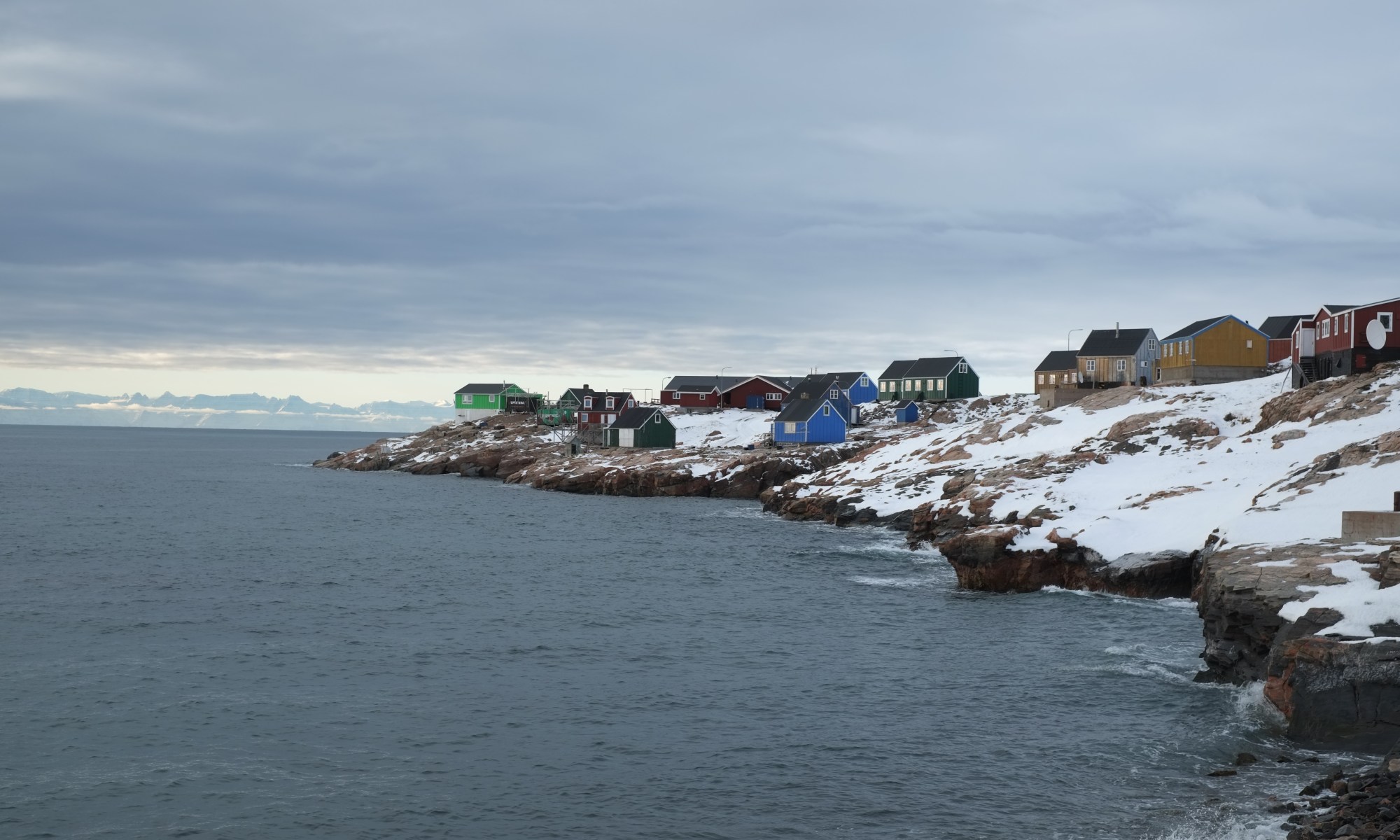
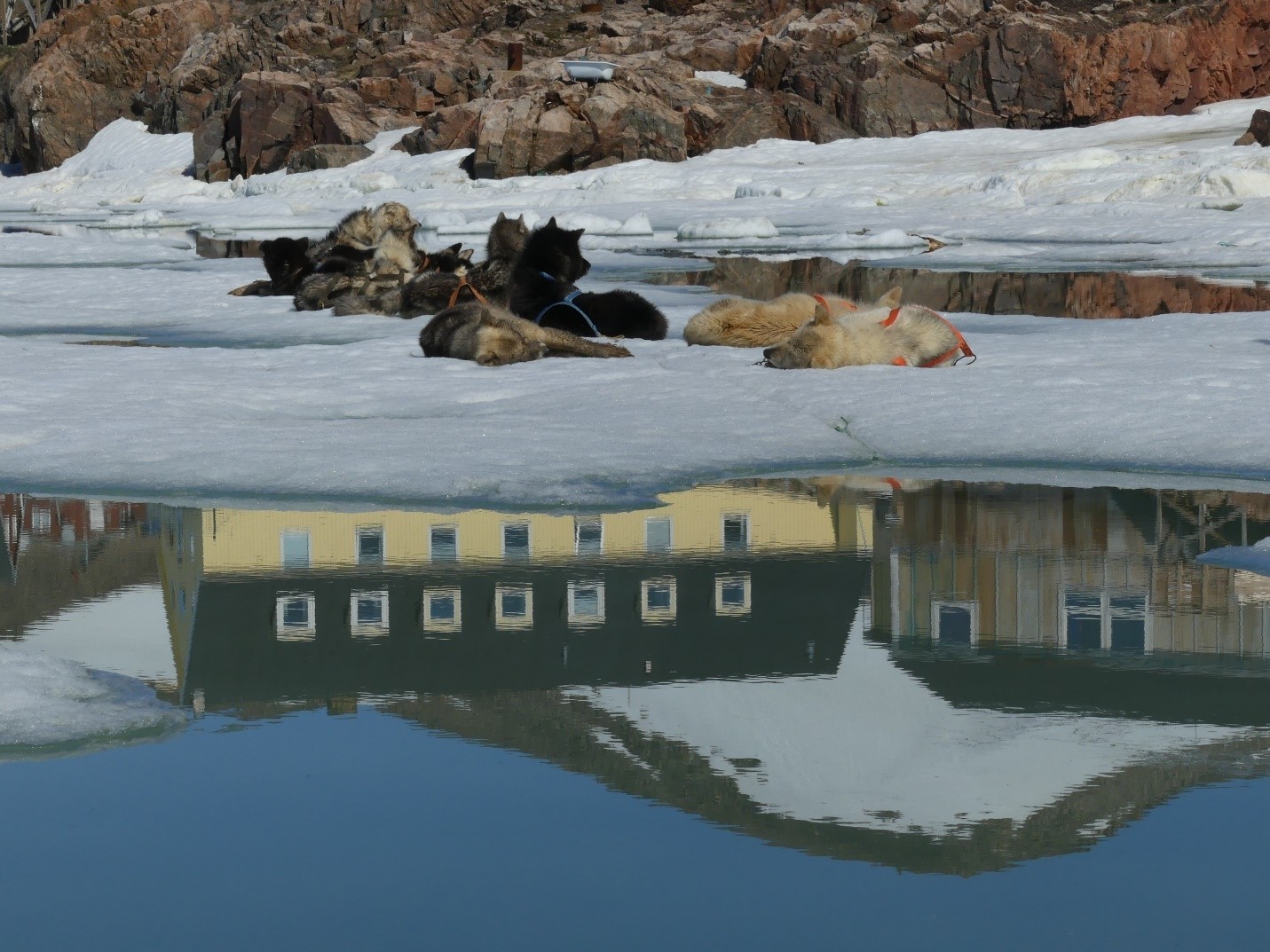
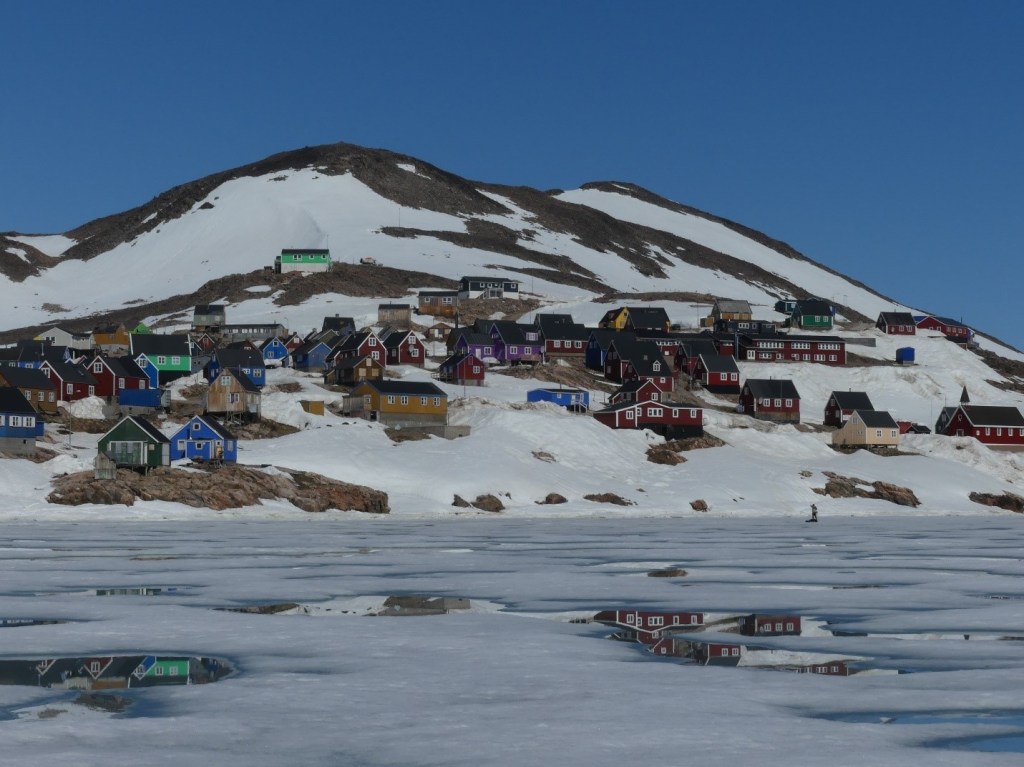
Ittoqqortoormiit (East Greenland). Last week, as I entered the cramped tourist agency in this town of 354 inhabitants, the director spoke almost instantly about the scandal that has been shaking the local press and Greenland for the past few weeks. On her desk, which has been refurbished since my last visit, she lays out documents from the time, in French, and asks me to take a closer look. In the 1960s, the Danish authorities would have launched an active policy of regulating the Greenlandic population, and the documents she gives me contain precise information about the town.
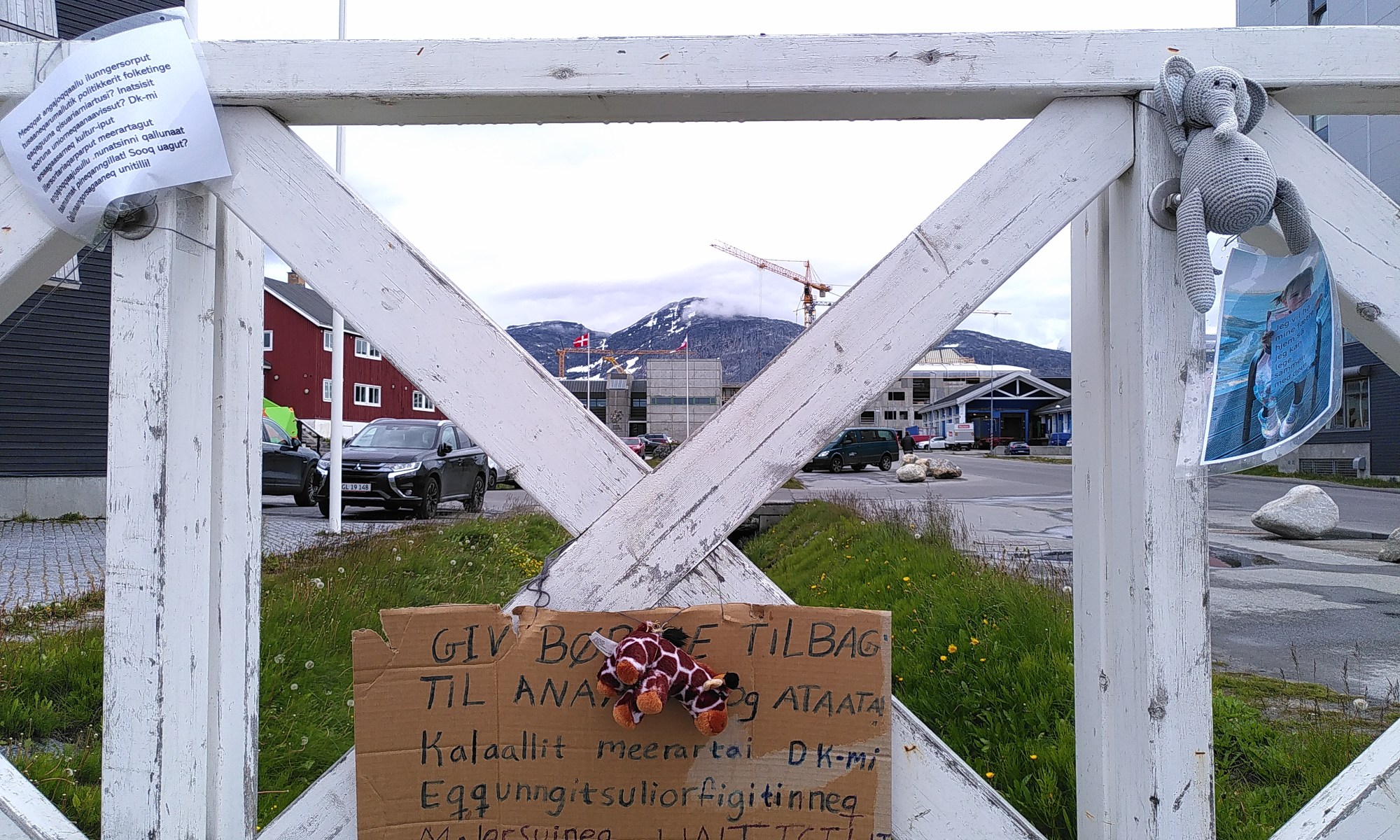
In the 1960s, faced with Greenland’s growing population, the Danish authorities launched an active policy to regulate the Greenlandic population. According to the Danish media DR, which is at the origin of the revelations, from 1966 onwards, thousands of IUDs were placed on Greenlandic women and girls from the age of 13[1]. Between 1966 and 1970, 4,500 Greenlandic women and girls were reportedly involved, or one of two fertile women at the time. The campaign is said to have continued beyond 1975. According to several women who are testifying today, everything took place without informed consent, and some minors were summoned by the school doctor without their parents even being informed. In 1970s, the law was changed so that doctors in Greenland could guide young girls from the age of 15 on contraception without their parents’ consent. Naja Lyberth was 14 years old in 1976 when she and the other girls in her class in Maniitsoq were called to the hospital; she now accuses Denmark of “taking her virginity”[2]. Inge Thomassen says that in 1995, during a medical examination, she realised that she had been wearing an IUD for years, which would have made her permanently infertile[3]. These testimonies are not isolated[4][5], this obstetric violence may have affected several hundred Greenlandic women. In addition, at the time, intrauterine devices were larger than those used today, which could cause even more pain and bleeding and have significant long-term effects.
« We are talking about a genocide »
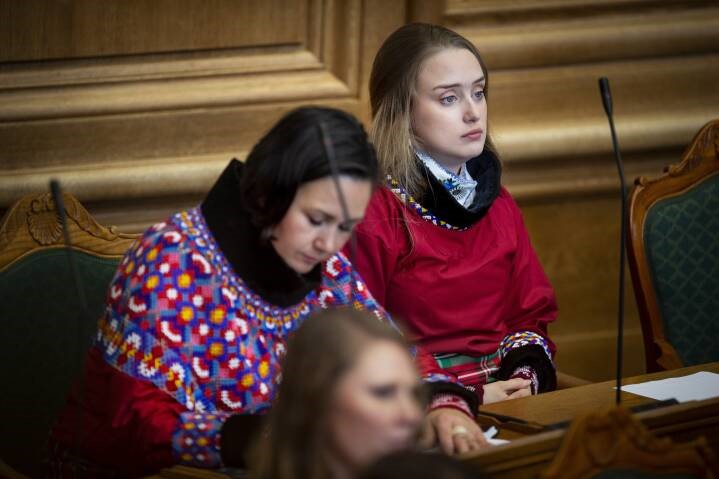
The Greenlandic political class is unanimous in condemning the violent policy of the Danish authorities. In the Folketing, the Danish parliament, Aki-Matilda Høegh-Dam, a Greenlandic MP (Siumut, S) since 2019, denounces what, for her, “borders on genocide”[6]. For Anaja Chemnitz Larsen, also a Greenlandic (Inuit Ataqatigiit, IA) member of the Folketing, “it shows a view of humanity that Greenlanders are different from Danes (…) by considering Greenlandic women as incapable of making a decision about their own bodies.” “This is an example of objectification and politicisation of the female body that is totally unacceptable. I find it cruel that the campaign included children under 18 and girls who were not sexually active (…) We need to get to the bottom of this and make sure that no more stories get buried. We must get rid of any policy where women are deprived of responsibility and co-determination of their own bodies”, says Naaja H. Nathanielsen (IA), Naalakkersuisoq (Minister) for Finance and Gender Equality.
Hans Enoksen, former president of the Naleraq (N) party, hopes that the case will be taken to the European Court of Human Rights, as he points out that the limitation of Greenland’s population growth is now having a significant impact on the country’s economy. Moreover, this scandal is reminiscent of other colonial wounds, such as that of the “experimental children”, 22 Greenlandic children aged between 4 and 9 who were removed from their homes and sent to Denmark as part of an experiment in 1951.[7][8], the aim was to ‘modernise’ them to become leaders when they returned to Greenland. On this subject, the Danish Prime Minister, Mette Frederiksen, recently offered a moderate apology: “the intentions at the time were certainly good, but it came at a price, and the consequences were inhumane”[9]. Or the “fatherless children” story, which concerns children born out of wedlock before 1963 in West Greenland and 1974 in the rest of Greenland, who were not allowed to know their father, inherit from him or take the family name. For Naja Dyrendom Graugaard, a post-doctoral fellow at Aalborg University, these stories challenge the common narrative that Denmark has been a good and forgiving colonial power in Greenland, both before and after the colonial era. As Anders Fogh Rasmussen, Danish Prime Minister from 2001 to 2009, said in 2008: ‘Denmark and the Danes have nothing to be ashamed of in Greenland, on the contrary. Denmark has made a fantastic and generous effort to develop Greenlandic society. We are proud of this effort, and it could serve as a model for others.[10].
Since the Self-Government Act of 2009, Greenland has had greater autonomy, but Greenland-Danish relations are still marked by strong colonial remanences, often taking the form of an obscure history draped in silence. In 2013, the Greenlandic government (Naalakkersuisut), then led by Aleqa Hammond (S), decided to set up a reconciliation commission, the purpose of which was to examine the colonial effects and legacy in Greenland. Rachael Lorna Johnstone, professor of law at the University of Greenland (Ilisimatusarfik), is critical of the results of this commission. “Perhaps it is time for a truth commission” she said, which would be investigated by the Greenland authorities.
Independent investigation to be complicated
Today, for Aki-Matilda Høegh-Dam, Greenland should start collecting evidence and testimonies in order to eventually bring the case before an international tribunal[11].On 2 June 2022, the Inatsisartut, Greenland’s parliament, unanimously decided to ask Denmark to open an “independent enquiry into the Danish health authorities’ pregnancy prevention practices in Greenland between the mid-1960s and the end of 1991 [when Greenland regained the health prerogatives]”[12]. The Danish Ministry of Health will be in charge of the investigation, with the support of the Greenlandic government, says Mimi Karlsen (IA), Naalakkersuisoq for Health. The investigation will be complicated, however, as the files have been transferred between several different authorities over time, and are therefore stored in different places.[13]. However, the Inatsisartut also unanimously decided that Greenland should itself set up a commission, which should determine whether Denmark had complied with the UN’s request for decolonisation by changing Greenland’s status from a colony to an integral part of the Realm in 1953. On 9 June, Naalakkersuisut and the Danish government agreed on a historical study of the relationship between Greenland and Denmark, covering the period from the Second World War to the present day. For Múte Bourup Egede, the Greenlandic Prime Minister, “we have to tell our story. We need to bring out the context of the different decisions that have been taken over the years,” he says. Danish Prime Minister Mette Frederiksen also took a step in this direction: “The relationship between Denmark and Greenland is strong and based on mutual respect. But we have recently become aware of cases and processes that show that there are still chapters in our common history that we have not discovered.”[14].
The Greenland Council for Human Rights, as well as experts from the Danish Institute for International Studies and the Department of Human Rights, considered the campaign a violation of women’s human rights[15]. In the absence of proof of a deliberate intention to exterminate the Greenlanders, the qualification of genocide (mentioned above) does not seem to be relevant for the moment.
Initial evidence, including a report from the Danish authorities in 1965, strongly suggests that the ‘Spiralkampagnen’ was born out of concern for the population growth of Greenland, which in 1965 was a Danish county. This population growth was likely to call into question the ‘modernisation’ of Greenland from the 1950s onwards (G-50 and then G-60 programmes), which was becoming more costly than expected. From the end of the 1960s onwards, a stagnation of the population was observed, which continued until the end of the 1970s (see graph below). This stagnation can be explained at least in part by the decrease in the number of births, which was practically divided by three in the 1970s: from 1,674 in 1964 to 638 in 1974.
Ittoqqortoormiit is a town of 354 inhabitants (2022), located at the mouth of the Kangertittivaq/Scoresby Sund, and is the northernmost community on the east coast of Greenland (70°30′ N 22° W). The village was established in 1925 by Ejnar Mikkelsen, and populated by about 85 Greenlanders, mainly from Ammassalik/Tasiilaq, with the aim of reaffirming Danish sovereignty and blocking further Norwegian expansion on the north-east coast of Greenland. The population gradually grew to 442 in 1967, divided into three settlements: Scorebysund, Kap Tobin and Kap Hope. By 1970, “this previously non-Malthusian population had suddenly and intensively adopted contraceptive methods”.[16].
It was in the autumn of 1968 that an active and effective campaign for the adoption of IUDs was conducted by Danish Chief Medical Officer W. Mortensen, who was in charge in the Ittoqqortoormiit region. “The proportion of women who received an IUD was very high: 45 out of 63 women aged between 17 and 40 years, and then 8 women asked to have it removed. Of the 18 women who did not receive an IUD, 3 were infertile, one was 30 years old and had never had a child, and for 10 others the last pregnancy was more than four years ago. However, we had shown in our 1968 study that there were virtually no cases of long intervals between pregnancies”[17]. Between 1959 and 1968, the birth rate was 52‰, with an average of 20 births per year, and an average population of 385. After the introduction of birth control, the average annual births for 1969 and 1970 fell to 3, or 7.2‰. Thus, for 1969-1970, the number of births is even lower than in the early years of the community, which was founded in 1924-25, when the population was six times larger. According to Joëlle Robert-Lamblin, an anthropologist who visited the village in 1968 and 1970, just before and just after the IUD campaign, many women told her in 1970: ‘We have no more children, and we don’t understand why’. Following these testimonies, an investigation was carried out in the field at the time. Finding the trace and documenting the context of this disgraceful policy would certainly be, in Ittoqqortoormiit, as in the whole of Greenland, a further step in a slow process of decolonisation.
[9] “Statsminister undskylder til eksperimentbørn: Konsekvenserne har været umenneskelige”, KNR, Anne Meisner Synnestvedt, Helle Nørrelund, 9 mars 2022 : Sørensenhttps://knr.gl/da/nyheder/statsminister-undskylder-til-eksperimentb%C3%B8rn-konsekvenserne-har-v%C3%A6ret-umenneskelige
[16] Robert Joëlle. Démographie et acculturation. Une nouvelle phase dans l’histoire des ammassalimiut émigrés au Scoresbysund : l’introduction du contrôle des naissances. In: Journal de la Société des Américanistes. Tome 59, 1970. pp. 147-154; doi : https://doi.org/10.3406/jsa.1970.2954
[17] Robert Joëlle. Démographie et acculturation. Une nouvelle phase dans l’histoire des ammassalimiut émigrés au Scoresbysund : l’introduction du contrôle des naissances. In: Journal de la Société des Américanistes. Tome 59, 1970. pp. 147
Sur fond de tensions géopolitiques accrues, la nouvelle stratégie de politique étrangère et de sécurité, qui fait de l’Arctique l’une de ses priorités, confirme que le Danemark se positionne pour une présence accrue de l’OTAN en Arctique, et envisage notamment le stationnement de troupes étrangères au Groenland.
L’Arctique est l’une des principales priorités de la politique étrangère et de sécurité du Danemark. La nouvelle stratégie affirme que l’Arctique « représente de plus en plus un champ de bataille géopolitique », ce qui implique de repenser les relations à l’OTAN. Autrefois sceptique quant à l’implication de l’OTAN dans la région, le Danemark semble désormais plus enclin à s’en rapprocher, sur fond de réarmement russe (dans la région). Si la nouvelle stratégie avance la coopération étroite entre le Danemark, les îles Féroé et le Groenland, ces derniers n’ont néanmoins pas été pleinement impliqués à ce stade, comme le souligne le premier ministre groenlandais. La Première ministre danoise, Mette Frederiksen, lors de la conférence de presse de présentation de la nouvelle stratégie, s’est félicitée “que les États-Unis aient tendu la main au Danemark avec une proposition de coopération bilatérale en matière de défense”. La stratégie stipule d’ailleurs que les Etats-Unis sont un partenaire unique et crucial pour le Danemark. Pour l’Ambassadeur de Russie au Danemark, Vladimir Barbin, “il s’agit d’une confirmation claire de la voie des États-Unis et de l’OTAN vers la sécurisation de la domination militaire dans le monde”. Le futur accord de défense américano-danois prévoit la possibilité de stationner des troupes américaines et de stocker des armes au Danemark, ainsi que l’utilisation des infrastructures danoises pour les forces aériennes et les navires militaires américains.
–Denmark to pursue a more cooperative defense strategy with the United States in the Arctic
Against the backdrop of heightened geopolitical tensions, the new foreign and security policy strategy, which makes the Arctic one of its priorities, confirms that Denmark is positioning itself for an increased NATO presence in the Arctic, including the stationing of foreign troops in Greenland.
The Arctic is one of Denmark’s top foreign and security policy priorities. The new strategy states that the Arctic “is increasingly a geopolitical battleground,” which implies rethinking relations with NATO. Once sceptical of NATO’s involvement in the region, Denmark now seems more inclined to move closer to it, against the backdrop of Russian rearmament (in the region). While the new strategy calls for close cooperation between Denmark, the Faroe Islands and Greenland, the latter have not been fully involved at this stage, as the Greenlandic Prime Minister points out. The Danish Prime Minister, Mette Frederiksen, at the press conference presenting the new strategy, welcomed “the fact that the United States has reached out to Denmark with a proposal for bilateral defense cooperation. Indeed, the strategy states that the United States is a unique and crucial partner for Denmark. For the Russian Ambassador to Denmark, Vladimir Barbin, “this is a clear confirmation of the path of the United States and NATO towards securing military dominance in the world”. The future U.S.-Danish defense agreement includes the possibility of stationing U.S. troops and storing weapons in Denmark, as well as the use of Danish infrastructure for U.S. air forces and military ships.




 Tanguy Sandré