From Venezuala to Greenland: Trump Imperialism… December’s Wrap Up

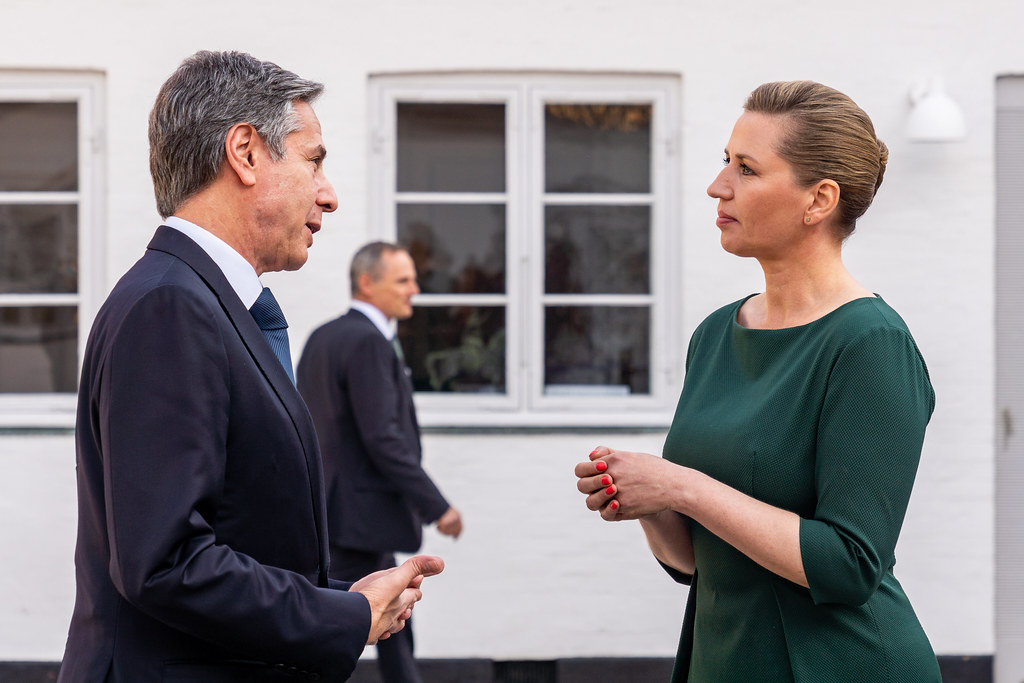
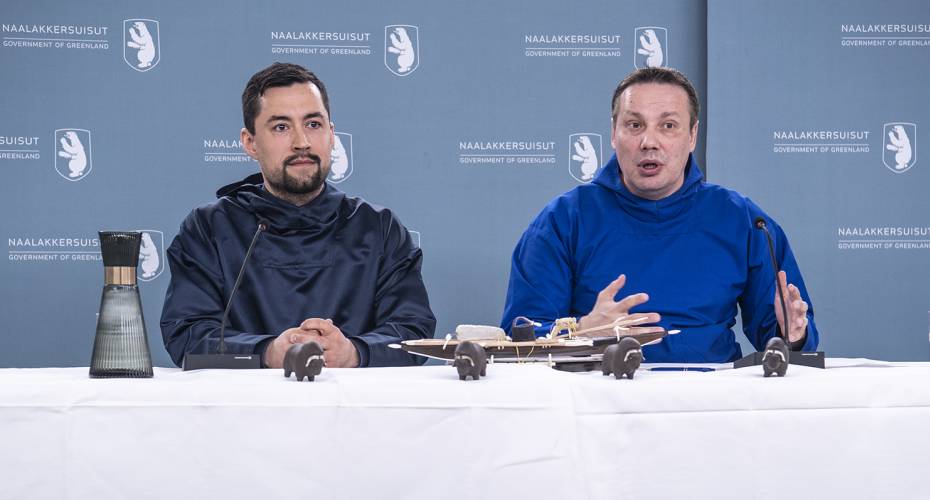
The desires of President Donald Trump in Greenland have taken credibility in recent days following the kidnapping of Venezuelan President Nicolas Maduro and his wife on January 3, illustrating a reaffirmation of an imperialist and interventionist aim freeing himself from international law. Following the intervention in Venezuela, Kate Miller, the wife of the deputy chief of staff of the White House shared a photo of Greenland against a background of the American flag with the caption “soon” (Sermitsiaq, January 4). Deputy Chief of Staff Stephen Miller himself claimed that Greenland should be part of the United States (Sermitsiaq, January 5). The White House would actively develop acquisition plans, including diplomatic, economic and military measures, calling the autonomous territory a “national security priority” and thus reviving an idea long considered rhetorical (High North News, January 7). This Trumpian obsession goes back to the first administration but gains in acuity following the US intervention in Venezuela, and while the use of the U.S. military “is still an option” according to the White House (BBC, January 7). At present, the existing defense agreements already allow the United States to increase its military presence, now limited to about 200 soldiers at the Pituffik base, in the northwest of the territory, which has a ballistic missile detection radar, as well as one of the control centers of the US military satellite network. Silent and then conciliatory after the abduction of Nicolas Maduro, Emmanuel Macron and six other leaders and heads of government of NATO member countries signed a joint declaration affirming that “it is up to Denmark and Greenland, and on their own, to decide on the issues concerning Denmark and Greenland” (SermitsiaqSermitsiaq, January 6). The foreign ministers of the Nordic countries (Finland, Sweden, Norway and Iceland) also defended the self-determination of Greenland and Denmark (Sermitsiaq, 6 January). Altinget underlines the weakening of European positions vis-à-vis international law: “We cannot defend international law in Ukraine and accept its collapse in Venezuela or Gaza. We cannot talk about sovereignty in the Baltic Sea and ignore it in the Caribbean.” (Altinget, January 5). Naalakkersuisut President Jens-Frederik Nielsen said in a statement to Trump that: “This is not how we address a people that has repeatedly shown responsibility, stability and loyalty. Too much, that’s too much. No more pressure. No more insinuations. No more annexation fantasies. We are open to dialogue. We are open to discussion.” (SermitsiaqSermitsiaq, January 4). Earlier in December, Donald Trump appointed a new special envoy to Greenland, the Republican governor of Louisiana state, Jeff Landry. The latter had written on X that it is an honour for him to assume the mission of integrating Greenland into the United States, already triggering a new round of condemnation from Danish, Greenlandic and European representatives (Sermitsiaq, 22 December). While responses to US threats have remained largely rhetorical, Greenland MP Aaja Chemnitz (IA) at the Folketing is now calling on Greenland and Denmark to take concrete steps, including military action, on the preparation and protection of Greenland (Sermitsiaq, 5 January). On the technological front, Starlink’s recent refusal to benefit European satellite solutions illustrates the growing politicization of digital infrastructures (Eye on the Arctic, December 10). In addition, on the climate front, the Arctic Report Card reports that the last ten years have been the ten warmest on record in the Arctic, while the Greenland ice sheet has continued to lose hundreds of billions of tonnes of ice (Hign North News, December 17). Finally, earlier this month, the Danish government announced that it had reached an agreement in Parliament to pay individual compensation to Greenlandic women who were victims of a forced birth control campaign (Eye on the Arctic, 10 December).

1.6 billion for Greenland, UID’s Apologises & Arctic Light 2025… September’s Wrap Up

Mid-September, Greenland and Denmark signed a framework agreement for infrastructure development in Greenland. Over the next four years, the Danish government will allocate DKK 1.6 billion to initiatives and investments in Greenland, including ports, airports, and healthcare. In particular, the agreement provides for Denmark to finance the construction of a new regional runway in Ittoqqortoormiit, the northernmost town on the east coast, which celebrated its 100th anniversary in early September (Sermitsiaq, September 21). The construction of a deep-water port in Qaqortoq, in the south of the country, is also planned (High North News, September 17). Also in mid-September, the Danish Social Appeals Commission overturned the decision of the Children and Youth Committee to forcibly remove Ivana Nikoline Brønlund’s daughter at birth (Sermitsiaq, September 22). While discrimination against Greenlanders has persisted in recent years (DR, September 25), the issue of historical reparations has also been in the news: on September 24, Danish Prime Minister Mette Frederiksen issued an official apology in Nuuk to Greenlandic women who were victims of forced contraception campaigns between 1966 and 1991 (Sermitsiaq, September 24). This long-awaited gesture is part of a process of recognition of colonial violence and reconciliation. On the security front, Denmark led the Arctic Light 2025 military exercise from September 9 to 19, bringing together more than 550 soldiers from five European countries for joint maneuvers on Greenlandic territory (DR, September 14). The exercise aimed to increase collective preparedness in the Arctic, against a backdrop of growing tensions with the United States and concerns about Russian activity. Finally, the Greenlandic parliament is considering further increasing the tax on cruise ships (currently 50 kroner per passenger, compared to 525 in 2008) in order to curb the growth of cruise tourism and derive greater benefit from it (Sermitsiaq, September 30).

Revue d’octobre : nouvelle coalition, représentation à l’OTAN et premier discours en Kalaallisut au Folketing

English below

A la suite de la réélection d’Erik Jensen à la tête du Siumut cet été, Mete B. Egede (IA) a formé un nouveau gouvernement de coalition avec le Siumut, dans lequel chacun des deux partis se partage les portefeuilles ; Erik Jensen sera chargé des finances. Le nouvel accord de coalition s’appuie sur quatre point-clés : le soutien au système de santé publique qui reste défaillant et qui souffre de sous-effectifs, une réforme de la taxation notamment en lien avec le tourisme, le désir partagé de construire l’indépendance par la création d’un département pour l’indépendance et, finalement, une stratégie pour le développement des matières premières et l’exploitation minière (Altinget, 2 octobre). A l’échelle internationale, des représentants groenlandais ont participé pour la première fois à la réunion de l’OTAN qui s’est tenue à Copenhague, ce qui démontre, selon Pele Broberg, un acte de reconnaissance vis-à-vis du Groenland, qui se positionne comme un acteur stratégique en Arctique (Sermitsiaq, 7 octobre). Le Groenland a également officiellement mis en place une représentation à Beijing, au cours de la visite de la ministre des Affaires étrangères et pour l’indépendance, Vivian Motzfeldt (Sermitsiaq, 20 octobre, Sermitsiaq, 23 octobre). Au Danemark, après la rentrée du Folketing, Markus E. Olsen, suppléant d’Aki-Matilda Høegh-Dam a tenu un discours historique, le premier en kalaallisut (groenlandais de l’Ouest) au sein de l’hémicycle. Il a notamment souligné : “même dans notre propre pays, nous sommes traités comme des étrangers, car le danois est parlé principalement dans les administrations publiques” (Sermitsiaq, 5 octobre). Sur le plan régional, le Canada et le Groenland ont signé une lettre d’intention sur une aire marine de conservation dans l’Arctique. Pour Sara Olsvig, présidente de l’Inuit Circumpolar Council, “cette initiative offre une occasion unique pour renforcer conjointement la conservation marine menée par les Inuit et élaborer de nouvelles approches dans lesquelles les Inuit participent à la gouvernance marine et à la définition des opportunités futures” (Eye On the Arctic, 19 octobre, Sermitsiaq, 20 octobre). L’ICC a par ailleurs enjoint le Groenland de révoquer sa réserve territoriale et d’adhérer à l’Accord de Paris, lequel a constitué un tournant dans la participation des organisations autochtones (Sermitsiaq, 10 octobre).

– October review: new coalition, NATO representation and first speech in Kalaallisut at the Folketing

Following Erik Jensen’s re-election as Siumut leader this summer, Mete B. Egede (IA) has formed a new coalition government with Siumut, in which both parties share portfolios; Erik Jensen will be in charge of finance. The new coalition agreement is based on four key points: support for the public health system, which remains deficient and suffers from understaffing; tax reform, particularly in relation to tourism; the shared desire to build independence by creating a department for independence; and, finally, a strategy for the development of raw materials and mining (Altinget, October 2). Internationally, Greenlandic representatives took part for the first time in the NATO meeting in Copenhagen, which Pele Broberg sees as an act of recognition of Greenland’s position as a strategic player in the Arctic (Sermitsiaq, October 7). Greenland also officially set up a representation in Beijing, during the visit of the Minister for Foreign Affairs and Independence, Vivian Motzfeldt (Sermitsiaq, October 20, Sermitsiaq, October 23). In Denmark, Markus E. Olsen, Aki-Matilda Høegh-Dam’s deputy, made a historic speech after the Folketing was called back into session, the first in Kalaallisut (West Greenlandic) to be given in the hemicycle. He pointed out that “even in our own country, we are treated as foreigners, as Danish is spoken mainly in public administration” (Sermitsiaq, October 5). On a regional level, Canada and Greenland have signed a letter of intent for a marine conservation area in the Arctic. For Sara Olsvig, President of the Inuit Circumpolar Council, “this initiative offers a unique opportunity to jointly strengthen Inuit-led marine conservation and develop new approaches in which Inuit participate in marine governance and in defining future opportunities” (Eye On the Arctic, October 19, Sermitsiaq, October 20). The ICC also urged Greenland to revoke its territorial reserve and join the Paris Agreement, which marked a turning point in the involvement of indigenous organizations (Sermitsiaq, October 10).

Revue de juin : Contact Committe, Siumut, Aki-Matilda Høegh-Dam et relations dano-groenlandaises

English below

Le Contact Committee, établi en 2021 comme un forum d’échanges régulier entre le Danemark, le Groenland et les îles Féroé, s’est réuni à Nuuk au début du mois, et a notamment permis de mettre sur la table les tensions dano-groenlandaises exacerbées ces dernier mois (voir ici), de répondre aux exigences de transparence du parlement groenlandais vis-à-vis de la politique étrangère danoise ou encore d’avancer sur la mise en œuvre de l’accord de défense (DR, 6 juin ; DR, 7 juin). La première ministre danoise, Mette Frederiksen, dont le nom est de plus en plus cité comme potentielle future secrétaire générale de l’OTAN (Sermitsiaq, 5 juin), et le ministre des affaires étrangères, Lars Løkke Rasmussen, étaient notamment présents aux côtés de Múte B. Egede et son homologue féroïen, Aksel V. Johannesen. Après plusieurs mois de contestations concernant la nomination d’un ambassadeur de l’Arctique (voir ici), le gouvernement groenlandais a ouvert des discussions quant à la nomination d’un nouvel ambassadeur coopté par le Groenland et/ou par une distribution des postes plus favorables au Groenland à l’avenir (Sermitsiaq, 9 juin). En matière de défense, Troels Lund Poulsen, le ministre danois de la défense, a réaffirmé la centralité de l’Arctique tout en regrettant l’absence de stratégie commune précise à ce stade. L’Arctic capacity package de 2021 prévoyait de créer une formation à la défense sur le sol groenlandais, qui n’a pas été mise en œuvre. Dans l’accord de défense, qui a été présenté par le ministère de la défense à la fin du mois de mai, il est proposé de dépenser 143 milliards de couronnes jusqu’en 2033 (KNR, 7 juin). Sur le plan national, les élections à la tête du parti Siumut pourraient remettre en cause la coalition au pouvoir, et provoquer de nouvelles élections dans les semaines qui viennent, en particulier en cas de victoire d’Aki-Matilda Høegh-Dam (Sermitsiaq, 15 juin). Par ailleurs, cette dernière, élue au Folketing, le parlement danois, vient d’obtenir une réponse favorable de la part de la présidence du parlement à sa demande de reconnaître le féroïen et le groenlandais comme langues officielles au parlement (Sermitsiaq, 14 juin). Après les critiques de Múte B. Egede (voir ici), l’équipe de recherche qui mènera les investigations sur la spiralkampagnen a été mise en place, et devrait rendre ses résultats d’ici deux ans (Sermitsiaq, 30 mai). A ce sujet, la parlementaire groenlandaise au Folketing, Aaja Chemnitz a appelé le gouvernement danois à d’ores et déjà présenter des excuses (Sermitsiaq, 1 juin). En visite au Groenland, Mette Frederiksen, a déclaré : “Je n’ai aucun doute que de graves crimes et erreurs ont été commis dans les relations dano-groenlandaises au fil des ans, même si nous sommes aujourd’hui dans une situation complètement différente” (DK, 7 juin). A ce jour, 163 femmes concernées ont décidé de saisir la justice (Sermitsiaq, 24 juin). Un projet de recherche qui doit faire la lumière sur l’histoire du Danemark au Groenland a également été mise en place en fin de mois (DR, 22 juin).  Enfin, suite à la démission de Kuupik Kleist de son poste de président de Inuit Circumpolar Council (ICC) Greenland, notamment en raison des coupes budgétaires décidées par l’Inatsisartut, le parlement groenlandais, Hjalmar Dahl a été élu à la tête de l’organisation qu’il avait déjà dirigée de 2018 à 2022 (Sermitsiaq, 19 juin).

– June review: Contact Committe, Siumut, Aki-Matilda Høegh-Dam and Danish-Greenish relations

The Contact Committee, established in 2021 as a forum for regular exchanges between Denmark, Greenland and the Faroe Islands, met in Nuuk at the beginning of the month, and provided an opportunity to discuss the Danish-Greenlandic tensions that have been exacerbated in recent months (see here), to respond to the Greenlandic parliament’s demands for transparency with regard to Danish foreign policy and to make progress on the implementation of the defence agreement (DR, 6 June; DR, 7 June). The Danish Prime Minister, Mette Frederiksen, whose name is being mentioned more and more as a potential future Secretary General of NATO (Sermitsiaq, 5 June), and the Minister for Foreign Affairs, Lars Løkke Rasmussen, were present alongside Múte B. Egede and her counterpart from Finland. Egede and his Faroese counterpart, Aksel V. Johannesen. After several months of disputes over the appointment of an Arctic ambassador (see here), the Greenland government has opened discussions on the appointment of a new ambassador co-opted by Greenland and/or a distribution of posts more favourable to Greenland in the future (Sermitsiaq, 9 June). On defence, Troels Lund Poulsen, the Danish Defence Minister, reaffirmed the centrality of the Arctic, while regretting the absence of a precise common strategy at this stage. The 2021 Arctic capacity package provided for the creation of defence training on Greenlandic soil, but this has not been implemented. In the defence agreement, which was presented by the Ministry of Defence at the end of May, it is proposed to spend 143 billion kroner until 2033 (KNR, 7 June). At national level, the Siumut party leadership elections could call into question the coalition in power, and provoke new elections in the coming weeks, particularly if Aki-Matilda Høegh-Dam wins (Sermitsiaq, 15 June). Moreover, Høegh-Dam, who was elected to the Folketing, the Danish parliament, has just received a favourable response from the parliamentary presidency to her request to have Faroese and Greenlandic recognised as official languages in parliament (Sermitsiaq, 14 June). Following criticism from Múte B. Egede (see here), the research team that will carry out the investigations into spiralkampagnen has been set up, and is expected to deliver its findings within two years (Sermitsiaq, 30 May). Greenland’s member of parliament in the Folketing, Aaja Chemnitz, has called on the Danish government to apologise (Sermitsiaq, 1 June). On a visit to Greenland, Mette Frederiksen said: “I have no doubt that serious crimes and mistakes have been committed in Danish-Greenlandic relations over the years, even though we are now in a completely different situation” (DK, 7 June). To date, 163 of the women concerned have decided to go to court (Sermitsiaq, 24 June). A research project to shed light on Denmark’s history in Greenland.

Revue de mars : représentante à l’OTAN, Ambassadeur de l’Arctique contesté, registre inuk.

English below

Lida Skifte Lennert, ex-représentante groenlandaise à Bruxelles et au Danemark, sera la première diplomate groenlandaise à la représentation permanente du Danemark auprès de l’OTAN (Sermitsiaq, 20 mars ; DR, 21 mars). Par ailleurs, dans le cadre d’un remaniement large des ambassadeurs et ambassadrices danoises, l’actuel ambassadeur du Danemark dans l’Arctique, Thomas Winkler est remplacé par Tobias Elling Rehfeld, jusqu’ici ambassadeur en Afrique du Sud (Altinget, 3 mars).Le profil de ce dernier est critiqué pour son manque d’ancrage avec le Groenland ; pour plusieurs responsables politiques groenlandaises, cette nomination fait fi de l’histoire coloniale et de la nécessité de nommer des Groenlandaises et des Groenlandais en particulier sur les questions arctiques (Sermitsiaq, 15 mars ; Altinget, 20 mars). À la suite de la visite de l’envoyé spécial de l’ONU, Francisco Cali-Tzay, la création d’un registre inuk basé sur le principe d’auto-identification (déclaration de l’ONU sur les droits des peuples autochtones) est de nouveau dans le débat public (Sermitsiaq, 22 février). Au Folketing, le Parlement danois, le ministre danois des Affaires étrangères Lars Løkke Rasmussen, s’y est montré résolument défavorable (Sermitsiaq, 17 mars).

– March Review: NATO Representative, Contested Arctic Ambassador, Inuk Register.

Lida Skifte Lennert, former Greenlandic representative in Brussels and Denmark, will be the first Greenlandic diplomat at Denmark’s permanent representation to NATO (Sermitsiaq, 20 March; DR, 21 March). Also, in a wide-ranging reshuffle of Danish ambassadors, Denmark’s current ambassador to the Arctic, Thomas Winkler, is being replaced by Tobias Elling Rehfeld, previously ambassador to South Africa (Altinget, 3 March). The latter’s profile is criticised for his lack of connection with Greenland; for several Greenlandic politicians, this appointment ignores the colonial history and the need to appoint Greenlanders in particular on Arctic issues (Sermitsiaq, 15 March; Altinget, 20 March). Following the visit of UN special envoy Francisco Cali-Tzay, the creation of an Inuk register based on the principle of self-identification (UN Declaration on the Rights of Indigenous Peoples) is again in the public debate (Sermitsiaq, 22 February). In the Folketing, the Danish Parliament, the Danish Minister of Foreign Affairs Lars Løkke Rasmussen has been strongly against it (Sermitsiaq, 17 March).

Le Danemark entend conduire une stratégie de défense en coopération plus étroite avec les États-Unis en Arctique (bilingual)

English below

Sur fond de tensions géopolitiques accrues, la nouvelle stratégie de politique étrangère et de sécurité, qui fait de l’Arctique l’une de ses priorités, confirme que le Danemark se positionne pour une présence accrue de l’OTAN en Arctique, et envisage notamment le stationnement de troupes étrangères au Groenland. 

L’Arctique est l’une des principales priorités de la politique étrangère et de sécurité du Danemark. La nouvelle stratégie affirme que l’Arctique « représente de plus en plus un champ de bataille géopolitique », ce qui implique de repenser les relations à l’OTAN. Autrefois sceptique quant à l’implication de l’OTAN dans la région, le Danemark semble désormais plus enclin à s’en rapprocher, sur fond de réarmement russe (dans la région). Si la nouvelle stratégie avance la coopération étroite entre le Danemark, les îles Féroé et le Groenland, ces derniers n’ont néanmoins pas été pleinement impliqués à ce stade, comme le souligne le premier ministre groenlandais. La Première ministre danoise, Mette Frederiksen, lors de la conférence de presse de présentation de la nouvelle stratégie, s’est félicitée “que les États-Unis aient tendu la main au Danemark avec une proposition de coopération bilatérale en matière de défense”. La stratégie stipule d’ailleurs que les Etats-Unis sont un partenaire unique et crucial pour le Danemark. Pour l’Ambassadeur de Russie au Danemark, Vladimir Barbin, “il s’agit d’une confirmation claire de la voie des États-Unis et de l’OTAN vers la sécurisation de la domination militaire dans le monde”. Le futur accord de défense américano-danois prévoit la possibilité de stationner des troupes américaines et de stocker des armes au Danemark, ainsi que l’utilisation des infrastructures danoises pour les forces aériennes et les navires militaires américains.

Denmark to pursue a more cooperative defense strategy with the United States in the Arctic

Against the backdrop of heightened geopolitical tensions, the new foreign and security policy strategy, which makes the Arctic one of its priorities, confirms that Denmark is positioning itself for an increased NATO presence in the Arctic, including the stationing of foreign troops in Greenland.

The Arctic is one of Denmark’s top foreign and security policy priorities. The new strategy states that the Arctic “is increasingly a geopolitical battleground,” which implies rethinking relations with NATO. Once sceptical of NATO’s involvement in the region, Denmark now seems more inclined to move closer to it, against the backdrop of Russian rearmament (in the region). While the new strategy calls for close cooperation between Denmark, the Faroe Islands and Greenland, the latter have not been fully involved at this stage, as the Greenlandic Prime Minister points out. The Danish Prime Minister, Mette Frederiksen, at the press conference presenting the new strategy, welcomed “the fact that the United States has reached out to Denmark with a proposal for bilateral defense cooperation. Indeed, the strategy states that the United States is a unique and crucial partner for Denmark. For the Russian Ambassador to Denmark, Vladimir Barbin, “this is a clear confirmation of the path of the United States and NATO towards securing military dominance in the world”. The future U.S.-Danish defense agreement includes the possibility of stationing U.S. troops and storing weapons in Denmark, as well as the use of Danish infrastructure for U.S. air forces and military ships.

Sources : The Arctic InstituteSermitsiaqSermitsiaq.