Inuit Women’s Summit, Minerals, Submarine Cables & Satellites… October’s Wrap Up

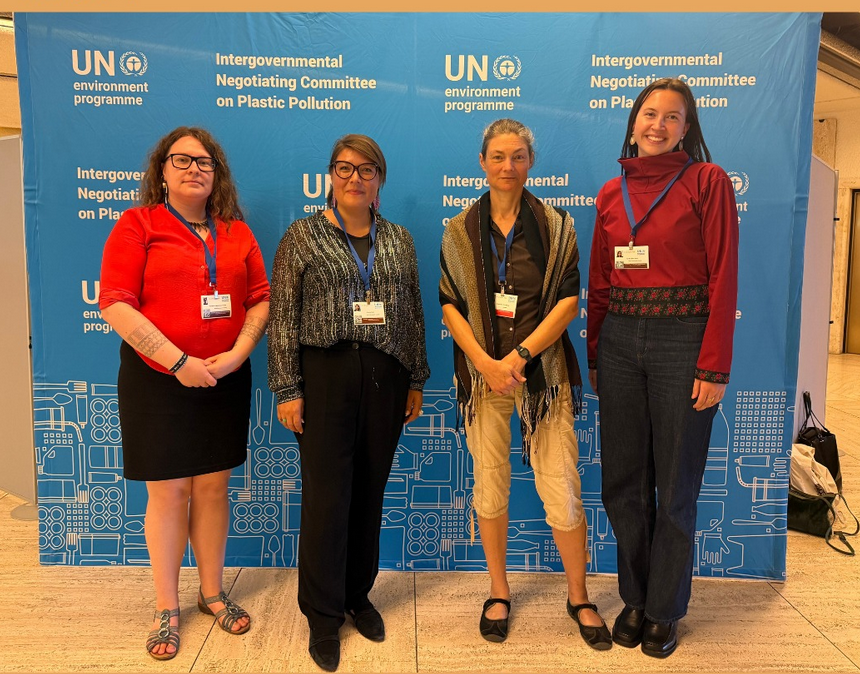
In Greenland, while Denmark has apologized and is preparing a compensation plan for women and girls who were victims of the forced sterilization program until 1991 (Sermitsiaq, October 22), the Inuit Circumpolar Council is organizing the first Inuit Women’s Summit in Sisimiut at the end of October. Its president, Sara Olvig, emphasized: “We are all deeply affected by the colonial policies that targeted Inuit women and girls.” More broadly, the Summit will focus on three themes: the rights and roles of Inuit women, the prevention of violence and the improvement of safety, and capacity building through culture (Eye on the Arctic, October 21). In early October, Prime Minister Jens-Frederik Nielsen addressed the European Parliament in Strasbourg. He emphasized the importance of the partnership with the EU and the potential for increased cooperation in areas such as critical raw materials and renewable energy (High North News, October 9). The Danish Export and Investment Fund (EIFO) announced a loan of 39 million kroner to the mining company Green Roc, which is working to reopen the Amitsq graphite mine in southern Greenland, last operated between 1915 and 1922 (Sermitsiaq, October 22). Also in the south, following the abandonment of the Kuannersuit mining project, the dispute between the Greenlandic government and Australian mining company Energy Transition Minerals has just been settled by an arbitration tribunal in favor of the Greenlandic government. The dispute had also been brought by the Australian company before the High Court of Greenland and the Copenhagen Court, which have not yet issued their verdicts (DR, October 29). On the defense front, as part of their efforts to strengthen their presence in the Arctic, Denmark and Greenland have agreed to build a dedicated naval dock in Nuuk (Eye on the Arctic, October 14). Also in this context, a new submarine cable worth 3 billion kroner is included in a new defense agreement, which will complement the two existing cables and Greenland’s infrastructure, which is considered highly vulnerable (Sermitsiaq, October 10). In addition, Tusass, Greenland’s autonomous telecommunications company, has signed an agreement with the French company Eutelsat to provide better internet access in regions without submarine cables, namely Tasiilaq and Ittoqqortoormiit in the east and Qaanaaq in the north. While the territory is considering liberalizing the telecommunications market, the importance of Greenland’s critical infrastructure being controlled by Greenland itself was recently reaffirmed, and a partnership with Starlink, which had been rumored, was ruled out (DR, October 20).


1.6 billion for Greenland, UID’s Apologises & Arctic Light 2025… September’s Wrap Up

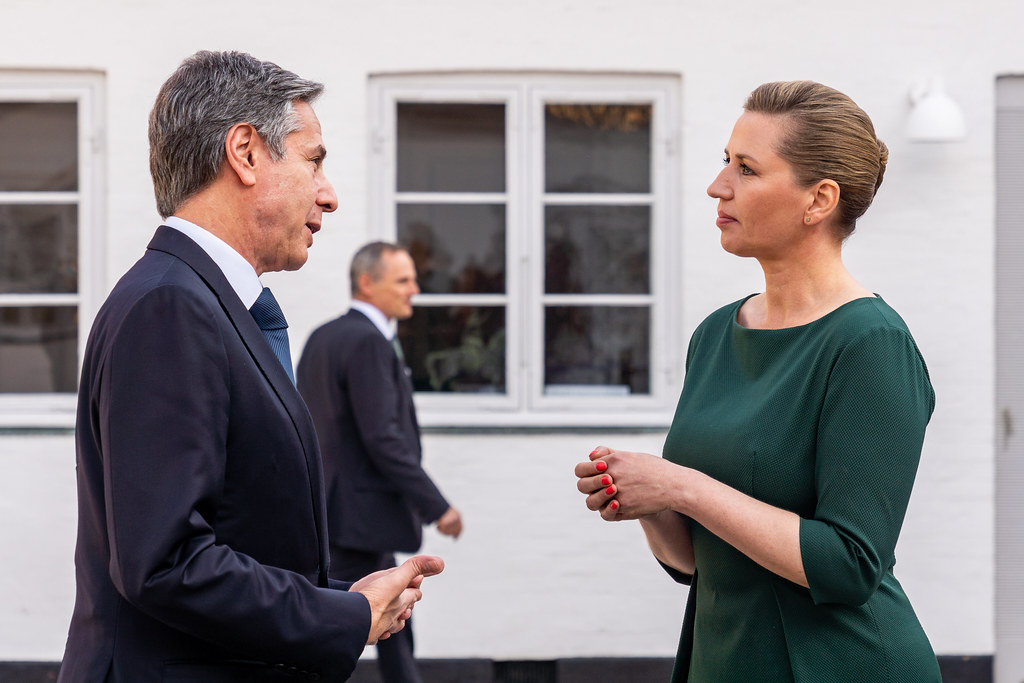
Mid-September, Greenland and Denmark signed a framework agreement for infrastructure development in Greenland. Over the next four years, the Danish government will allocate DKK 1.6 billion to initiatives and investments in Greenland, including ports, airports, and healthcare. In particular, the agreement provides for Denmark to finance the construction of a new regional runway in Ittoqqortoormiit, the northernmost town on the east coast, which celebrated its 100th anniversary in early September (Sermitsiaq, September 21). The construction of a deep-water port in Qaqortoq, in the south of the country, is also planned (High North News, September 17). Also in mid-September, the Danish Social Appeals Commission overturned the decision of the Children and Youth Committee to forcibly remove Ivana Nikoline Brønlund’s daughter at birth (Sermitsiaq, September 22). While discrimination against Greenlanders has persisted in recent years (DR, September 25), the issue of historical reparations has also been in the news: on September 24, Danish Prime Minister Mette Frederiksen issued an official apology in Nuuk to Greenlandic women who were victims of forced contraception campaigns between 1966 and 1991 (Sermitsiaq, September 24). This long-awaited gesture is part of a process of recognition of colonial violence and reconciliation. On the security front, Denmark led the Arctic Light 2025 military exercise from September 9 to 19, bringing together more than 550 soldiers from five European countries for joint maneuvers on Greenlandic territory (DR, September 14). The exercise aimed to increase collective preparedness in the Arctic, against a backdrop of growing tensions with the United States and concerns about Russian activity. Finally, the Greenlandic parliament is considering further increasing the tax on cruise ships (currently 50 kroner per passenger, compared to 525 in 2008) in order to curb the growth of cruise tourism and derive greater benefit from it (Sermitsiaq, September 30).

French Consulate, Economic Crisis, Eastern Independence & Protest in Nuuk… Summer’s Wrap Up

Following President Macron’s visit to Greenland last June, the French ambassador to Denmark, Christophe Parisot, is considering opening a French consulate general in Nuuk in 2026, following in the footsteps of the European Union (Sermitsiaq, August 13). In July, as part of the Danish presidency of the EU Council, a delegation of European ambassadors and senior officials visited Ilulissat and Nuuk to strengthen cooperation with Greenland on climate, security, and raw materials issues (Sermitsiaq, July 31). Meanwhile, in an interview with Reuters, the head of the Arctic Command said that Greenland is not that difficult to defend, and that its defense is under control (Sermitsiaq, June 27). That being said, Danish Defence Minister Troels Lund Poulsen has affirmed his commitment to increasing the Danish military presence in Greenland through the construction of a new headquarters for the Arctic Command, as well as the creation of a Greenlandic military unit under the Arctic Command, as part of the Arctic Basic Training, which is located in Kangerlussuaq (DR & DR, August 18). While in Nuuk, he met with Foreign Minister Vivian Motzfeldt and German Deputy Defence Minister Dr. Nils Schmid to work on strengthening cooperation between the three countries in light of developments in security policy. On this occasion, the German supply ship “Berlin” docked in Nuuk (Sermitsiaq, August 18). At the national level, for the former prime minister, and now Minister of Finance, Múte B. Egede, “Greenland is entering an economic crisis,” predicting budget cuts of 864 million kroner over the next four years, notably through a reform of the pension system (Altinget, August 19). The minister attributes, in part, the current economic difficulties in Greenland to the lack of manpower and the weakening of Greenland’s development potential resulting from the campaign of forced sterilization of Greenlandic women and girls in the 1960s (DR, August 19). In this regard, the investigation, which is to reveal the consequences of forced sterilizations and contraception cases from the 1960s to the present day, is running behind schedule and is not expected to be published before the end of January 2026 (Sermitsiaq, June 28). While Greenlandic independence has occupied a central place in recent debates, a new party has just been created in Tasiilaq to defend this time the independence of the eastern part of Greenland (Party for an Independent Eastern Greenland, PSØ.G.). On May 18, a large demonstration took place in Tasiilaq against politicians from the west coast. Anette Nicolaisen, one of the party’s founders, summarized: “We absolutely cannot bear that West Greenland says: ‘Denmark, you are not listening to us, Denmark, you are doing all these things against us,’ and when we then say, you are doing exactly the same thing to us, nobody does anything” (DR, August 2). In Denmark, Ivana Nikoline Brønlund, 18, from Greenland, has just had her child forcibly taken from her at birth by the municipality of Høje-Taastrup. While the removal of Greenlandic children from their families has been the subject of widespread controversy since last year, and the Danish government has finally decided to end the controversial FKU psychological test and create a special unit (VISO), protests have taken place in Nuuk (Sermitsiaq, August 13). It appears that the municipality of Høje-Taastrup has not complied with the new legislation (Sermitsiaq, August 16). Today, several dozen cases are being re-evaluated in light of criticism of institutionalized discrimination through FKU tests (DR, August 10).


Arctic Council, US Intelligency, Protest for Eastern citizens… May’s Wrap-Up

On May 12, Greenland assumed the leadership of the Arctic Council on behalf of the Kingdom of Denmark. After a long power struggle between Nuuk and Copenhagen, Vivian Motzfeldt, Greenland’s foreign minister, took over the chairmanship of the Council after two years of Norwegian presidency marked by a desire to foster regional cooperation. “I must say that I think it is entirely appropriate that Greenland takes this on behalf of the Kingdom, as this is the Arctic part of the Kingdom of Denmark,” the Norwegian foreign minister said at the handover session in Tromsø (Altinget , May 13; Sermitsiaq, May 18). Ahead of the handover, the 14th meeting of the Arctic Council was held virtually. The eight member states of the Council and its six permanent participating organizations agreed on a joint statement, which reiterates the commitment to maintaining peace, stability and cooperation in the Arctic, and to maintaining the Arctic Council as the main tool for this commitment (High North News, May 13). The Kingdom of Denmark, whose Senior Arctic Official (SAO) will be Greenlandic Arctic Ambassador Kenneth Høegh, presented the roadmap for its presidency (2025-2027) which is divided into five themes: indigenous peoples and Arctic societies, sustainable economic development and energy transition, ocean, climate change in the Arctic and biodiversity (Sermitsiaq, May 12). In addition, Vivian Motzfeldt met with the EU’s foreign and security policy chief, Kaja Kallas. The raw materials sector was highlighted as an important area for developing cooperation, with Vivian Motzfeldt stressing that “in these difficult times Greenland is facing, it is important to approach reliable partners who share the same values” (Sermitsiaq, 18 May). The foreign minister also met with her French counterpart Jean-Noël Barrot, stating that “France was one of the first countries to significantly express its support for the Greenlandic population” (Sermitsiaq, 21 May); in January, Jean-Noël Barrot confirmed that France was at Denmark’s disposal if it requested support (Sermitsiaq, 22 May). While the Danish-American defense agreement providing for the possibility of stationing American soldiers on Danish soil at the Karup, Skrydstrup and Aalborg bases was discussed in the Folketing (Sermitsiaq, May 15), Foreign Minister Lars Løkke Rasmussen, like the Greenlandic Prime Minister, deemed “unacceptable” the United States’ desire to intensify its espionage activities in Greenland and Denmark, revealed by the Wall Street Journal (Wall Street Journal, May 6; Sermitsiaq, May 8; Sermitsiaq, May 15). The Pentagon is also considering transferring Greenland from the United States European Command (EUCOM) to the United States Northern Command (NORTHCOM). Beyond this unilateral and partly symbolic measure, the White House is also studying the possibility of offering Greenland a zone of free association with the United States, a status hitherto reserved for small island nations in the Pacific Ocean, notably the Marshall Islands and Micronesia (Reuters , May 9). In early May, Nordic defense ministers signed a revised memorandum of understanding on cooperation at a meeting in Rovaniemi. The new version incorporates the significant development of NORDEFCO (Nordic Defense Cooperation) in recent years, particularly following Russia’s war against Ukraine and Finland’s and Sweden’s accession to NATO (High North News, May 12). Regionally, while Greenlandic authorities have repeatedly protested their underrepresentation in regional governance forums, Prime Minister Jens-Frederik Nielsen participated in the Nordic ministerial meeting (Sermitsiaq, May 26). Finally, demonstrations took place in Tasiilaq and Nuuk to denounce the plight of residents of the country’s east coast who face chronic underinvestment, political marginalization and numerous stigmatizations (Sermitsiaq, May 15; Sermitsiaq, May 22; Sermitsiaq, May 22). 

New Government, Visit of King Frederik X, Power Outage from Spain to Kalaallit Nunaat… April’s Wrap-Up

On April 7, the Inatsisartut, the Greenlandic parliament, officially swore in 33-year-old Jens-Frederik Nielsen as prime minister, leading a coalition that includes Demokraatit, Inuit Ataqatigiit, Siumut, and Atassut, excluding Naleraq, which advocates for faster independence. This broad coalition, which represents 75% of the vote, pledges to strengthen infrastructure, particularly on the east coast, improve the health system, and move toward independence, while deferring discussions on controversial issues such as taxation and the exploitation of natural resources to later agreements (KNR, April 7). Earlier, even before the inauguration of the new prime minister, Danish Prime Minister Mette Frederiksen visited Greenland to strengthen relations between the Danish and Greenlandic governments, after the United States significantly escalated its rhetoric regarding the country’s desire to take control of Greenland (DR, April 3; High North News, April 9). In this regard, following J.D. Vance at Pittufik in late March, Susannah Meyers, commander of the US space station, was fired due to a “lack of confidence in her ability to lead” following a critical email to the vice president (DR, April 11). Regionally, while Greenland suspended its participation in the Nordic Council last year, the Nordic governments are now considering granting full membership status to Greenland, the Faroe Islands, and Åland (Sermitsiaq, April 22). That said, like the former prime minister, Jens-Frederik Nielsen remains skeptical about the short-term possibility of seeing Greenland acquire an expanded role within the Council (Sermitsiaq, April 23). The latter also paid a visit to Copenhagen to strengthen relations with Denmark, stating that Greenland would never be for sale and criticizing disrespectful statements from the United States. Following his meeting with Mette Frederiksen, the latter indicated that Denmark was ready to renegotiate the autonomy agreement and also wishes to invest more in Greenland, while the possibility of a reconciliation commission was put forward (Sermitsiaq, April 27). Also in response to American ambitions, King Frederik X of Denmark visited Greenland at the end of April to reaffirm the historical ties between Denmark and his autonomous territory (Eye on the Arctic, April 29). Despite calls for independence and recent tensions, the king enjoys widespread popularity within the autonomous territory, which he knows well and visited several times before his inauguration (DR, April 29). In Copenhagen, the Danish parliament adopted the bill that puts an end to the use by municipalities of psychological tests (FKU) deemed discriminatory against Greenlandic families (Sermitsiaq, April 25). However, earlier in the month, the appeal of Keira Alexandra Kronvold, the Greenlandic mother who had brought these psychological tests to light, was rejected (Sermitsiaq, April 16). At the end of the month, following the massive power outage in Spain, telecommunications services were interrupted for a few hours in isolated communities in Greenland (Sermitsiaq, April 29). Since 2023, the ground station in Maspalomas, Gran Canaria, has played a central role in sending data to satellites that supply the communities of Qaanaaq and surrounding areas, Ittoqqortoormiit and Tasiilaq (Sermitsiaq, April 30). Furthermore, Greenland’s health system remains particularly vulnerable due to staff shortages, which led to the closure of two maternity wards in Qaqortoq and Sisimiut this month (Sermitsiaq , April 16). Finally, on the climate front, 2024 was the third warmest year ever recorded in the Arctic (Sermitsiaq, April 23). 


National and Municipal Elections, Protests Against Trump, JD Vance… March’s Wrap-Up


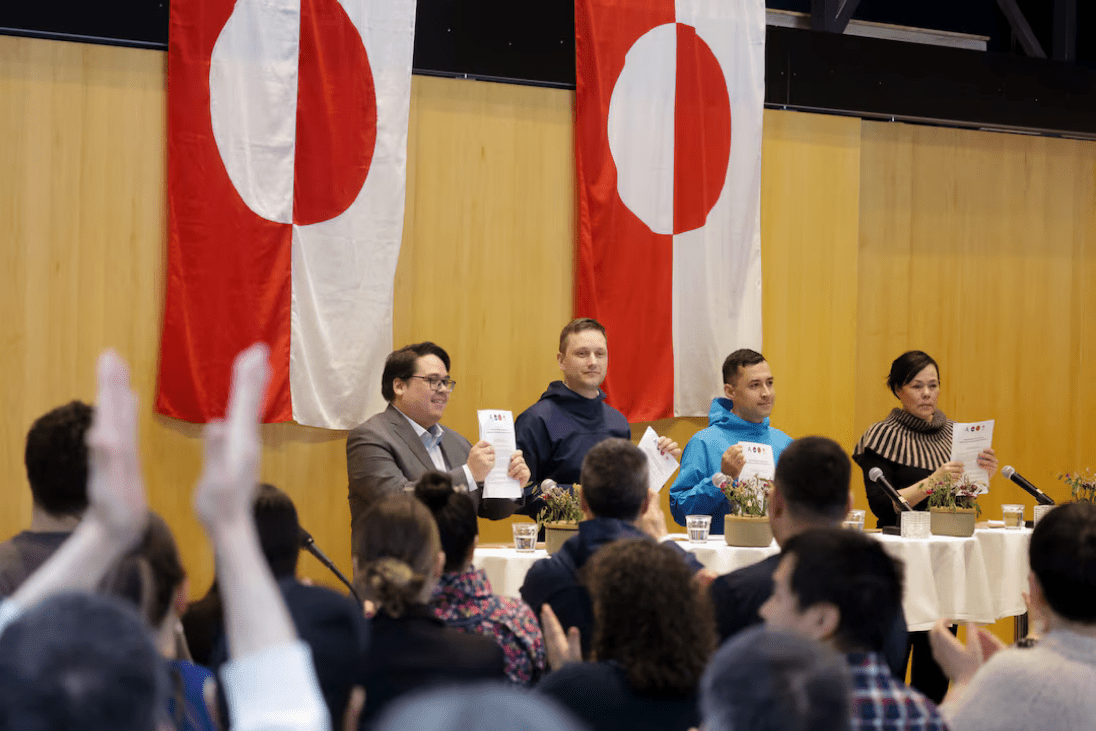
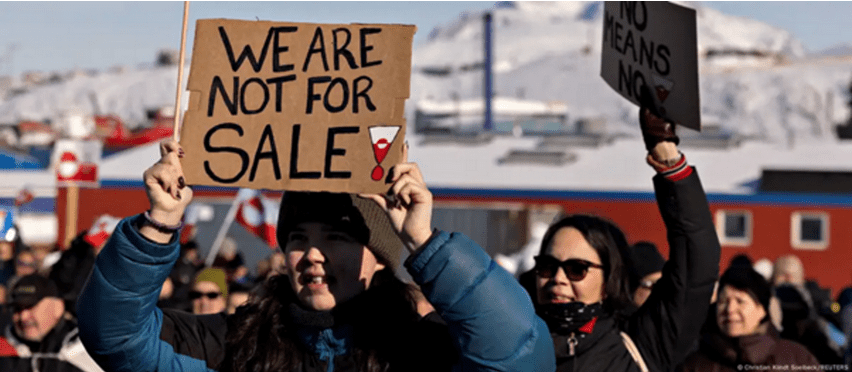
More than 28,000 Greenlanders voted in the March 11 elections to the Inatsisartut, the national parliament, with a turnout of 70.9% (+5 points compared with 2021). A total of six parties competed for the 31 seats in parliament. The social-liberal Demokraatit party (29.9%, 10 seats) (+20.9) came out on top, while the pro-independence Naleraq party won 24.5% of the vote (8 seats) (+12.5). The outgoing coalition of Inuit Ataqatigiit (IA) (15.3%, 7 seats) (-15.3) and Siumut (14.7%, 4 seats) (-14.7) was largely rejected by voters. For its part, Atassut, the only “unionist” party, won 2 seats (7.3% of the vote) (+0.4). Only Qulleq (1.1%), a newly-formed pro-mining, pro-oil extraction party complacent towards Donald Trump, failed to win a seat. The formation of the future government was entrusted to Demokraatit, and its leader Jens Frederik Nielsen, who brought together a broad coalition of all the parties sitting in parliament, with the exception of Naleraq. This coalition agreement, which covers the consolidation of an independence plan, the strengthening of transport, particularly on the east coast, and health, also proposes to defer the most divisive issues, particularly around taxation, raw materials and fisheries, to later agreements (KNR, March 28). On the foreign affairs front, Jens Frederik Nielsen clearly stated the government’s intention to turn its back on Denmark until it can become an independent country (Sermitsiaq, April 1), while he asserted: “Greenland will never be part of the United States. We want to trade. We want a strong national security partnership, of course, but with mutual respect. We will never be for sale and we will never be American” (Reuters, April 1). Parliament will meet on April 7 to approve the coalition agreement, which demonstrates a strong desire for unity in the face of recent external pressure (Sermitsiaq, March 28). Following the coalition agreement, Danish Prime Minister Mette Friederiksen began a three-day visit on April 2, during which she will meet the future Prime Minister (KNR, April 2). This visit has caused a stir within the coalition due to its timing, as the new government has not yet been approved by parliament (KNR, March 31). Earlier, on March 15, a historic demonstration took to the streets of Nuuk, the capital, as well as Sisimiut, the country’s second-largest city, and Qaanaaq, in the north-west of the country, not far from the US military base at Pituffik (formerly Thule) (Sermitsiaq, March 15). A demonstration where numerous signs addressed Trump: “No Means No!” [No means No!], “We Are Not For Sale!” [or “Make America Go Away!” [or “Make America Go Away!] A demonstration described as massive in a country of 57,000 inhabitants, during which many Greenlandic flags were waved by the demonstrators. The demonstration followed Donald Trump’s speech to Congress, in which he reiterated for the umpteenth time since his inauguration that the United States would take control of Greenland “one way or another”, making it clear that he had no intention of letting the autonomous Danish territory down (High North News, March 5). A demonstration with similar slogans also took place on March 31, in front of the American Embassy in Copenhagen (KNR, March 31). This followed on directly from the visit of a US delegation, comprising JD Vance’s wife Usha Vance, US National Security Advisor Mike Waltz, Energy Secretary Chris Wright and Utah Republican Senator Mike Lee, without an official invitation, which further strained diplomatic relations with the USA (KNR, March 28). Although the delegation only visited the US base at Pituffik, and not Nuuk and Sisimiut, Vice President JD Vance joined the delegation at the last minute from March 27 to 29. At a press conference, he declared that Denmark had not “done a good job” for the people of Greenland, nor had it done enough to ensure Greenland’s security (Sermitsiaq , April 1; The Guardian, March 31). Finally, elections for the country’s five municipalities were held on April 1. Siumut, which had largely lost the parliamentary elections, came out on top, while IA lost ground and Demokraatit benefited from the momentum of the parliamentary elections (Sermitsiaq, April 2). The election, which was marked by a feminization of political life (Altinget, April 2), also gave voice to issues that the legislative elections had neglected: the desire for decentralization, education issues and care for the elderly (KNR, April 1).


Oil Spill around Nanortalik, Tsunami, Polar Bears, Merging of Municipalities… September’s Wrap-Up

Following the sinking of the vessel Adolf Jensen, an oil spill of between 15,000 and 20,000 liters of diesel oil occurred in Nanortalik, in the south of the country (DR, September 20). Due to climate change, the occurrence of tsunamis could increase in Kalaallit Nunaat, according to a study that examined the occurrence of a tsunami on the east coast of Kalaallit Nunaat last year (Sermitsiaq, September 13). In addition, a polar bear traveled at least 200 kilometers from Kalaallit Nunaat to Iceland, before being shot by the authorities (DR, September 20). On the domestic front, the merger of municipalities in 2009 has posed major difficulties; in particular, many citizens living outside the main towns of the five main municipalities complain of a lack of local democracy and an over-burdened bureaucracy. A reorganization of the municipalities could be envisaged (Sermitsiaq, September 13). Greenlandic Folketing MP Aki-Matilda Høegh-Dam, who gave a speech in Kalaallisut a year ago, is due to give her speech in her mother tongue again at the opening of the parliamentary session on October 3. However, she has been refused the use of simultaneous interpretation equipment, even though the Folketing has it (DR, September 30). On the subject of the Arctic ambassador, whose appointment had met with profound Greenlandic disagreement last year, the Danish Prime Minister declared that she “wanted to respond” to Kalaallit Nunaat’s wish to have an Arctic ambassador in the country (DR, August 27). Against a backdrop of tension over Kalaallit Nunaat’s in the Nordic Council, Múte B. Egede stated that Kalaallit Nunaat would not participate in the Danish presidency of the Nordic Council of Ministers in 2026 (Altinget, September 12). Meanwhile, more than two months after the arrest of activist Paul Watson, Denmark’s Supreme Court has yet to rule on his detention (DR, October 2). Finally, Air Greenland has announced the creation of new air links between Denmark and Kalaallit Nunaat, with new departures to Nuuk from Aalborg and Billund (DR, September 24).

Revue d’octobre : nouvelle coalition, représentation à l’OTAN et premier discours en Kalaallisut au Folketing

English below

A la suite de la réélection d’Erik Jensen à la tête du Siumut cet été, Mete B. Egede (IA) a formé un nouveau gouvernement de coalition avec le Siumut, dans lequel chacun des deux partis se partage les portefeuilles ; Erik Jensen sera chargé des finances. Le nouvel accord de coalition s’appuie sur quatre point-clés : le soutien au système de santé publique qui reste défaillant et qui souffre de sous-effectifs, une réforme de la taxation notamment en lien avec le tourisme, le désir partagé de construire l’indépendance par la création d’un département pour l’indépendance et, finalement, une stratégie pour le développement des matières premières et l’exploitation minière (Altinget, 2 octobre). A l’échelle internationale, des représentants groenlandais ont participé pour la première fois à la réunion de l’OTAN qui s’est tenue à Copenhague, ce qui démontre, selon Pele Broberg, un acte de reconnaissance vis-à-vis du Groenland, qui se positionne comme un acteur stratégique en Arctique (Sermitsiaq, 7 octobre). Le Groenland a également officiellement mis en place une représentation à Beijing, au cours de la visite de la ministre des Affaires étrangères et pour l’indépendance, Vivian Motzfeldt (Sermitsiaq, 20 octobre, Sermitsiaq, 23 octobre). Au Danemark, après la rentrée du Folketing, Markus E. Olsen, suppléant d’Aki-Matilda Høegh-Dam a tenu un discours historique, le premier en kalaallisut (groenlandais de l’Ouest) au sein de l’hémicycle. Il a notamment souligné : “même dans notre propre pays, nous sommes traités comme des étrangers, car le danois est parlé principalement dans les administrations publiques” (Sermitsiaq, 5 octobre). Sur le plan régional, le Canada et le Groenland ont signé une lettre d’intention sur une aire marine de conservation dans l’Arctique. Pour Sara Olsvig, présidente de l’Inuit Circumpolar Council, “cette initiative offre une occasion unique pour renforcer conjointement la conservation marine menée par les Inuit et élaborer de nouvelles approches dans lesquelles les Inuit participent à la gouvernance marine et à la définition des opportunités futures” (Eye On the Arctic, 19 octobre, Sermitsiaq, 20 octobre). L’ICC a par ailleurs enjoint le Groenland de révoquer sa réserve territoriale et d’adhérer à l’Accord de Paris, lequel a constitué un tournant dans la participation des organisations autochtones (Sermitsiaq, 10 octobre).

– October review: new coalition, NATO representation and first speech in Kalaallisut at the Folketing

Following Erik Jensen’s re-election as Siumut leader this summer, Mete B. Egede (IA) has formed a new coalition government with Siumut, in which both parties share portfolios; Erik Jensen will be in charge of finance. The new coalition agreement is based on four key points: support for the public health system, which remains deficient and suffers from understaffing; tax reform, particularly in relation to tourism; the shared desire to build independence by creating a department for independence; and, finally, a strategy for the development of raw materials and mining (Altinget, October 2). Internationally, Greenlandic representatives took part for the first time in the NATO meeting in Copenhagen, which Pele Broberg sees as an act of recognition of Greenland’s position as a strategic player in the Arctic (Sermitsiaq, October 7). Greenland also officially set up a representation in Beijing, during the visit of the Minister for Foreign Affairs and Independence, Vivian Motzfeldt (Sermitsiaq, October 20, Sermitsiaq, October 23). In Denmark, Markus E. Olsen, Aki-Matilda Høegh-Dam’s deputy, made a historic speech after the Folketing was called back into session, the first in Kalaallisut (West Greenlandic) to be given in the hemicycle. He pointed out that “even in our own country, we are treated as foreigners, as Danish is spoken mainly in public administration” (Sermitsiaq, October 5). On a regional level, Canada and Greenland have signed a letter of intent for a marine conservation area in the Arctic. For Sara Olsvig, President of the Inuit Circumpolar Council, “this initiative offers a unique opportunity to jointly strengthen Inuit-led marine conservation and develop new approaches in which Inuit participate in marine governance and in defining future opportunities” (Eye On the Arctic, October 19, Sermitsiaq, October 20). The ICC also urged Greenland to revoke its territorial reserve and join the Paris Agreement, which marked a turning point in the involvement of indigenous organizations (Sermitsiaq, October 10).

Revue de juin : Contact Committe, Siumut, Aki-Matilda Høegh-Dam et relations dano-groenlandaises

English below

Le Contact Committee, établi en 2021 comme un forum d’échanges régulier entre le Danemark, le Groenland et les îles Féroé, s’est réuni à Nuuk au début du mois, et a notamment permis de mettre sur la table les tensions dano-groenlandaises exacerbées ces dernier mois (voir ici), de répondre aux exigences de transparence du parlement groenlandais vis-à-vis de la politique étrangère danoise ou encore d’avancer sur la mise en œuvre de l’accord de défense (DR, 6 juin ; DR, 7 juin). La première ministre danoise, Mette Frederiksen, dont le nom est de plus en plus cité comme potentielle future secrétaire générale de l’OTAN (Sermitsiaq, 5 juin), et le ministre des affaires étrangères, Lars Løkke Rasmussen, étaient notamment présents aux côtés de Múte B. Egede et son homologue féroïen, Aksel V. Johannesen. Après plusieurs mois de contestations concernant la nomination d’un ambassadeur de l’Arctique (voir ici), le gouvernement groenlandais a ouvert des discussions quant à la nomination d’un nouvel ambassadeur coopté par le Groenland et/ou par une distribution des postes plus favorables au Groenland à l’avenir (Sermitsiaq, 9 juin). En matière de défense, Troels Lund Poulsen, le ministre danois de la défense, a réaffirmé la centralité de l’Arctique tout en regrettant l’absence de stratégie commune précise à ce stade. L’Arctic capacity package de 2021 prévoyait de créer une formation à la défense sur le sol groenlandais, qui n’a pas été mise en œuvre. Dans l’accord de défense, qui a été présenté par le ministère de la défense à la fin du mois de mai, il est proposé de dépenser 143 milliards de couronnes jusqu’en 2033 (KNR, 7 juin). Sur le plan national, les élections à la tête du parti Siumut pourraient remettre en cause la coalition au pouvoir, et provoquer de nouvelles élections dans les semaines qui viennent, en particulier en cas de victoire d’Aki-Matilda Høegh-Dam (Sermitsiaq, 15 juin). Par ailleurs, cette dernière, élue au Folketing, le parlement danois, vient d’obtenir une réponse favorable de la part de la présidence du parlement à sa demande de reconnaître le féroïen et le groenlandais comme langues officielles au parlement (Sermitsiaq, 14 juin). Après les critiques de Múte B. Egede (voir ici), l’équipe de recherche qui mènera les investigations sur la spiralkampagnen a été mise en place, et devrait rendre ses résultats d’ici deux ans (Sermitsiaq, 30 mai). A ce sujet, la parlementaire groenlandaise au Folketing, Aaja Chemnitz a appelé le gouvernement danois à d’ores et déjà présenter des excuses (Sermitsiaq, 1 juin). En visite au Groenland, Mette Frederiksen, a déclaré : “Je n’ai aucun doute que de graves crimes et erreurs ont été commis dans les relations dano-groenlandaises au fil des ans, même si nous sommes aujourd’hui dans une situation complètement différente” (DK, 7 juin). A ce jour, 163 femmes concernées ont décidé de saisir la justice (Sermitsiaq, 24 juin). Un projet de recherche qui doit faire la lumière sur l’histoire du Danemark au Groenland a également été mise en place en fin de mois (DR, 22 juin).  Enfin, suite à la démission de Kuupik Kleist de son poste de président de Inuit Circumpolar Council (ICC) Greenland, notamment en raison des coupes budgétaires décidées par l’Inatsisartut, le parlement groenlandais, Hjalmar Dahl a été élu à la tête de l’organisation qu’il avait déjà dirigée de 2018 à 2022 (Sermitsiaq, 19 juin).

– June review: Contact Committe, Siumut, Aki-Matilda Høegh-Dam and Danish-Greenish relations

The Contact Committee, established in 2021 as a forum for regular exchanges between Denmark, Greenland and the Faroe Islands, met in Nuuk at the beginning of the month, and provided an opportunity to discuss the Danish-Greenlandic tensions that have been exacerbated in recent months (see here), to respond to the Greenlandic parliament’s demands for transparency with regard to Danish foreign policy and to make progress on the implementation of the defence agreement (DR, 6 June; DR, 7 June). The Danish Prime Minister, Mette Frederiksen, whose name is being mentioned more and more as a potential future Secretary General of NATO (Sermitsiaq, 5 June), and the Minister for Foreign Affairs, Lars Løkke Rasmussen, were present alongside Múte B. Egede and her counterpart from Finland. Egede and his Faroese counterpart, Aksel V. Johannesen. After several months of disputes over the appointment of an Arctic ambassador (see here), the Greenland government has opened discussions on the appointment of a new ambassador co-opted by Greenland and/or a distribution of posts more favourable to Greenland in the future (Sermitsiaq, 9 June). On defence, Troels Lund Poulsen, the Danish Defence Minister, reaffirmed the centrality of the Arctic, while regretting the absence of a precise common strategy at this stage. The 2021 Arctic capacity package provided for the creation of defence training on Greenlandic soil, but this has not been implemented. In the defence agreement, which was presented by the Ministry of Defence at the end of May, it is proposed to spend 143 billion kroner until 2033 (KNR, 7 June). At national level, the Siumut party leadership elections could call into question the coalition in power, and provoke new elections in the coming weeks, particularly if Aki-Matilda Høegh-Dam wins (Sermitsiaq, 15 June). Moreover, Høegh-Dam, who was elected to the Folketing, the Danish parliament, has just received a favourable response from the parliamentary presidency to her request to have Faroese and Greenlandic recognised as official languages in parliament (Sermitsiaq, 14 June). Following criticism from Múte B. Egede (see here), the research team that will carry out the investigations into spiralkampagnen has been set up, and is expected to deliver its findings within two years (Sermitsiaq, 30 May). Greenland’s member of parliament in the Folketing, Aaja Chemnitz, has called on the Danish government to apologise (Sermitsiaq, 1 June). On a visit to Greenland, Mette Frederiksen said: “I have no doubt that serious crimes and mistakes have been committed in Danish-Greenlandic relations over the years, even though we are now in a completely different situation” (DK, 7 June). To date, 163 of the women concerned have decided to go to court (Sermitsiaq, 24 June). A research project to shed light on Denmark’s history in Greenland.