Researcher in Social & Transdisciplinary Sciences · Critical Environmental Justice & Ethnographies
Tag: Independence
Independence in Kalaallit Nunaat (Greenland) is a growing political topic, with ongoing debates about full sovereignty, as KN seeks greater self-governance while navigating its relationship with Denmark, particularly in areas of foreign policy, resources, and culture.
Following President Macron’s visit to Greenland last June, the French ambassador to Denmark, Christophe Parisot, is considering opening a French consulate general in Nuuk in 2026, following in the footsteps of the European Union (Sermitsiaq, August 13). In July, as part of the Danish presidency of the EU Council, a delegation of European ambassadors and senior officials visited Ilulissat and Nuuk to strengthen cooperation with Greenland on climate, security, and raw materials issues (Sermitsiaq, July 31). Meanwhile, in an interview with Reuters, the head of the Arctic Command said that Greenland is not that difficult to defend, and that its defense is under control (Sermitsiaq, June 27). That being said, Danish Defence Minister Troels Lund Poulsen has affirmed his commitment to increasing the Danish military presence in Greenland through the construction of a new headquarters for the Arctic Command, as well as the creation of a Greenlandic military unit under the Arctic Command, as part of the Arctic Basic Training, which is located in Kangerlussuaq (DR & DR, August 18). While in Nuuk, he met with Foreign Minister Vivian Motzfeldt and German Deputy Defence Minister Dr. Nils Schmid to work on strengthening cooperation between the three countries in light of developments in security policy. On this occasion, the German supply ship “Berlin” docked in Nuuk (Sermitsiaq, August 18). At the national level, for the former prime minister, and now Minister of Finance, Múte B. Egede, “Greenland is entering an economic crisis,” predicting budget cuts of 864 million kroner over the next four years, notably through a reform of the pension system (Altinget, August 19). The minister attributes, in part, the current economic difficulties in Greenland to the lack of manpower and the weakening of Greenland’s development potential resulting from the campaign of forced sterilization of Greenlandic women and girls in the 1960s (DR, August 19). In this regard, the investigation, which is to reveal the consequences of forced sterilizations and contraception cases from the 1960s to the present day, is running behind schedule and is not expected to be published before the end of January 2026 (Sermitsiaq, June 28). While Greenlandic independence has occupied a central place in recent debates, a new party has just been created in Tasiilaq to defend this time the independence of the eastern part of Greenland (Party for an Independent Eastern Greenland, PSØ.G.). On May 18, a large demonstration took place in Tasiilaq against politicians from the west coast. Anette Nicolaisen, one of the party’s founders, summarized: “We absolutely cannot bear that West Greenland says: ‘Denmark, you are not listening to us, Denmark, you are doing all these things against us,’ and when we then say, you are doing exactly the same thing to us, nobody does anything” (DR, August 2). In Denmark, Ivana Nikoline Brønlund, 18, from Greenland, has just had her child forcibly taken from her at birth by the municipality of Høje-Taastrup. While the removal of Greenlandic children from their families has been the subject of widespread controversy since last year, and the Danish government has finally decided to end the controversial FKU psychological test and create a special unit (VISO), protests have taken place in Nuuk (Sermitsiaq, August 13). It appears that the municipality of Høje-Taastrup has not complied with the new legislation (Sermitsiaq, August 16). Today, several dozen cases are being re-evaluated in light of criticism of institutionalized discrimination through FKU tests (DR, August 10).
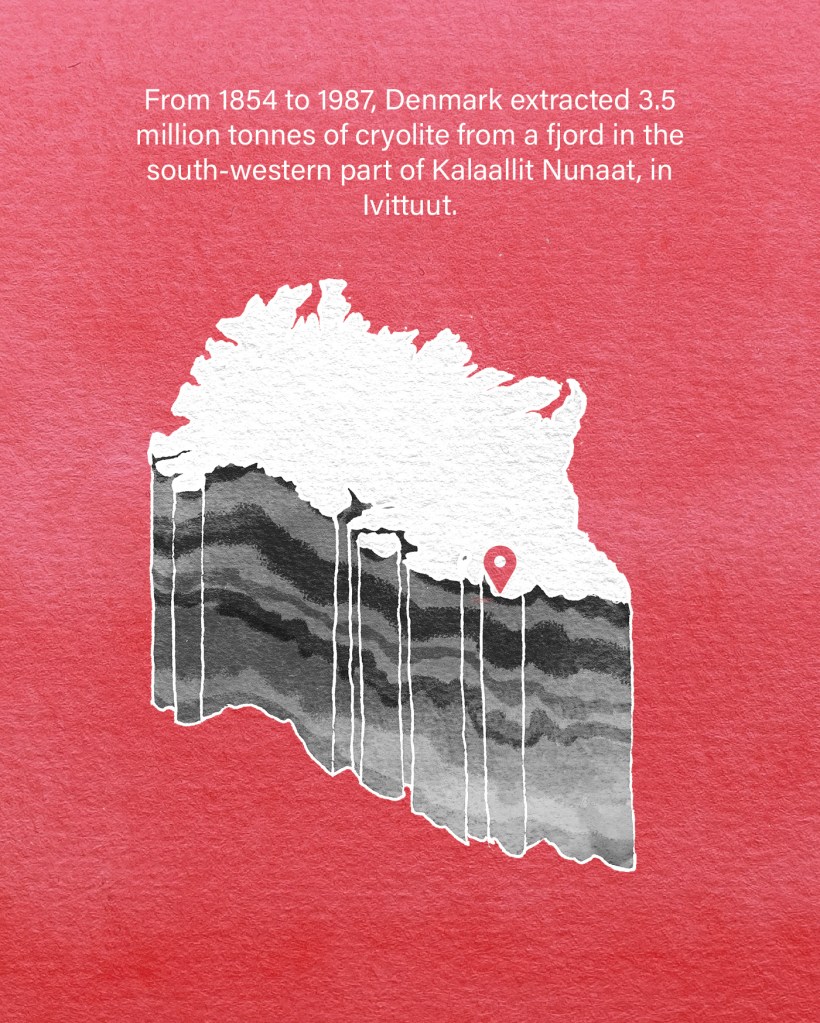
Over the past few days, DR, the Danish broadcasting corporation, has withdrawn the documentary Orsugiak: The White Gold of Greenland from its catalog. The documentary, produced by DR and originally broadcast on February 9, recounts the investigation by Danish-Kalaaleq (sing. Greenlandic-e) researcher Naja Dyrendom Graugaard, a specialist in colonial issues, into Danish extractivist activities in Kalaallit Nunaat (the indigenous name for the territory referred to as Greenland) during and after the colonial era. The investigation shows that between 1854 and 1987, Denmark extracted around 3.5 million tonnes of cryolite from a fjord in southern Kalaallit Nunaat, with an estimated turnover of 400 billion Danish kroner in 2025 (around 54 billion euros). Cryolite is a rare mineral that forms the basis of the aluminum industry, based on a combination with alumina extracted from bauxite. It is now depleted and produced artificially. The only deposit was at Ivittuut, in south-western Kalaallit Nunaat. The exposure of Danish extractivist activities in Kalaallit Nunaat, but above all the quantification of the revenues derived by the Danish colonial power, provoked great indignation in Kalaallit Nunaat and denial in Denmark. DR’s withdrawal of the documentary illustrates the extent of tensions surrounding the recognition of Danish colonial history, at a time when the March 11 parliamentary elections in Kalaallit Nunaat could bring the autonomous territory closer to independence.
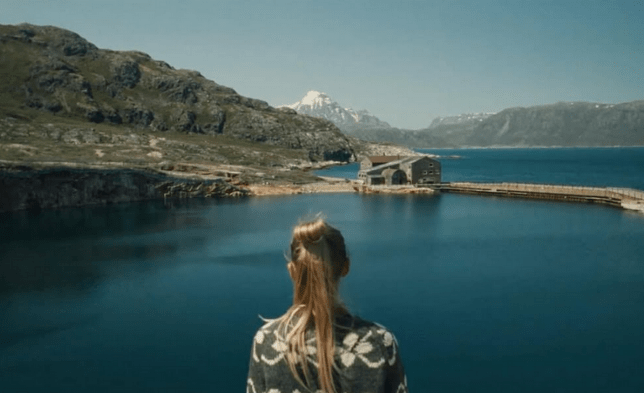
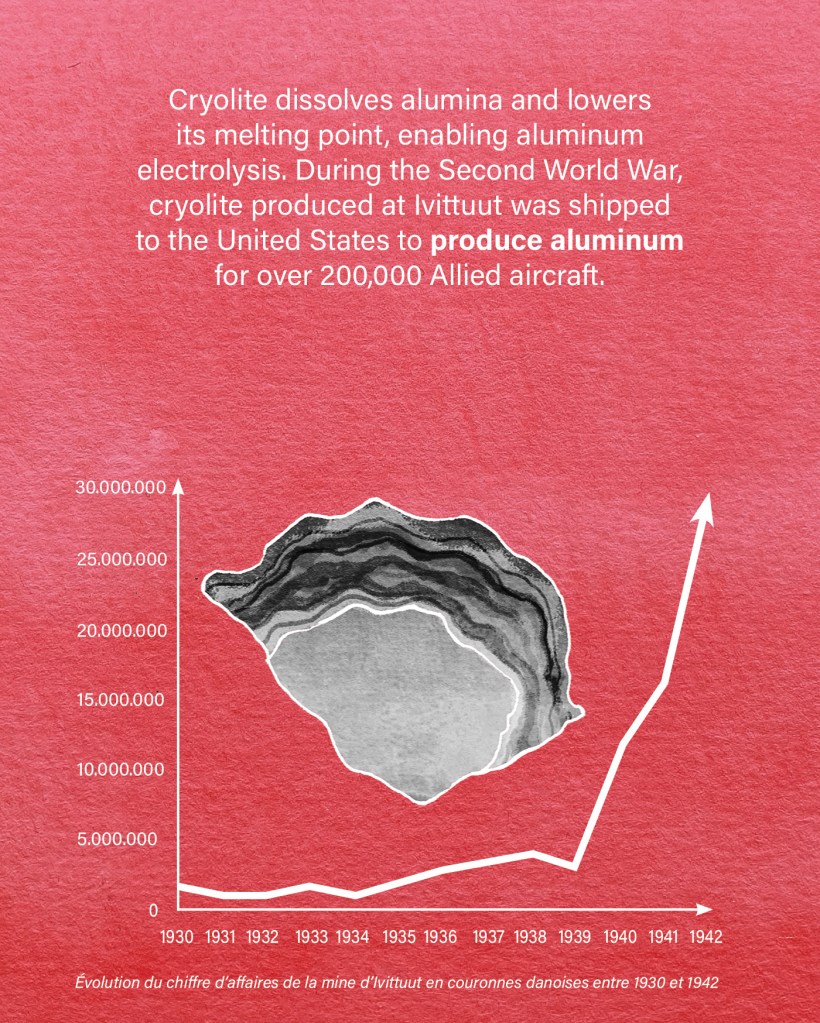
Starting from the Ivittuut open-pit cryolite mine in the south-west of the country, which today is nothing more than a huge water-filled crater, the documentary follows the silver trail from the Kalaaleq subsoil to the Danish state’s accounting records. It also explores the origins of the mine and the story of how cryolite was used to produce aluminum for over 200,000 Allied aircraft during the Second World War. While the Ivittuut mine is widely known at Kalaallit Nunaat, the amount of money generated by its operation remains unknown. The documentary also mentions that the colonial authorities isolated the neighboring colony of Arsuk from the rest of the country for years. The reason for this was the fear of Danish doctors that diseases transmitted by Danish mine workers to the local population could spread. More generally, the mobility of local populations in the region was strictly regulated.
In the course of the documentary, and from the account books unearthed by a Danish researcher, we learn that the total revenue shown in the accounts of the company that operated the mine amounts to 400 billion kroner in today’s Denmark (around 54 billion euros). The conversion to present value was carried out by Torben M. Andersen, Professor of Economics at the University of Aarhus and Chairman of the Economic Council of Kalaallit Nunaat. The value of cryolite increased considerably when it was discovered in 1886 that the raw material could be used to produce aluminum. Raw cryolite was transported by ship to Denmark and processed in a plant from where it was sold. As early as 1864, the Pennsylvania Salt Manufacturing Company, also known as PennSalt (now Pennwalt Cooperation), signed a contract with the Danish government to obtain cryolite from Ivittuut. During the Nazi occupation of Denmark, the raw cryolite was sold directly to the American company Pennsalt.
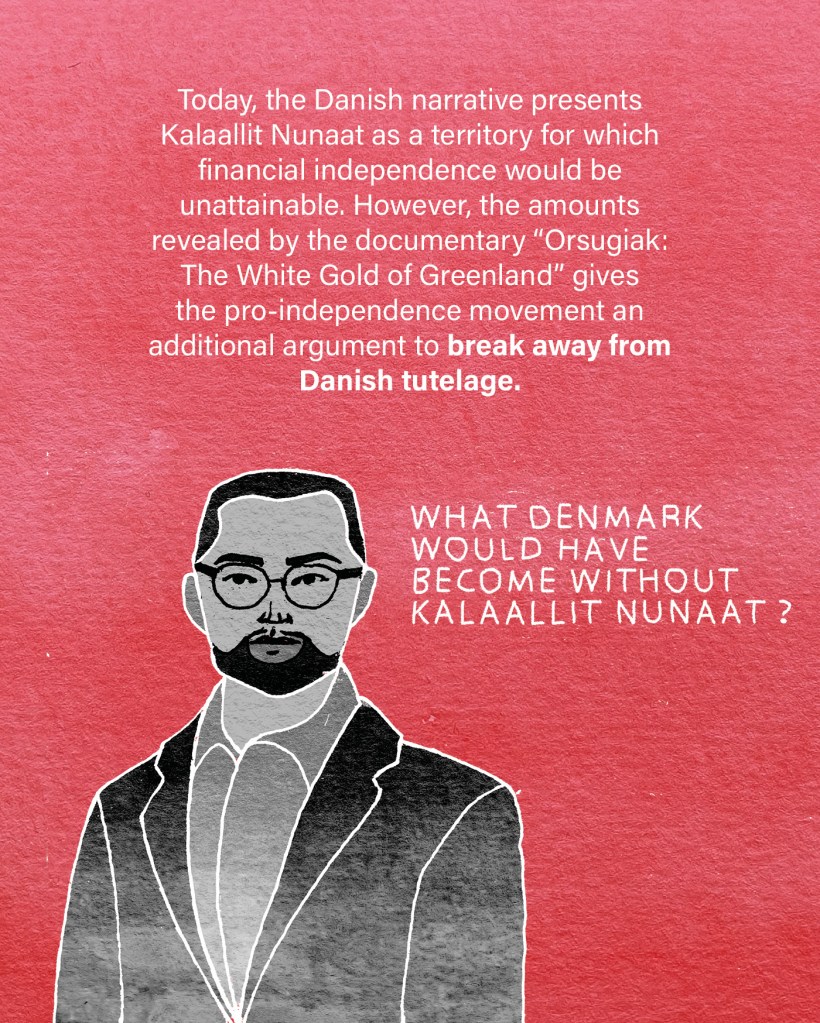
Previewed in Nuuk (the capital of Kalaallit Nunaat), the documentary caused a stir among Kalaallit (pl. Greenlandic) citizens and politicians. For the president of Siumut, one of the main parties in the ruling coalition, Erik Jensen, the documentary shows that the Kalaallit’s desire for independence is not unrealistic: “It has reinforced our feeling that we can stand on our own two feet at Kalaallit Nunaat. That we’re not just an expense.” Reversing the stigma, Prime Minister Kalaaleq questionned: “What would Denmark have become without Kalaallit Nunaat?”For Sara Olsvig, president of the Inuit Circumpolar Council (ICC), “the documentary should give further impetus to Denmark’s journey towards a better understanding of itself as a colonial power.” In Denmark, however, the documentary has triggered fierce criticism, particularly from the Conservative and Liberal parties and the Minister of Culture, Jakob Engel-Schmidt, who called the documentary “disinformation”. While several economists have cast doubt on the figures that have crystallized the criticism, Torben M. Andersen clearly emphasizes in the documentary that it is a calculation of total sales, not profits. For economist Arindam Banerjee, who also takes part in the documentary, it’s important to factor the colonialist relationship into the equation. The fact that Denmark had a monopoly in Kalaallit Nunaat (until 1950), that mining was run by a Danish company, and that Danish workers ran and participated in the operation, all contributed to benefiting the Danish economy in the end. This is why the 400 billion figure can be considered a profit for the Danish company at the expense of Kalaallit Nunaat.
However, in the face of controversy, DR finally decided on February 19 to delete the controversial documentary, which was said to offer an “overly one-sided” and “biased” view of the facts, and to sack its editor-in-chief. A “shameful” decision for Prime Minister Kalaaleq and seen as “serious interference in the independent press, which could threaten press freedom” by the Kalaallit Nunaat Media Association. Nonetheless, the documentary helps to document Denmark’s colonial history, and in particular the role of mining, but also, and perhaps more importantly, highlights a “colonial denial” of it.
Exceptionalism and censorship
The documentary’s value can be measured by the debate it has provoked. If the denial of the story told in The White Gold of Greenland is so strong, it’s because the myth of benevolent colonialism in Kalaallit Nunaat firmly persists. This myth of “Scandinavian exceptionalism” perpetuates ignorance and denial of Scandinavian participation in the atrocities of colonization, presenting colonial actions accomplished through “collaboration rather than extortion and subjugation” (Naum & Monié Nordin, 2013, p. 4). Unlike France, Great Britain, Spain or Portugal, the Nordic countries are less frequently regarded as colonial powers. Moreover, as Norway, Finland and Iceland only became sovereign nations in the twentieth century, their national identities have not been shaped by consideration of their colonial past (Volquardsen & Körber, 2023). However, the Kingdom of Denmark-Norway did carry out colonial expansions in Kalaallit Nunaat, Iceland, the Faroe Islands and on three different continents: India (1620-1845), Africa (1659-1850) and the Caribbean (1672-1917). According to historian Soren Rud (2017), the Denmark-Kalaallit Nunaat relationship is characterized by denial, shame and pride, which Jensen (2018a) describes as “whitewashing and national self-glorification” (p. 132). As Naum & Monié Nordin (2013) point out, “administrators and travelers visiting northern Scandinavia and Greenland produced an image of the Sami and Inuit population that was essentially no different from representations of Native Americans or Africans in the early modern era” (p. 11). Unlike tropical colonies, Denmark’s relationship with Kalaallit Nunaat was never completely severed (see Jensen, 2018a), which necessitates a close examination of how colonial legacies persist in the present.
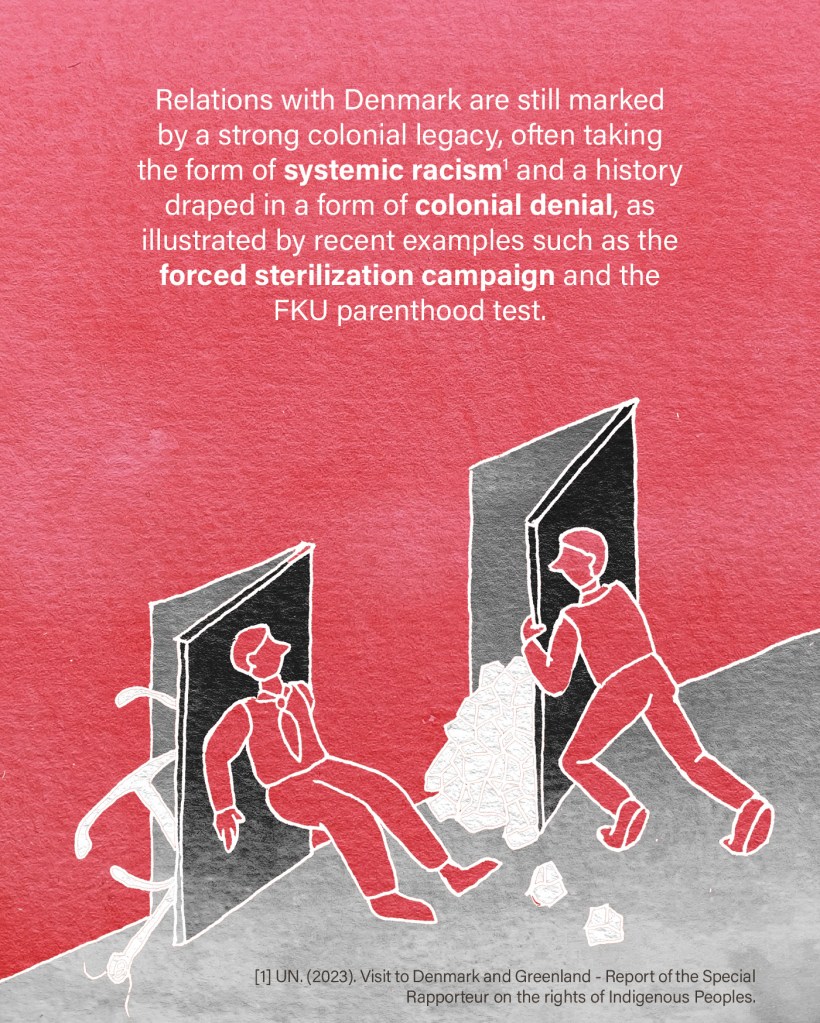
In recent years, the revelation of the colonial violence of the Kalaallit women’s sterilization campaign in the 1960s, described as genocide by Prime Minister Kalaaleq, has helped to document colonial remnants and challenge the myth of “benevolent colonialism”. More recently, the Danish Parenting Assessment Test (FKU), one of the psychometric tests widely used in Denmark to assess parenting skills, has been strongly criticized for reproducing racist discrimination. At the end of February, a demonstration against Danish racism was held in Nuuk, with the Prime Minister in attendance. In 2023, the Special Rapporteur on the Rights of Indigenous Peoples, José Francisco Calí Tzay, highlighted the discrimination suffered by the Kalaallit in accessing their rights, calling for “a process of reconciliation to address the legacy of colonialism and racism and, with the participation of the Inuit, to develop effective solutions and policies”.
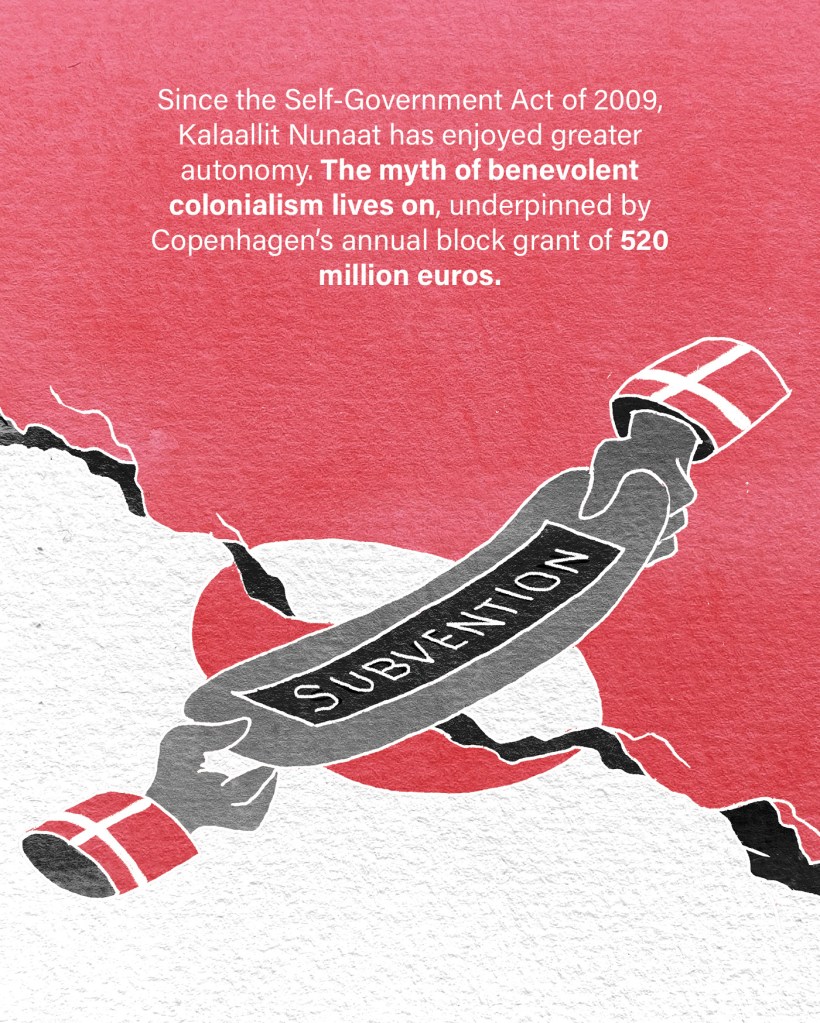
In 2009, the Self-Government Act marked an important step towards greater autonomy for Kalaallit Nunaat from Denmark. The Act extended the powers granted to Kalaallit Nunaat under the 1979 Self-Government Act, allowing greater control over domestic affairs, including mining and petroleum rights. Denmark retained authority over foreign affairs, defense and monetary policy. The law also recognized the Kalaallit as a distinct people with the right to self-determination under international law, paving the way for possible future negotiations on full independence.
While relations with Denmark have seriously deteriorated in recent years, and US ambitions have once again been pressing since Donald Trump’s return to the White House, Kalaaleq Prime Minister Mute B. Egede has announced that general elections will be held on March 11. Some in Denmark believe that the documentary could prove disastrous for the Kalaallit, leaving them open to the designs of the United States. However, it seems that the United States’ best ally, if any, is more than ever colonial denial and refusal to acknowledge colonial history. As researcher Marine Duc points out, this would be to deny the Kalaallit’s capacity for action, but also to obliterate the history of their struggles in the face of imperialism. While the main campaign themes should revolve around aspirations to independence, as well as relations with Denmark and the United States, Prime Minister Kalaaleq recently declared forcefully: “We don’t want to be Americans, and we don’t want to be Danes either. We will be Kalaallit”. So, although they differ on the modalities and calendar for implementation, all six parties involved in the March 11 campaign are now in favor of Kalaallit Nunaat’s independence.
The documentary is now available on Faroese TV, but without subtitles. A version with English subtitles has been circulating, but is nowhere to be found.
In solidarity with the team behind the documentary, a petition has been set up here.
References
Jensen, L. (2018). Postcolonial Denmark: Nation narration in a crisis ridden Europe. Routledge Taylor and Francis Group.
Naum, M., & Monié Nordin, J. (Eds.). (2013). Scandinavian colonialism and the rise of modernity: Small time agents in a global arena. Springer.
Rud, S. (2017). Colonialism in Greenland: Tradition, Governance and Legacy. Palgrave Macmillan.
Volquardsen, E., & Körber, L.-A. (2023). Kolonialismus und Dekolonisierung [Colonialism and decolonization]. In B. Henningsen & U. F. Brömmling (Eds.), Nordeuropa: Handbuch für Wissenschaft und Studium (1. Auflage). Nomos, Rombach Wissenschaft.
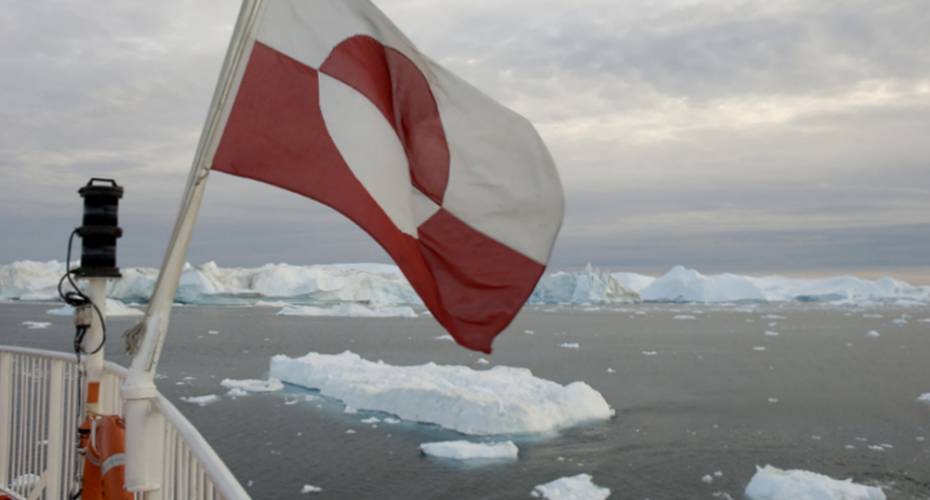
As Donald Trump reiterated his desire to take over Greenland on the sidelines of his inauguration speech, Secretary of State Marco Rubio declared that the US President’s interest was “no joke” and a matter of “national interest” (Altinget, January 21; Eye on the Arctic, January 31). Donald Trump Jr.’s recent visit to Nuuk has put Greenland even more in the international spotlight. As a sign of unity, Greenland Prime Minister Múte B. Egede called for the Greenlandic flag to be raised on January 24 (Sermitsiaq, January 24), while he had repeatedly stressed that the island belonged to Greenlanders and was not for sale, that they would decide their own future and that they remained faithful to their quest for independence (KNR, January 8). This is what he hammered home during his appearance on the ultra-conservative US Fox News channel: “We don’t want to be Americans, and we don’t want to be Danes either. We will be Greenlanders,” he declared (Sermitsiaq, January 17). Echoing this, Danish Prime Minister Mette Frederiksen asserted that “Greenlanders must decide for themselves on the future of Greenland” (Berlingske, January 7), a point she reaffirmed in mid-January during a telephone exchange with the president-elect (Sermitsiaq, January 15). According to a poll for the Greenlandic newspaper Sermitsiaq, 85% of Greenlanders unequivocally reject the idea of an American Greenland (Altinget, January 31). Against the backdrop of US ambitions, a defense agreement was signed between the Danish, Faroese and Greenlandic governments, providing 1.6 billion euros for military capabilities, including three new Arctic patrol ships, two long-range drones and improved surveillance (Altinget, January 27). However, this agreement is considered to be largely inadequate both to enable a defense that does not depend solely on the United States (Altinget, January 29; Altinget, January 30), and to take account of Greenland’s desire for independence (Altinget, January 29). Siumut political spokeswoman Doris J. Jensen declared that Article 21 of the Self-Government Act, which leads to Greenlandic independence, must be activated immediately: “Activating Article 21 is not only a necessary first step, but also a clear demonstration that Greenland is ready to take responsibility for its own future” (DR, January 29). Greenland MP Aki-Matilda Høegh-Dam (Siumut) has also called for the creation of a “Greenland state with its own sovereignty” (Sermitsiaq, January 12). Meanwhile, the Danish government has just presented a plan to combat racism against Greenlanders, which has been criticized for not involving Greenland’s elected representatives (DR, January 15). That said, for Greenland MP Aaja Chemnitz (IA), “recently, it has been clearly demonstrated that racism against Greenlanders exists in certain circles and notably on social networks. It is therefore important that we recognize politically that racism exists and is deeply unacceptable” (Altinget, January 27). On this subject, Denmark has announced that it is abandoning the use of highly controversial “parental competence” (FKU) tests for Greenlandic families, following anger at the way in which these tests have been regularly used for people of Inuit origin, often resulting in the separation of children from their parents (see here) (The Guardian, January 20; Sermitsiaq, January 17). For Inuit filmmaker Aka Hansen, this decision is motivated above all by Denmark’s desire to rehabilitate the myth of “the good settler”, as emphasized by ICC President Sara Olvig (High North News, February 2), in the face of the US offensive. At the Arctic Frontiers conference in Tromsø, Norway, the Nordic Council of Ministers launched a new 4 million euro program to build resilience and support local Arctic communities (Eye on the Arctic, January 24). Last but not least, Greenland’s biggest influencer Qupanuk Olsen (1.5 million subscribers) announced her candidacy for the forthcoming Greenlandic parliamentary elections in the spring, representing the pro-independence Naleraq party (Sermitsiaq, January 15).
A la suite de la réélection d’Erik Jensen à la tête du Siumut cet été, Mete B. Egede (IA) a formé un nouveau gouvernement de coalition avec le Siumut, dans lequel chacun des deux partis se partage les portefeuilles ; Erik Jensen sera chargé des finances. Le nouvel accord de coalition s’appuie sur quatre point-clés : le soutien au système de santé publique qui reste défaillant et qui souffre de sous-effectifs, une réforme de la taxation notamment en lien avec le tourisme, le désir partagé de construire l’indépendance par la création d’un département pour l’indépendance et, finalement, une stratégie pour le développement des matières premières et l’exploitation minière (Altinget, 2 octobre). A l’échelle internationale, des représentants groenlandais ont participé pour la première fois à la réunion de l’OTAN qui s’est tenue à Copenhague, ce qui démontre, selon Pele Broberg, un acte de reconnaissance vis-à-vis du Groenland, qui se positionne comme un acteur stratégique en Arctique (Sermitsiaq, 7 octobre). Le Groenland a également officiellement mis en place une représentation à Beijing, au cours de la visite de la ministre des Affaires étrangères et pour l’indépendance, Vivian Motzfeldt (Sermitsiaq, 20 octobre, Sermitsiaq, 23 octobre). Au Danemark, après la rentrée du Folketing, Markus E. Olsen, suppléant d’Aki-Matilda Høegh-Dam a tenu un discours historique, le premier en kalaallisut (groenlandais de l’Ouest) au sein de l’hémicycle. Il a notamment souligné : “même dans notre propre pays, nous sommes traités comme des étrangers, car le danois est parlé principalement dans les administrations publiques” (Sermitsiaq, 5 octobre). Sur le plan régional, le Canada et le Groenland ont signé une lettre d’intention sur une aire marine de conservation dans l’Arctique. Pour Sara Olsvig, présidente de l’Inuit Circumpolar Council, “cette initiative offre une occasion unique pour renforcer conjointement la conservation marine menée par les Inuit et élaborer de nouvelles approches dans lesquelles les Inuit participent à la gouvernance marine et à la définition des opportunités futures” (Eye On the Arctic, 19 octobre, Sermitsiaq, 20 octobre). L’ICC a par ailleurs enjoint le Groenland de révoquer sa réserve territoriale et d’adhérer à l’Accord de Paris, lequel a constitué un tournant dans la participation des organisations autochtones (Sermitsiaq, 10 octobre).
– October review: new coalition, NATO representation and first speech in Kalaallisut at the Folketing
Following Erik Jensen’s re-election as Siumut leader this summer, Mete B. Egede (IA) has formed a new coalition government with Siumut, in which both parties share portfolios; Erik Jensen will be in charge of finance. The new coalition agreement is based on four key points: support for the public health system, which remains deficient and suffers from understaffing; tax reform, particularly in relation to tourism; the shared desire to build independence by creating a department for independence; and, finally, a strategy for the development of raw materials and mining (Altinget, October 2). Internationally, Greenlandic representatives took part for the first time in the NATO meeting in Copenhagen, which Pele Broberg sees as an act of recognition of Greenland’s position as a strategic player in the Arctic (Sermitsiaq, October 7). Greenland also officially set up a representation in Beijing, during the visit of the Minister for Foreign Affairs and Independence, Vivian Motzfeldt (Sermitsiaq, October 20, Sermitsiaq, October 23). In Denmark, Markus E. Olsen, Aki-Matilda Høegh-Dam’s deputy, made a historic speech after the Folketing was called back into session, the first in Kalaallisut (West Greenlandic) to be given in the hemicycle. He pointed out that “even in our own country, we are treated as foreigners, as Danish is spoken mainly in public administration” (Sermitsiaq, October 5). On a regional level, Canada and Greenland have signed a letter of intent for a marine conservation area in the Arctic. For Sara Olsvig, President of the Inuit Circumpolar Council, “this initiative offers a unique opportunity to jointly strengthen Inuit-led marine conservation and develop new approaches in which Inuit participate in marine governance and in defining future opportunities” (Eye On the Arctic, October 19, Sermitsiaq, October 20). The ICC also urged Greenland to revoke its territorial reserve and join the Paris Agreement, which marked a turning point in the involvement of indigenous organizations (Sermitsiaq, October 10).


 Tanguy Sandré