French Consulate, Economic Crisis, Eastern Independence & Protest in Nuuk… Summer’s Wrap Up
Following President Macron’s visit to Greenland last June, the French ambassador to Denmark, Christophe Parisot, is considering opening a French consulate general in Nuuk in 2026, following in the footsteps of the European Union (Sermitsiaq, August 13). In July, as part of the Danish presidency of the EU Council, a delegation of European ambassadors and senior officials visited Ilulissat and Nuuk to strengthen cooperation with Greenland on climate, security, and raw materials issues (Sermitsiaq, July 31). Meanwhile, in an interview with Reuters, the head of the Arctic Command said that Greenland is not that difficult to defend, and that its defense is under control (Sermitsiaq, June 27). That being said, Danish Defence Minister Troels Lund Poulsen has affirmed his commitment to increasing the Danish military presence in Greenland through the construction of a new headquarters for the Arctic Command, as well as the creation of a Greenlandic military unit under the Arctic Command, as part of the Arctic Basic Training, which is located in Kangerlussuaq (DR & DR, August 18). While in Nuuk, he met with Foreign Minister Vivian Motzfeldt and German Deputy Defence Minister Dr. Nils Schmid to work on strengthening cooperation between the three countries in light of developments in security policy. On this occasion, the German supply ship “Berlin” docked in Nuuk (Sermitsiaq, August 18). At the national level, for the former prime minister, and now Minister of Finance, Múte B. Egede, “Greenland is entering an economic crisis,” predicting budget cuts of 864 million kroner over the next four years, notably through a reform of the pension system (Altinget, August 19). The minister attributes, in part, the current economic difficulties in Greenland to the lack of manpower and the weakening of Greenland’s development potential resulting from the campaign of forced sterilization of Greenlandic women and girls in the 1960s (DR, August 19). In this regard, the investigation, which is to reveal the consequences of forced sterilizations and contraception cases from the 1960s to the present day, is running behind schedule and is not expected to be published before the end of January 2026 (Sermitsiaq, June 28). While Greenlandic independence has occupied a central place in recent debates, a new party has just been created in Tasiilaq to defend this time the independence of the eastern part of Greenland (Party for an Independent Eastern Greenland, PSØ.G.). On May 18, a large demonstration took place in Tasiilaq against politicians from the west coast. Anette Nicolaisen, one of the party’s founders, summarized: “We absolutely cannot bear that West Greenland says: ‘Denmark, you are not listening to us, Denmark, you are doing all these things against us,’ and when we then say, you are doing exactly the same thing to us, nobody does anything” (DR, August 2). In Denmark, Ivana Nikoline Brønlund, 18, from Greenland, has just had her child forcibly taken from her at birth by the municipality of Høje-Taastrup. While the removal of Greenlandic children from their families has been the subject of widespread controversy since last year, and the Danish government has finally decided to end the controversial FKU psychological test and create a special unit (VISO), protests have taken place in Nuuk (Sermitsiaq, August 13). It appears that the municipality of Høje-Taastrup has not complied with the new legislation (Sermitsiaq, August 16). Today, several dozen cases are being re-evaluated in light of criticism of institutionalized discrimination through FKU tests (DR, August 10).


Donald Trump Expansionism, Kalaaleq Independence, Arctic Defense, Danish Racism… January’s Wrap-Up

As Donald Trump reiterated his desire to take over Greenland on the sidelines of his inauguration speech, Secretary of State Marco Rubio declared that the US President’s interest was “no joke” and a matter of “national interest” (Altinget, January 21; Eye on the Arctic, January 31). Donald Trump Jr.’s recent visit to Nuuk has put Greenland even more in the international spotlight. As a sign of unity, Greenland Prime Minister Múte B. Egede called for the Greenlandic flag to be raised on January 24 (Sermitsiaq, January 24), while he had repeatedly stressed that the island belonged to Greenlanders and was not for sale, that they would decide their own future and that they remained faithful to their quest for independence (KNR, January 8). This is what he hammered home during his appearance on the ultra-conservative US Fox News channel: “We don’t want to be Americans, and we don’t want to be Danes either. We will be Greenlanders,” he declared (Sermitsiaq, January 17). Echoing this, Danish Prime Minister Mette Frederiksen asserted that “Greenlanders must decide for themselves on the future of Greenland” (Berlingske, January 7), a point she reaffirmed in mid-January during a telephone exchange with the president-elect (Sermitsiaq, January 15). According to a poll for the Greenlandic newspaper Sermitsiaq, 85% of Greenlanders unequivocally reject the idea of an American Greenland (Altinget, January 31). Against the backdrop of US ambitions, a defense agreement was signed between the Danish, Faroese and Greenlandic governments, providing 1.6 billion euros for military capabilities, including three new Arctic patrol ships, two long-range drones and improved surveillance (Altinget, January 27). However, this agreement is considered to be largely inadequate both to enable a defense that does not depend solely on the United States (Altinget, January 29; Altinget, January 30), and to take account of Greenland’s desire for independence (Altinget, January 29). Siumut political spokeswoman Doris J. Jensen declared that Article 21 of the Self-Government Act, which leads to Greenlandic independence, must be activated immediately: “Activating Article 21 is not only a necessary first step, but also a clear demonstration that Greenland is ready to take responsibility for its own future” (DR, January 29). Greenland MP Aki-Matilda Høegh-Dam (Siumut) has also called for the creation of a “Greenland state with its own sovereignty” (Sermitsiaq, January 12). Meanwhile, the Danish government has just presented a plan to combat racism against Greenlanders, which has been criticized for not involving Greenland’s elected representatives (DR, January 15). That said, for Greenland MP Aaja Chemnitz (IA), “recently, it has been clearly demonstrated that racism against Greenlanders exists in certain circles and notably on social networks. It is therefore important that we recognize politically that racism exists and is deeply unacceptable” (Altinget, January 27). On this subject, Denmark has announced that it is abandoning the use of highly controversial “parental competence” (FKU) tests for Greenlandic families, following anger at the way in which these tests have been regularly used for people of Inuit origin, often resulting in the separation of children from their parents (see here) (The Guardian, January 20; Sermitsiaq, January 17). For Inuit filmmaker Aka Hansen, this decision is motivated above all by Denmark’s desire to rehabilitate the myth of “the good settler”, as emphasized by ICC President Sara Olvig (High North News, February 2), in the face of the US offensive. At the Arctic Frontiers conference in Tromsø, Norway, the Nordic Council of Ministers launched a new 4 million euro program to build resilience and support local Arctic communities (Eye on the Arctic, January 24). Last but not least, Greenland’s biggest influencer Qupanuk Olsen (1.5 million subscribers) announced her candidacy for the forthcoming Greenlandic parliamentary elections in the spring, representing the pro-independence Naleraq party (Sermitsiaq, January 15).

Discriminatory Parenting Test, Translation at the Folketing, Inauguration of Nuuk Airport… November’s Wrap-Up

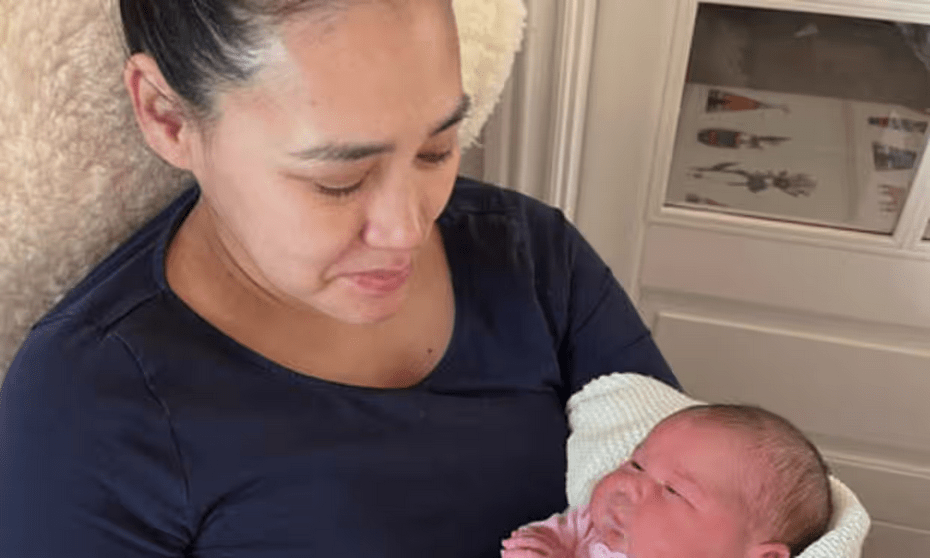
In Kalaallit Nunaat, tensions and demonstrations of support for Keira Alexandra Kronvold, a woman of kalaaleq origin, increased as her child was forcibly taken away by social services within hours of giving birth in Thisted, Denmark. The Danish Parenting Assessment Test (FKU), one of the psychometric tests widely used in Denmark to assess parenting skills, has been heavily criticized for reproducing racist discrimination. An extract from Keira Alexandra Kronvold’s file bears witness to this: “her origin would make it difficult for her to prepare the child for the social expectations and codes necessary in Danish society”. This is just one of many cases, since according to a 2022 report, children of kalaaleq origin living in Denmark are six times more likely to be placed in care than those of Danish origin (Sermitsiaq, November 20; The Guardian, November 25; DR, November 12). At the Folketing, the Danish parliament, the simultaneous translation hitherto rejected by the Speaker, Søren Gade, was tested for the first time during questions to the Prime Minister, Mette Frederiksen, who described the day as historic (Sermitsiaq, November 26; DR, November 26). Another “historic moment” for former Prime Minister Kim Kielsen was the inauguration of Nuuk International Airport, which now provides a direct link between Nuuk and Copenhagen, bypassing Kangerlussuaq (Sermitsiaq, November 28). At the end of November, Danish Defence Minister Troels Lund Poulsen visited Nuuk to meet Foreign Minister Vivian Motzfeldt to discuss the defence agreement and reaffirm a joint commitment to close cooperation on Arctic defence issues, with two priorities: to ensure that the Arctic remains a low-voltage zone, and to guarantee the participation of local businesses and the local population in the development of defence installations (Sermitsiaq, November 23; Eye on the Arctic, November 23). And while Kalaallit Nunaat has already decided to boycott the Nordic Council, the Faroe Islands have also threatened to leave the regional governance body. The Swedish presidency has not invited Kalaallit Nunaat and the Faroe Islands to a number of meetings, seeing this as a breach of equality between Council members, while an update of the treaties is called for so that Kalaallit Nunaat, the Faroe Islands and Åland join the Council as independent members (High North News, November 6). Finally, Paul Watson’s pre-trial detention has once again been renewed until December 18, pending a Danish response as to whether or not he should be extradited to Japan (Sermitsiaq, December 2).

Photo: Keira Alexandra Kronvold and her baby, who has been removed from her by the local municipality. Photograph: supplied (The Guardian).