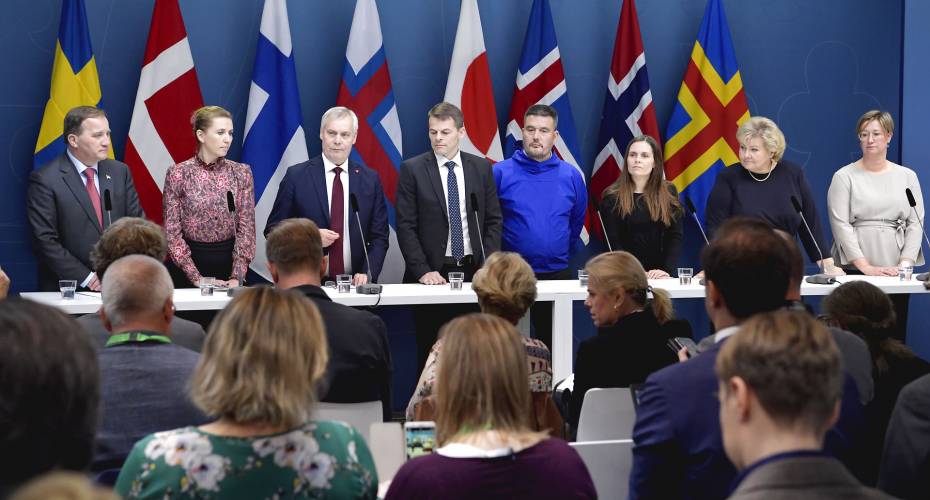
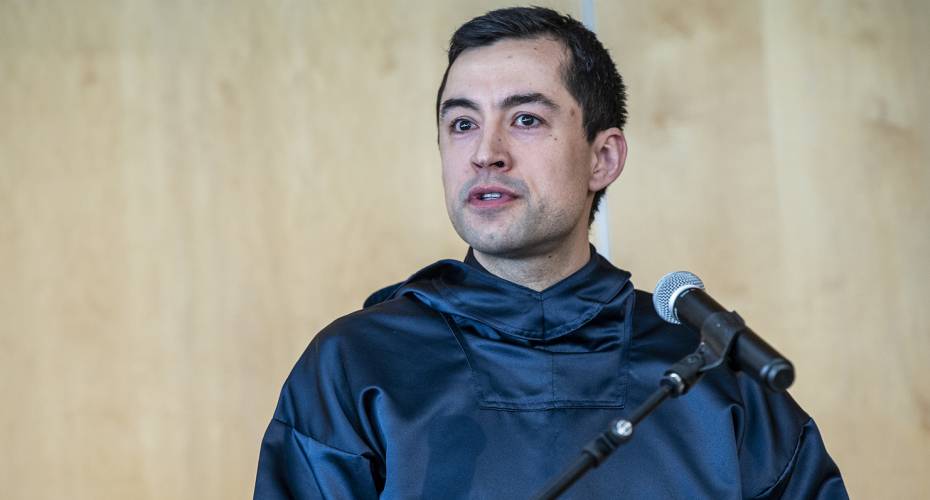
From Venezuala to Greenland: Trump Imperialism… December’s Wrap Up

The desires of President Donald Trump in Greenland have taken credibility in recent days following the kidnapping of Venezuelan President Nicolas Maduro and his wife on January 3, illustrating a reaffirmation of an imperialist and interventionist aim freeing himself from international law. Following the intervention in Venezuela, Kate Miller, the wife of the deputy chief of staff of the White House shared a photo of Greenland against a background of the American flag with the caption “soon” (Sermitsiaq, January 4). Deputy Chief of Staff Stephen Miller himself claimed that Greenland should be part of the United States (Sermitsiaq, January 5). The White House would actively develop acquisition plans, including diplomatic, economic and military measures, calling the autonomous territory a “national security priority” and thus reviving an idea long considered rhetorical (High North News, January 7). This Trumpian obsession goes back to the first administration but gains in acuity following the US intervention in Venezuela, and while the use of the U.S. military “is still an option” according to the White House (BBC, January 7). At present, the existing defense agreements already allow the United States to increase its military presence, now limited to about 200 soldiers at the Pituffik base, in the northwest of the territory, which has a ballistic missile detection radar, as well as one of the control centers of the US military satellite network. Silent and then conciliatory after the abduction of Nicolas Maduro, Emmanuel Macron and six other leaders and heads of government of NATO member countries signed a joint declaration affirming that “it is up to Denmark and Greenland, and on their own, to decide on the issues concerning Denmark and Greenland” (SermitsiaqSermitsiaq, January 6). The foreign ministers of the Nordic countries (Finland, Sweden, Norway and Iceland) also defended the self-determination of Greenland and Denmark (Sermitsiaq, 6 January). Altinget underlines the weakening of European positions vis-à-vis international law: “We cannot defend international law in Ukraine and accept its collapse in Venezuela or Gaza. We cannot talk about sovereignty in the Baltic Sea and ignore it in the Caribbean.” (Altinget, January 5). Naalakkersuisut President Jens-Frederik Nielsen said in a statement to Trump that: “This is not how we address a people that has repeatedly shown responsibility, stability and loyalty. Too much, that’s too much. No more pressure. No more insinuations. No more annexation fantasies. We are open to dialogue. We are open to discussion.” (SermitsiaqSermitsiaq, January 4). Earlier in December, Donald Trump appointed a new special envoy to Greenland, the Republican governor of Louisiana state, Jeff Landry. The latter had written on X that it is an honour for him to assume the mission of integrating Greenland into the United States, already triggering a new round of condemnation from Danish, Greenlandic and European representatives (Sermitsiaq, 22 December). While responses to US threats have remained largely rhetorical, Greenland MP Aaja Chemnitz (IA) at the Folketing is now calling on Greenland and Denmark to take concrete steps, including military action, on the preparation and protection of Greenland (Sermitsiaq, 5 January). On the technological front, Starlink’s recent refusal to benefit European satellite solutions illustrates the growing politicization of digital infrastructures (Eye on the Arctic, December 10). In addition, on the climate front, the Arctic Report Card reports that the last ten years have been the ten warmest on record in the Arctic, while the Greenland ice sheet has continued to lose hundreds of billions of tonnes of ice (Hign North News, December 17). Finally, earlier this month, the Danish government announced that it had reached an agreement in Parliament to pay individual compensation to Greenlandic women who were victims of a forced birth control campaign (Eye on the Arctic, 10 December).

Greenland Science Week, Ice Sheets, Indigenous Rights & Arctic Security… November’s Wrap Up

In Greenland, a major scientific conference, the Greenland Science Week, organized by the Arctic Hub, brought together 400 researchers from 20 countries. Several representatives of the new presidency of the Arctic Council—now largely based in Greenland—took part (High North News, 19 November). Greenland’s Minister for Foreign Affairs and Research, Vivian Motzfeldt, reiterated that research conducted in Greenland must primarily benefit local populations, integrate Indigenous knowledge, and ensure meaningful knowledge returns to the communities concerned (High North News, 13 November).

A new scientific report published ahead of COP30 warns of a rapid and potentially irreversible decline of the Greenland and Antarctic ice sheets, which could lead to sea-level rise far exceeding current estimates. The report cautions that even the +1.5°C target would not be sufficient to prevent major damage and calls for global emissions to be halved by 2030 to limit ice-sheet collapse and its global consequences (Eye on the Arctic, 13 November).

At COP, the Inuit Circumpolar Council (ICC) also denounced the interchangeable use of the terms “local communities” and “Indigenous peoples,” a practice which, according to the organization, obscures the specific rights of Indigenous peoples (Eye on the Arctic, 19 November). The ICC is also calling for direct access to funding, the integration of Indigenous knowledge, and a just energy transition (Eye on the Arctic, 13 November).

At the national level, former Greenlandic Prime Minister Múte B. Egede accused Denmark of having committed a “genocide” during the so-called spiral campaign of the 1960s–1970s, sparking controversy. He received the backing of his successor, Jens-Frederik Nielsen (Sermitsiaq, 21 November), despite a now-withdrawn threat of legal action (Sermitsiaq, 23 November) by former Danish minister Tom Høyen, who disputes the accusations.

At the European Parliament, a network of regionalist, separatist, and minority-focused parties across Europe invited two Faroese politicians and former Siumut party secretary in Greenland, Ole Aggo Markussen, to exchange views and expand their network. The group brings together Scottish, Catalan, Basque, Corsican, Flemish, and also Kanak independence movements (Altinget, 24 November).

Also at the European Parliament, a new resolution on the Arctic was adopted, warning against growing militarization and stressing the need for cooperation with Nordic partners, notably Norway. The text highlights the importance of the High North for Europe’s security, energy, connectivity, and geopolitical stability, placing the Arctic at the core of the EU’s diplomatic and security priorities (High North News, 1 December).

Finally, earlier this month, the new US ambassador to Denmark—co-founder of PayPal and a long-time friend of Elon Musk—took up his post in Copenhagen, identifying defense cooperation, trade ties, and Arctic security as priorities (Eye on the Arctic, 5 November). He nevertheless remained evasive about Trump’s ambitions, refusing to rule out past proposals by Donald Trump regarding US sovereignty over Greenland (DR, 18 November). In early December, representatives from Greenland, Denmark, and the United States are set to meet in Greenland to resume official trilateral talks (Sermitsiaq, 26 November).

Oil Spill around Nanortalik, Tsunami, Polar Bears, Merging of Municipalities… September’s Wrap-Up

Following the sinking of the vessel Adolf Jensen, an oil spill of between 15,000 and 20,000 liters of diesel oil occurred in Nanortalik, in the south of the country (DR, September 20). Due to climate change, the occurrence of tsunamis could increase in Kalaallit Nunaat, according to a study that examined the occurrence of a tsunami on the east coast of Kalaallit Nunaat last year (Sermitsiaq, September 13). In addition, a polar bear traveled at least 200 kilometers from Kalaallit Nunaat to Iceland, before being shot by the authorities (DR, September 20). On the domestic front, the merger of municipalities in 2009 has posed major difficulties; in particular, many citizens living outside the main towns of the five main municipalities complain of a lack of local democracy and an over-burdened bureaucracy. A reorganization of the municipalities could be envisaged (Sermitsiaq, September 13). Greenlandic Folketing MP Aki-Matilda Høegh-Dam, who gave a speech in Kalaallisut a year ago, is due to give her speech in her mother tongue again at the opening of the parliamentary session on October 3. However, she has been refused the use of simultaneous interpretation equipment, even though the Folketing has it (DR, September 30). On the subject of the Arctic ambassador, whose appointment had met with profound Greenlandic disagreement last year, the Danish Prime Minister declared that she “wanted to respond” to Kalaallit Nunaat’s wish to have an Arctic ambassador in the country (DR, August 27). Against a backdrop of tension over Kalaallit Nunaat’s in the Nordic Council, Múte B. Egede stated that Kalaallit Nunaat would not participate in the Danish presidency of the Nordic Council of Ministers in 2026 (Altinget, September 12). Meanwhile, more than two months after the arrest of activist Paul Watson, Denmark’s Supreme Court has yet to rule on his detention (DR, October 2). Finally, Air Greenland has announced the creation of new air links between Denmark and Kalaallit Nunaat, with new departures to Nuuk from Aalborg and Billund (DR, September 24).

Paul Watson’s Arrest, Arctic Command Rescue, Paris Agreement, Critical Mineral… Summer’s Wrap-Up

The arrest of whale conservation activist Paul Watson on July 21 in Nuuk, following an international arrest warrant charging him with obstructing activities and causing injury and property damage to a Japanese whaling vessel in 2010, has attracted international attention (Eye on the Arctic, August 15). While his request for release has been rejected and he will remain in kalaallit jails until at least September 5, 2024, the activist could be extradited to Japan if the Danish Ministry of Justice, which has retained its prerogatives despite Kalaallit Nunaat’s increased autonomy, so decides (Sermitsiaq, August 20). In Kalaallit Nunaat, Paul Watson remains associated with pressure on Inuit hunters and Inuit ways of life (Mediapart, July 23). At the end of July, Arctic Command rescued the pilots whose plane had crashed into the open ocean near Qaqortoq, in southern Kalaallit Nunaat (Sermitsiaq, July 29). Search and rescue capabilities are becoming an increasingly important issue as commercial and tourist activity intensifies in the region (High North News, August 1). On the climate front, “the Paris Agreement is not just a symbolic act”, said UN Climate Secretary Simon Stiell, commenting on Kalaallit Nunaat’s accession to the Paris Agreement at a time when temperatures in the Arctic are rising four times faster than in the rest of the world. The Minister for Agriculture, Self-Sufficiency, Energy and the Environment, Kalistat Lund, has indicated that he will develop a climate strategy following local consultation throughout the country (Sermitsiaq, July 3). At UN level, the President of the Inuit Circumpolar Council (ICC), Sara Olsvig, has been appointed to the Expert Group on Rare Minerals for Energy Transition, to ensure that the recommendations made by the working group are in line with the UN Declaration on the Rights of Indigenous Peoples. Its presence is all the more important given that 54% of critical mineral deposits known to date are located on or near the territories of indigenous peoples (Sermitsiaq, July 14). In the kalaaleq parliament, Inatsisartut, the president of Naleraq’s party, Pele Broberg, known for his pro-independence stance, is going to propose a change to the rules of procedure so that the only language used will be Greenlandic, raising questions of national belonging for many Greenlanders who are not fluent in Kalaallisut, the national language (Sermitsiaq, August 6; Altinget, August 19). On the other hand, academic work to clearly establish the facts about the sterilization of Greenlandic girls and women from the 1960s onwards is currently being held up by the rejection of access to public health archives (Sermitsiaq, July 23; Sermitsiaq, July 25). Due to disputes with the Swedish presidency over the country’s secondary position, the President of the Greenland National Executive, Múte B. Egede, will not be taking part in the conference. Egede will not be taking part in the Nordic Council’s work or in the annual session in Reykjavik this autumn (Altinget, August 21). This summer, several towns were visited by polar bears, resulting in several preventive culls, notably in Ittoqqortoormiit, on the east coast. A researcher from a German research team on Traill Island, near Mestersvig in eastern Greenland, was attacked by a polar bear (Sermitsiaq, July 30). Finally, the US Secretary of the Navy, Carlos Del Toro, recently met with the Danish Ministry of Defense and military leaders in Copenhagen, as well as exchanging views with Faroese Foreign Minister Høgni Hoydal, to discuss the Russian threat and opportunities for increased cooperation in the Arctic and North Atlantic. The Faroe Islands, which will shortly be opening an office in Washington, is committed in its Arctic strategy to enhanced cooperation with other allies in the Arctic and wider North Atlantic to actively contribute to the preservation of security and stability (High North News, August 19).

Revue de décembre : Deep-sea mining, coopération nordique et aides exceptionnelles pour les chasseurs et chasseuses en raison du changement climatique

English below

Le parlement danois a entériné l’accord conclu en juin 2022 avec le Canada concernant le différend territorial de l’île Hans, soldant un différend de 50 ans (Sermitsiaq, 19 décembre). Le gouvernement Groenlandais, qui a été consulté en amont de la publication du plan Norvégien pour le “deep-sea mining”, n’a pas arrêté de position et devra, en particulier, se prononcer sur les impacts potentiels du développement de “deep-sea mining” aux larges de la côte est du Groenland (Sermitsiaq, 22 décembre). A Bruxelles, Ursula von der Leyen a rencontré conjointement Mette Frederiksen (Danemark), Múte B. Egede (Groenland) et Aksel V. Johannesen (Îles Féroé). Múte B. Egede a confirmé l’ouverture d’une représentation européenne à Nuuk et annoncé une visite de la présidente de la Commission européenne au printemps prochain (Sermitsiaq, 18 décembre). Les relations entre l’UE et le Groenland/les îles Féroé portent traditionnellement sur la politique de la pêche, mais la “transition énergétique” a également ouvert de nouveaux domaines de coopération dans les domaines du climat, de l’énergie. L’UE et le Groenland ont conclu, fin novembre, un partenariat stratégique pour le développement de chaînes de valeur pour les matières premières (Représentation danoise à la Comission Européenne, 13 décembre). Au Danemark, le ministère de la Défense a été mis en cause après les révélations de DR, d’après lesquelles les navires danois, et plus largement les équipements militaires, sont loin de répondre aux exigences minimales de l’OTAN (DR, 29 novembre, 19 décembre). Par ailleurs, le ministère des affaires étrangères a déclaré que l’Arctique et l’Atlantique Nord figureront parmi les priorités de Copenhague lorsque le Danemark reprendra la présidence de la Coopération nordique de défense (NORDEFCO) de la Suède le 1er janvier : “C’est important pour les lignes de communication et d’approvisionnement stratégiques, ainsi que pour les capacités et la coopération opérationnelle. Nous envisageons donc de renforcer nos capacités de surveillance dans la région. Une coopération et une coordination nordiques plus étroites dans le cadre général de l’OTAN seront importantes”, a affirmé le porte-parole du Ministère (Eye on the Arctic. 22 décembre). Enfin, face aux difficultés rencontrées par les chasseurs en raison des impacts du changement climatique particulièrement exacerbés cette année, le gouvernement a déployé une aide à destination des chasseurs concernés (Sermitsiaq, 18 décembre).

– December Review: Deep-sea mining, Nordic cooperation and exceptional aid due to climate change

The Danish parliament has ratified the agreement reached in June 2022 with Canada on the Hans Island territorial dispute, settling a 50-year dispute (Sermitsiaq, 19 December). The Greenland government, which was consulted prior to the publication of the Norwegian plan for deep-sea mining, has not adopted a position and will have to give its opinion on the potential impact of the development of deep-sea mining off the east coast of Greenland (Sermitsiaq, 22 December). In Brussels, Ursula von der Leyen met with Mette Frederiksen (Denmark), Múte B. Egede (Greenland) and Aksel V. Johannesen (Faroe Islands). Múte B. Egede confirmed the opening of a European representation in Nuuk and announced a visit by the President of the European Commission next spring (Sermitsiaq, 18 December). Relations between the EU and Greenland/Faroe Islands have traditionally focused on fisheries policy, but the ‘energy transition’ has also opened up new areas of cooperation in the fields of climate and energy. At the end of November, the EU and Greenland concluded a strategic partnership for the development of value chains for raw materials (Danish Representation to the European Commission, 13 December). In Denmark, the Ministry of Defence has been called into question following revelations by DR that Danish ships, and more generally military equipment, fall far short of NATO’s minimum requirements (DR, 29 November, 19 December). In addition, the Ministry of Foreign Affairs has stated that the Arctic and the North Atlantic will be high on Copenhagen’s agenda when Denmark takes over the chairmanship of the Nordic Defence Cooperation (NORDEFCO) from Sweden on 1 January: “This is important for strategic communication and supply lines, as well as for capabilities and operational cooperation. We are therefore planning to strengthen our surveillance capabilities in the region. Closer Nordic cooperation and coordination within the overall NATO framework will be important”, said the Ministry’s spokesman (Eye on the Arctic. 22 December). Finally, in response to the difficulties encountered by hunters as a result of the impacts of climate change, which have been particularly exacerbated this year, the government has deployed aid for the hunters concerned (Sermitsiaq, 18 December).

Revue de juillet-août : élections au Siumut, recours sur l’uranium et températures records en juillet

English below

L’actuel président du Siumut, Erik Jensen, a été réélu au premier tour (39 voix sur 68) pour diriger le second plus grand parti du pays. En cas de victoire de l’un (Kim Kielsen) ou l’une de ses rivales (Aki-Matilda Høegh-Dam), de nouvelles élections nationales à la rentrée pouvaient être attendues, ainsi que des prises de positions plus tranchées sur l’indépendance ou encore l’uranium, sur lequel le parti n’a pas de position stable depuis 2013 (DR, 30 juillet). Le réélection d’Erik Jensen signe donc le choix du “pragmatisme” et de la stabilité au sein de la coalition (DR, 30 juillet ; Sermitsiaq, 31 juillet). En 2021, menée par le parti IA, la coalition avait décidé de stopper les projets d’exploration et d’exploitation d’uranium. La compagnie australienne Energy Transition Minerals, qui avait obtenu une permission d’exploration en 2007 et demandé un permis d’exploitation en 2019 pour la mine de Kuannersuit, dans le sud-ouest du Groenland, a décidé d’intenter un recours pour obtenir une compensation de 76,5 milliards de couronnes danoises auprès du Danemark et du Groenland (DR ; Sermitsiaq, 20 juillet). Mi-juillet s’est tenue un sommet entre le président américain et les premiers ministres des pays nordiques, auquel le président groenlandais, Muté B. Egede, et le dirigeant féroïen, Aksel V. Johannesen n’ont pas été invités (Politiken, 22 juillet). Ces derniers ont vivement critiqués les pays Nordiques pour leur absence de considération répétée à leur égard : “Si les pays nordiques ne veulent pas prendre la coopération avec nous au sérieux et veiller à ce que nous soyons impliqués et entendus lors des négociations, nous devons réévaluer notre participation et regarder plus à l’ouest, vers d’autres pays de l’Arctique, et voir si nous pouvons développer une collaboration dans laquelle nous sommes pris au sérieux”, a averti Muté B. Egede à Sermitsiaq (15 juillet). Ceci s’ajoute aux tensions déjà fortes avec le Danemark qui se succèdent depuis plusieurs mois (Altinget, 14 août). Les discussions entre le Danemark, les îles Féroé et le Groenland autour du renforcement de la coopération avec les États-Unis dans l’Arctique, décidés en juin dernier, seront sur la table des négociations dans les prochains mois (Altinget, 3 août). Sur le plan climatique, d’après le Danish Meteorological Institute (DMI), les températures du mois de juillet 2023 ont été supérieures de  4,4°C à la moyenne observée depuis 1991 au sommet de la calotte glaciaire (station Summit) (DR, 11 août), tandis que des records de fonte de l’inlandsis ont aussi été observés par la NASA au mois de juillet (Eye on the Arctic, 2 août). D’après une autre étude menée par l’Université d’Aalborg, la population de la communauté d’Ittoqqortoormiit, à l’est du Groenland, et bien qu’elle vive loin des sources de pollution par les PFAS, celle-ci présente des concentrations de ces substances dans le sang parmi les plus élevées au monde (Sermitsiaq, 12 juillet). Le gouvernement a déclaré prendre cette étude très au sérieux et a annoncé son intention de ratifier la Convention de Stockholm sur les polluants organiques persistants (POP) (Sermitsiaq, 24 juillet). Par ailleurs, le colonel Søren Andersen a été nommé général de division et nouveau commandant du Commandement de l’Arctique (Altinget, 9 août).

– July-August review: Siumut elections, uranium appeal and record temperatures in July

Siumut’s current president, Erik Jensen, was re-elected in the first round (39 votes out of 68) to lead the country’s second-largest party. In the event of victory for one (Kim Kielsen) or the other of his rivals (Aki-Matilda Høegh-Dam), new national elections in the autumn could be expected, as well as stronger positions on independence or uranium, on which the party has had no stable position since 2013 (DR, July 30). Erik Jensen’s re-election signals the choice of “pragmatism” and stability within the coalition (DR, July 30; Sermitsiaq, July 31). In 2021, led by the IA party, the coalition had decided to halt uranium exploration and mining projects. The Australian company Energy Transition Minerals, which had obtained exploration permission in 2007 and applied for a mining permit in 2019 for the Kuannersuit mine in south-west Greenland, decided to seek compensation of DKK 76.5 billion from Denmark and Greenland (DR; Sermitsiaq, July 20). In mid-July, a summit was held between the American president and the prime ministers of the Nordic countries, to which the Greenlandic president, Muté B. Egede, and the Faroese leader, Aksel V. Johannesen, were not invited. Egede and Faroese leader Aksel V. Johannesen were not invited (Politiken, July 22). The latter strongly criticized the Nordic countries for their repeated lack of consideration for them: “If the Nordic countries don’t want to take cooperation with us seriously and ensure that we are involved and heard in the negotiations, we need to re-evaluate our participation and look further west, to other Arctic countries, and see if we can develop a collaboration in which we are taken seriously”, warned Muté B. Egede in Sermitsia. Egede in Sermitsiaq (July 15). This comes on top of the already high tensions with Denmark that have been building up for several months (Altinget, August 14). Discussions between Denmark, the Faroe Islands and Greenland on closer cooperation with the United States in the Arctic, agreed last June, will be on the negotiating table in the coming months (Altinget, August 3). On the climate front, according to the Danish Meteorological Institute (DMI), temperatures in July 2023 were 4.4°C above the average observed since 1991 at the summit of the ice cap (Summit station) (DR, August 11), while record melting of the ice sheet was also observed by NASA in July (Eye on the Arctic, August 2). According to another study conducted by Aalborg University, the population of the community of Ittoqqortoormiit, in eastern Greenland, despite living far from sources of PFAS pollution, has some of the highest concentrations of these substances in their blood in the world (Sermitsiaq, July 12). The government has stated that it takes this study very seriously, and has announced its intention to ratify the Stockholm Convention on Persistent Organic Pollutants (POPs) (Sermitsiaq, July 24). Colonel Søren Andersen has been appointed Major General and new Commander of the Arctic Command (Altinget, August 9).

Le Groenland repousse l’adhésion à l’Accord de Paris

English below

Annoncée en 2021 par le premier ministre groenlandais, Mute B. Egede, l’entrée du Groenland dans l’Accord de Paris a finalement été repoussée dans l’attente de la réalisation d’une étude d’impact.

L’adhésion du Groenland à l’Accord de Paris devait être actée lors de la convention de printemps du parlement groenlandais, l’Inatsisartut. Cependant, ce point a été retiré de l’ordre du jour du congrès. La nouvelle coalition, formée par Siumut et Inuit Ataqatigiit, a convenu qu’il devrait d’abord y avoir une étude d’impact. L’automne dernier, le Premier ministre groenlandais Mute B. Egede s’est rendu au sommet sur le climat en Écosse et a proclamé que le Groenland souhaitait adhérer à l’Accord de Paris. L’étude d’impact devrait être finalisée à l’automne.

– Greenland postpones joining the Paris Agreement

Announced in 2021 by the Greenlandic Prime Minister, Mute B. Egede, Greenland’s entry into the Paris Agreement has finally been postponed pending an impact study. Egede, Greenland’s entry into the Paris Agreement has finally been postponed pending the completion of an impact assessment.

Greenland’s accession to the Paris Agreement was to be acted upon at the spring convention of the Greenlandic parliament, the Inatsisartut. However, this item was removed from the convention agenda. The new coalition, formed by Siumut and Inuit Ataqatigiit, agreed that there should be an impact assessment first. Last fall, Greenland’s Prime Minister Mute B. Egede went to the climate summit in Scotland and proclaimed Greenland’s desire to join the Paris Agreement. The impact assessment should be finalized in the fall.

Sources : Sermitsiaq.