Arctic Council, US Intelligency, Protest for Eastern citizens… May’s Wrap-Up
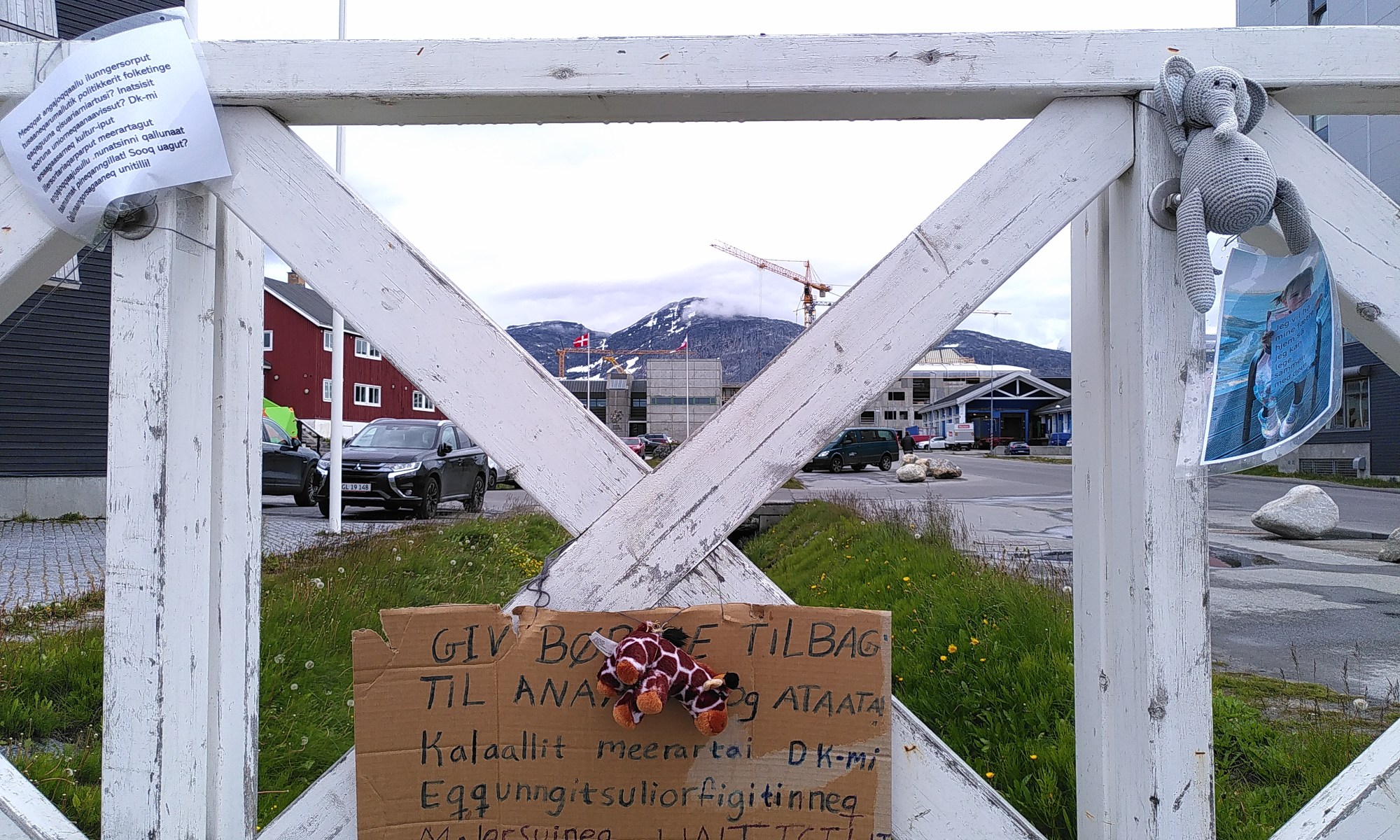
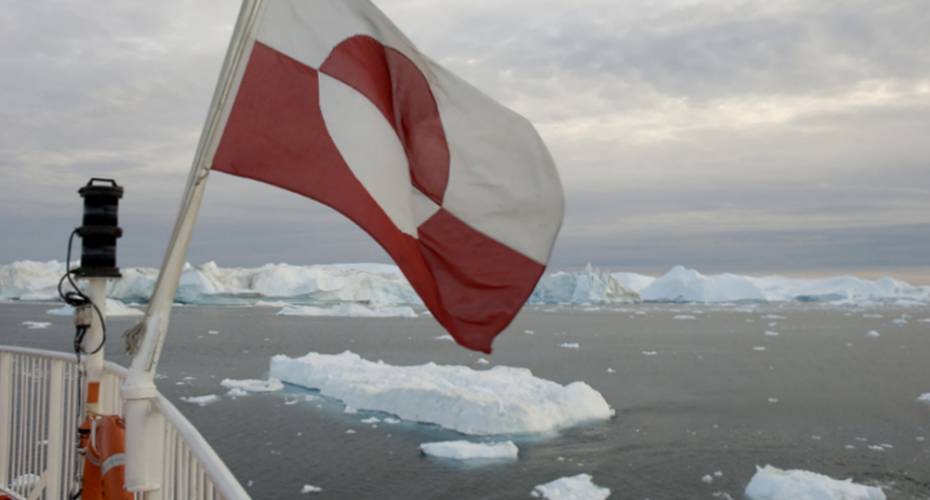
On May 12, Greenland assumed the leadership of the Arctic Council on behalf of the Kingdom of Denmark. After a long power struggle between Nuuk and Copenhagen, Vivian Motzfeldt, Greenland’s foreign minister, took over the chairmanship of the Council after two years of Norwegian presidency marked by a desire to foster regional cooperation. “I must say that I think it is entirely appropriate that Greenland takes this on behalf of the Kingdom, as this is the Arctic part of the Kingdom of Denmark,” the Norwegian foreign minister said at the handover session in Tromsø (Altinget , May 13; Sermitsiaq, May 18). Ahead of the handover, the 14th meeting of the Arctic Council was held virtually. The eight member states of the Council and its six permanent participating organizations agreed on a joint statement, which reiterates the commitment to maintaining peace, stability and cooperation in the Arctic, and to maintaining the Arctic Council as the main tool for this commitment (High North News, May 13). The Kingdom of Denmark, whose Senior Arctic Official (SAO) will be Greenlandic Arctic Ambassador Kenneth Høegh, presented the roadmap for its presidency (2025-2027) which is divided into five themes: indigenous peoples and Arctic societies, sustainable economic development and energy transition, ocean, climate change in the Arctic and biodiversity (Sermitsiaq, May 12). In addition, Vivian Motzfeldt met with the EU’s foreign and security policy chief, Kaja Kallas. The raw materials sector was highlighted as an important area for developing cooperation, with Vivian Motzfeldt stressing that “in these difficult times Greenland is facing, it is important to approach reliable partners who share the same values” (Sermitsiaq, 18 May). The foreign minister also met with her French counterpart Jean-Noël Barrot, stating that “France was one of the first countries to significantly express its support for the Greenlandic population” (Sermitsiaq, 21 May); in January, Jean-Noël Barrot confirmed that France was at Denmark’s disposal if it requested support (Sermitsiaq, 22 May). While the Danish-American defense agreement providing for the possibility of stationing American soldiers on Danish soil at the Karup, Skrydstrup and Aalborg bases was discussed in the Folketing (Sermitsiaq, May 15), Foreign Minister Lars Løkke Rasmussen, like the Greenlandic Prime Minister, deemed “unacceptable” the United States’ desire to intensify its espionage activities in Greenland and Denmark, revealed by the Wall Street Journal (Wall Street Journal, May 6; Sermitsiaq, May 8; Sermitsiaq, May 15). The Pentagon is also considering transferring Greenland from the United States European Command (EUCOM) to the United States Northern Command (NORTHCOM). Beyond this unilateral and partly symbolic measure, the White House is also studying the possibility of offering Greenland a zone of free association with the United States, a status hitherto reserved for small island nations in the Pacific Ocean, notably the Marshall Islands and Micronesia (Reuters , May 9). In early May, Nordic defense ministers signed a revised memorandum of understanding on cooperation at a meeting in Rovaniemi. The new version incorporates the significant development of NORDEFCO (Nordic Defense Cooperation) in recent years, particularly following Russia’s war against Ukraine and Finland’s and Sweden’s accession to NATO (High North News, May 12). Regionally, while Greenlandic authorities have repeatedly protested their underrepresentation in regional governance forums, Prime Minister Jens-Frederik Nielsen participated in the Nordic ministerial meeting (Sermitsiaq, May 26). Finally, demonstrations took place in Tasiilaq and Nuuk to denounce the plight of residents of the country’s east coast who face chronic underinvestment, political marginalization and numerous stigmatizations (Sermitsiaq, May 15; Sermitsiaq, May 22; Sermitsiaq, May 22). 

Revue d’avril : Pituffik Space Base, Conseil de l’Arctique, plan de réduction de la dépendance des îles Féroé

English below

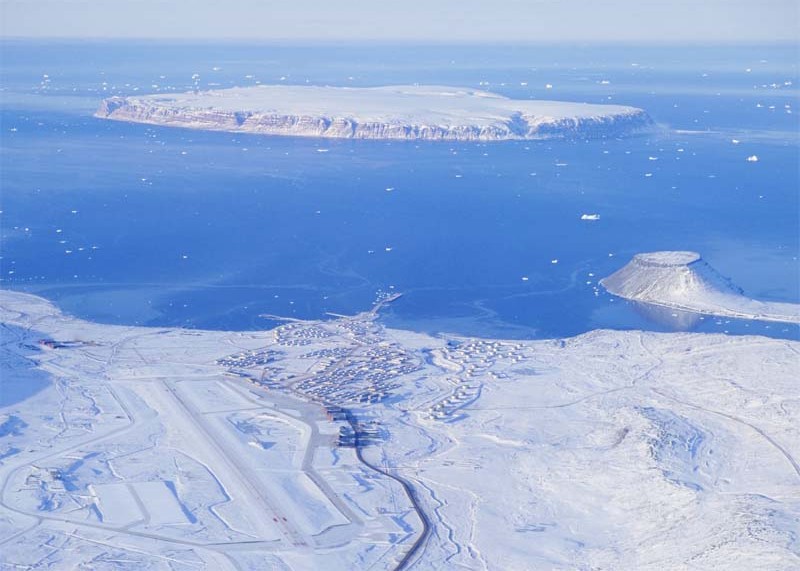
Au Nord du Groenland, la base militaire américaine Thule Air Base, au sud de Qaanaaq, vient d’être renommée Pituffik Space Base. « J’espère que cette journée servira d’exemple de la capacité des grandes nations à écouter leurs voisins, même les plus petits », a déclaré M. Motzfeldt, la ministre groenlandaise des Affaires étrangères, de l’Économie et du Commerce (Eye On The Arctic, 11 avril). Pour Sara Olsvig, présidente de l’Inuit Circumpolar Council (ICC), il s’agit d’un symbole important qui mérite d’être accompagné d’une reconnaissance accrue du déplacement forcé de 187 inughuits (inuits du Nord-Ouest du Groenland) lors de l’agrandissement de la base militaire en 1953 (Sermitsiaq, 6 avril ; Sermitsiaq, 7 avril). À l’instar des autres membres du Conseil de l’Arctique, Lars Løkke Rasmussen, le ministre des Affaires étrangères danois, a annoncé qu’il ne participerait pas physiquement à la réunion ministérielle qui se tient le 11 mai à Salekhard (Russie) ; Thomas Winkler, Ambassadeur de l’Arctique danois, ainsi que les représentants des gouvernements des îles Féroé et du Groenland, y participeront néanmoins à distance (Altinget, 17 avril). Le gouvernement des îles Féroé a mis en place un plan d’action visant à réduire sa dépendance vis-à-vis du Danemark d’ici quatre ans, la coalition au pouvoir vise une réduction de 25 millions de couronnes danoises par an de la subvention globale, qui devrait donc passer de 641 à 541 millions en 2026 (Sermitsiaq, 4 avril).

– April Review: Pituffik Space Base, Arctic Council, Faroe Islands dependency reduction plan

In North Greenland, the US military base Thule Air Base, south of Qaanaaq, has just been renamed Pituffik Space Base. “I hope that this day will serve as an example of how big nations can listen to their neighbours, even the smallest ones” said Motzfeldt, Greenland’s Minister of Foreign Affairs, Economy and Trade (Eye On The Arctic, 11 April). For Sara Olsvig, chair of the Inuit Circumpolar Council (ICC), this is an important symbol that deserves to be accompanied by greater recognition of the forced displacement of 187 Inughuit (Inuit from northwest Greenland) during the expansion of the military base in 1953 (Sermitsiaq, 6 April; Sermitsiaq, 7 April). Like the other members of the Arctic Council, Lars Løkke Rasmussen, the Danish Foreign Minister, has announced that he will not physically participate in the ministerial meeting in Salekhard, Russia, on 11 May; Thomas Winkler, the Danish Arctic Ambassador, as well as representatives of the Faroese and Greenlandic governments, will nevertheless participate from a distance (Altinget, 17 April). The Faroese government has put in place an action plan to reduce its dependence on Denmark within four years, with the ruling coalition aiming to reduce the overall subsidy by DKK 25 million per year, from DKK 641 million to DKK 541 million by 2026 (Sermitsiaq, 4 April).

Revue de février : discrimination systémique, stratégie de défense et présence militaire accrue, Accord de Paris, Tartupalik

English below

L’ONU, par la voix du rapporteur spécial sur les droits des peuples autochtones, Cali Tzay, a pointé l’ampleur de la discrimination raciale structurelle et systématique exercée au sein du Royaume du Danemark sur les inuit du Groenland, soulignant des obstacles pour ceux et celles-ci de jouir pleinement de leurs droits humains (ONU, 10 février 2023). Parmi les illustrations récentes, le rapporteur souligne la campagne de stérilisation forcée des femmes groenlandaises, les cas d’enfants groenlandais enlevés à leurs familles au Danemark ou encore l’absence de consentement libre, préalable et éclairé concernant les projets touristiques et d’infrastructures. Sur le plan de la gouvernance arctique, Rasmus Leander Nielsen et Jeppe Strandsbjer, deux universitaires à l’Université de Nuuk, soulignent l’importance du Conseil de l’Arctique pour le Groenland, malgré la position très claire du gouvernement groenlandais dès le déclenchement de la guerre en Ukraine (Altinget, 22 février 2023). Cette position s’illustre dans les récents propos de la ministre des affaires étrangères groenlandaise, Vivian Motzfeldt, qui signifie que “le Groenland doit être prêt à accroître la présence militaire sur son territoire” (Sermitsiaq, 12 février 2023). Le ministre des affaires étrangères danois, Lars Løkke Rasmussen, entend renforcer l’implication du Groenland et des Îles Féroé dans la stratégie de défense du royaume (High North News, 10 février 2023). Enfin, de nouvelles évaluations suggèrent que l’entrée du Groenland dans l’Accord de Paris se fasse sur la base du modèle féroïen, qui pourrait notamment permettre aux secteurs des matières premières et du transport maritime de ne pas être couvert par des engagements contraignant (Sermitsiaq, 14 février 2023). Par ailleurs, au début du mois, l’accord Canada-Danemark/Groenland sur l’île Tartupaluk a été officiellement signé par le ministre des Affaires étrangères danois (Sermitsiaq, 16 février 2023).

– February Review: systemic discrimination, defense strategy and increased military presence, Paris Agreement, Tartupalik

The United Nations, through the voice of the Special Rapporteur on the rights of indigenous peoples, Cali Tzay, has pointed out the extent of structural and systematic racial discrimination exercised within the Kingdom of Denmark against the Inuit of Greenland, underlining the obstacles for them to fully enjoy their human rights (UN, 10 February 2023). Among the recent illustrations, the rapporteur highlights the campaign of forced sterilization of Greenlandic women, the cases of Greenlandic children kidnapped from their families in Denmark or the absence of free, prior and informed consent concerning tourism and infrastructure projects. In terms of Arctic governance, Rasmus Leander Nielsen and Jeppe Strandsbjer, two academics at the University of Nuuk, emphasize the importance of the Arctic Council for Greenland, despite the very clear position of the Greenlandic government at the outbreak of the war in Ukraine (Altinget, February 22, 2023). This position is illustrated by the recent words of Greenland’s foreign minister, Vivian Motzfeldt, who means that “Greenland must be prepared to increase the military presence on its territory” (Sermitsiaq, 12 February 2023). Danish Foreign Minister Lars Løkke Rasmussen intends to strengthen the involvement of Greenland and the Faroe Islands in the kingdom’s defense strategy (High North News, 10 February 2023). Finally, new assessments suggest that Greenland’s entry into the Paris Agreement should be based on the Faroese model, which could, among other things, allow the raw materials and shipping sectors to be exempt from binding commitments (Sermitsiaq, 14 February 2023). In addition, earlier this month, the Canada-Denmark/Greenland agreement on Tartupaluk Island was officially signed by the Danish Minister of Foreign Affairs (Sermitsiaq, 16 February 2023).

La guerre en Ukraine pourrait-elle contribuer à une présidence groenlandaise du Conseil de l’Arctique ?

English below

D’après un chercheur à l’Université de Cambridge, la guerre en Ukraine pourrait être l’une des raisons pour lesquelles le Groenland pourrait obtenir la présidence du Conseil de l’Arctique. 

Si la Russie détient actuellement la présidence du Conseil de l’Arctique, l’ensemble des Etats membres ont décidé de suspendre leur participation. Pour le chercheur en politique internationale dans l’Arctique, Marc Jacobsen, cette situation pourrait permettre au Groenland d’obtenir la présidence du Conseil en 2025-2027. En juin dernier, le Groenland a déjà affirmé son désir d’une implication accrue au sein du Conseil de l’Arctique. Un accord signé avec le royaume du Danemark tend à affirmer que le Groenland devrait être le premier à parler et à signer au Conseil de l’Arctique. Par ailleurs, la volonté d’une coopération renforcée avec les île Féroés alimente l’idée d’un rôle accru du Groenland au sein des organes de gouvernance régionale. Il n’est également pas impossible qu’à l’avenir, le chef de délégation soit groenlandais et qu’il dispose d’un bureau à Nuuk et non à Copenhague. Si le cabinet du ministère des Affaires étrangères à Nuuk semble aujourd’hui sous-dimensionné, la nouvelle stratégie de politique étrangère et de sécurité du gouvernement, qui témoigne d’une concentration accrue sur l’Arctique, pourrait d’après Marc Jacobsen conduire à reconsidérer l’implication du Groenland dans les instances de coopération régionale.

– Could the war in Ukraine contribute to a Greenlandic chairmanship of the Arctic Council?

According to a researcher at the University of Cambridge, the war in Ukraine could be one of the reasons why Greenland might get the chairmanship of the Arctic Council.

While Russia currently holds the chairmanship of the Arctic Council, all member states have decided to suspend their participation. For the researcher in international politics in the Arctic, Marc Jacobsen, this situation could allow Greenland to obtain the chairmanship of the Council in 2025-2027. Last June, Greenland already stated its desire for increased involvement in the Arctic Council. An agreement signed with the Kingdom of Denmark tends to affirm that Greenland should be the first to speak and sign in the Arctic Council. In addition, the desire for enhanced cooperation with the Faroe Islands fuels the idea of an increased role for Greenland in regional governance bodies. It is also not impossible that in the future the head of delegation will be Greenlandic and that he will have an office in Nuuk and not in Copenhagen. If the office of the Ministry of Foreign Affairs in Nuuk seems to be undersized today, the government’s new foreign and security policy strategy, which shows an increased focus on the Arctic, could, according to Marc Jacobsen, lead to a reconsideration of Greenland’s involvement in regional cooperation bodies.

Sources : Sermitsiaq, Altinget