Revue de mars : l’UE s’installe à Nuuk, budget militaire accru et l’Etat danois pousuivi par 143 femmes inuit

English below

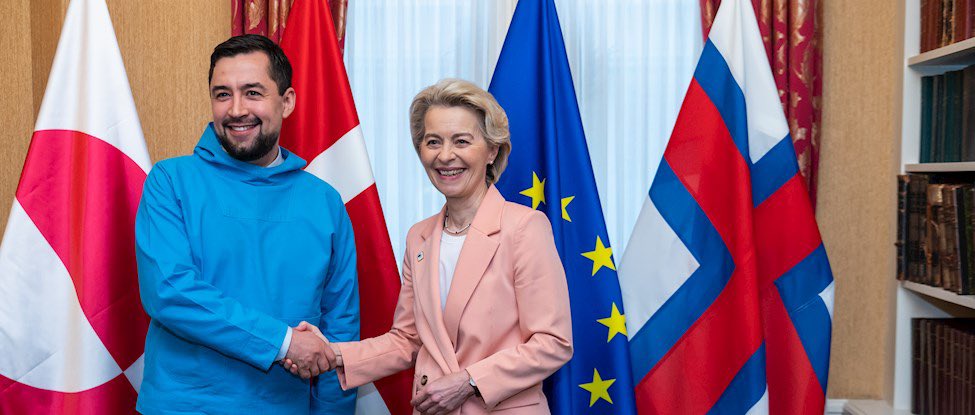
Au Groenland, après deux ans de préparation, l’Union Européenne par la voix de la présidente de la Commission, Ursula von der Leyen, a officiellement inauguré un bureau à Nuuk le 15 mars dernier. Le nouveau bureau de l’UE devrait contribuer à renforcer la coopération entre l’UE et le Groenland dans de nouveaux domaines prioritaires tels que les matières premières, le climat et l’énergie (Sermitsiaq, 11 mars). L’UE s’est déjà engagée à investir 500 millions d’euros dans le pays d’ici à 2027 (Polar Journal, 14 mars). Pour Ursula von der Leyen, “le fait que l’UE aide à développer l’énorme potentiel du Groenland en matière d’énergies renouvelables et de matières premières critiques est une situation gagnant-gagnant” (Altinget, 15 mars). Sur le plan de la défense, le Danemark, qui avait déjà annoncé l’an dernier tripler ses dépenses militaires sur 10 ans, va augmenter ses dépenses en défense de 5,4 milliards d’euros sur cinq ans. En 2024 et 2025, les dépenses militaires devraient représenter 2,4 % du PIB danois (au-dessus du seuil de 2% fixé par l’OTAN) (Rcinet, 13 mars). Au Groenland, 143 femmes inuit poursuivent le Danemark pour contraception forcée ; le Danemark avait mis en place une campagne de pose forcée de dispositifs contraceptifs intra-utérins dans les années 1960 et 1970 (Rcinet, 5 mars). L’Inuit Circumpolar Council a apporté son plein soutien (Sermitsiaq, 8 mars). Par ailleurs, sur la question du deep-sea mining, le gouvernement groenlandais a annoncé être en accord avec les Nations unies pour mettre en place, par mesure de précaution, une pause pour l’exploitation minière dans les profondeurs des fonds marins (DR, 13 mars). Enfin, les deux navires d’inspection de la marine, qui ont pour mission de patrouiller dans les eaux du Groenland, ont vu leur interdiction de naviguer levée. Les deux navires d’inspection de la classe Knud Rasmussen étaient immobilisés dans le port de Nuuk depuis le 1er février, car les moteurs auxiliaires des deux navires étaient soudainement tombés en panne (DR, 25 mars).

– March Review: EU settles in Nuuk, military budget increased and Danish state pursued by 143 Inuit women

In Greenland, after two years of preparation, the European Union, through the voice of Commission President Ursula von der Leyen, officially inaugurated an office in Nuuk on March 15. The new EU office should help strengthen cooperation between the EU and Greenland in new priority areas such as raw materials, climate and energy (Sermitsiaq, March 11). The EU has already pledged to invest 500 million euros in the country by 2027 (Polar Journal, March 14). For Ursula von der Leyen, “the fact that the EU is helping to develop Greenland’s enormous potential for renewable energies and critical raw materials is a win-win situation” (Altinget, March 15). On the defense front, Denmark, which had already announced last year that it would triple its military spending over 10 years, is to increase its defense spending by 5.4 billion euros over five years. By 2024 and 2025, military spending should represent 2.4% of Danish GDP (above the 2% threshold set by NATO) (Rcinet, March 13). In Greenland, 143 Inuit women sue Denmark for forced contraception; Denmark had implemented a campaign of forced insertion of intrauterine contraceptive devices in the 1960s and 1970s (Rcinet, March 5). The Inuit Circumpolar Council lent its full support (Sermitsiaq, March 8). Meanwhile, on the issue of deep-sea mining, the Greenland government announced that it had agreed with the United Nations to introduce a precautionary pause for deep-sea mining (DR, March 13). Finally, the two navy inspection vessels, whose mission is to patrol Greenland’s waters, have had their sailing ban lifted. The two Knud Rasmussen-class inspection vessels had been immobilized in the port of Nuuk since February 1, when their auxiliary engines suddenly failed (DR, March 25).

Revue de février : “Nothing about us, without us”, et l’enquête historique sur les relations entre le Danemark et le Groenland

English below

Au Groenland, le Naalakkersuisut (Gouvernement) a rendu publique sa stratégie étrangère, de sécurité et de défense “Greenland in the world – nothing about us, without us” pour la période 2024-2033. La stratégie a été présentée par la Naalakkersuisoq (Ministre) des affaires étrangères et de l’indépendance du Groenland, Vivian Motzfeldt, qui a affirmé que : “le peuple groenlandais doit s’adapter, prendre position et avoir une stratégie cohérente par rapport aux grands événements mondiaux.” La stratégie évoque quatre axes majeurs : 1) Une responsabilité accrue sur les questions de souveraineté territoriale pour préserver l’Arctique comme un espace à faibles tensions (participation plus active dans la patrouille SIRIUS, rôle accru dans la surveillance du GIUK) ; 2) Un rôle prédominant dans les instances de gouvernance régionale, et notamment le Conseil de l’Arctique, au sein duquel le Groenland doit se préparer à jouer un rôle de premier plan dans le cadre de la présidence du royaume au Conseil de l’Arctique en 2025-2027 ; 3) La création d’un “Arctic North American Forum” afin de développer la coopération avec les gouvernements et les parlements de l’Alaska et des territoires canadiens du Yukon, des Territoires du Nord-Ouest, du Nunavut et du Nunavik (Sermitsiaq, 21 février) ; 4) Le renforcement des opportunités commerciales en Chine, depuis l’ouverture d’une représentation à Beijing (DR, 21 février). Cette stratégie, qui a été construite en consultation avec les Etats-Unis, le Canada, l’Islande et le Danemark, a reçu un large soutien au sein de la classe politique groenlandaise (à l’exception du parti indépendantiste Naleraq) (DR, 21 février ; Sermitsiaq, 21 février). La stratégie prévoit également un engagement accru au sein de l’OTAN dans laquelle le Groenland entend façonner une meilleure compréhension de l’Arctique, des Nations Unies mais aussi en lien avec l’Union Européenne qui souhaite ouvrir depuis plusieurs années une représentation à Nuuk (KNR, 21 février). Par ailleurs, l’enquête historique sur les relations entre le Danemark et le Groenland, dont l’objectif est d’examiner l’histoire entre le Groenland et le Danemark depuis la Seconde Guerre mondiale jusqu’à aujourd’hui, en particulier les décisions politiques danoises qui ont eu des conséquences pour la population groenlandaise, a été mise en place (KNR, 20 février).

– February Review: “Nothing about us, without us”, and the historical survey on Denmark and Greenland’s relations

In Greenland, the Naalakkersuisut (Government) has released its foreign, security and defense strategy “Greenland in the world – nothing about us, without us” for the period 2024-2033. The strategy was presented by Greenland’s Naalakkersuisoq (Minister) of Foreign Affairs and Independence, Vivian Motzfeldt, who stated that “the Greenlandic people must adapt, take a stand and have a coherent strategy in relation to major world events.” The strategy evokes four major axes: 1) Increased responsibility for issues of territorial sovereignty to preserve the Arctic as a low-tension space (more active participation in the SIRIUS patrol, increased role in GIUK monitoring); 2) A prominent role in regional governance bodies, and in particular the Arctic Council, in which Greenland must prepare to play a leading role as part of the kingdom’s chairmanship of the Arctic Council in 2025-2027 ; 3) The creation of an “Arctic North American Forum” to develop cooperation with the governments and parliaments of Alaska and the Canadian territories of Yukon, Northwest Territories, Nunavut and Nunavik (Sermitsiaq, February 21); 4) The strengthening of business opportunities in China, since the opening of a representation office in Beijing (DR, February 21). This strategy, which was built in consultation with the USA, Canada, Iceland and Denmark, has received broad support among Greenland’s political class (with the exception of the pro-independence Naleraq party) (DR, February 21; Sermitsiaq, February 21). The strategy also calls for greater involvement in NATO, where Greenland intends to shape a better understanding of the Arctic, and in the United Nations, as well as with the European Union, which has been keen to open a representation in Nuuk for several years (KNR, February 21). In addition, the historical inquiry into relations between Denmark and Greenland, which aims to examine the history between Greenland and Denmark from the Second World War to the present day, in particular the Danish political decisions that have had consequences for the Greenlandic population, has been set up (KNR, February 20).

Revue de janvier : Accord bilatéral de défense, exploitation minière en eaux profondes au Groenland et abdication de la reine Margret II

English below

Au Groenland, le nouvel accord bilatéral de défense avec les Etats-Unis prévoit la possibilité pour ces derniers de stationner des soldats et de stocker du matériel militaire sur le sol danois. Le traité du Groenland de 1941 avait déjà permis aux États-Unis d’établir des bases et d’utiliser de vastes zones militaires au Groenland. L’accord a été révisé, notamment en 1951, après l’adhésion du Danemark à l’OTAN. Cela a conduit, entre autres, à la construction de la base de Pituffik (ex-Thulé), la seule base américaine au Groenland aujourd’hui. Pour le professeur Thorsten Borring Olesen, “outre le fait que le premier accord couvrait le Groenland tandis que le nouveau couvre le Danemark, une différence très importante est que le nouvel accord précise qu’il ne doit pas y avoir d’armes nucléaires sur les bases en temps de paix.” (Altinget, 22 janvier). En Arctique et dans  l’Atlantique Nord, le nouvel accord de défense danois prévoit 2,74 milliards DKK (environ 400 millions de dollars) pour l’achat de drones à longue portée afin d’accroître la surveillance. L’accord donne également la priorité à la mise en place d’un radar d’alerte aérienne sur les îles Féroé. Le radar surveillera l’espace aérien entre l’Islande, la Norvège et le Royaume-Uni, avec une portée de 3 à 400 kilomètres (High North News, 24 janvier). Bien que le gouvernement du Groenland ait été inclus dans les négociations, et bien qu’un programme d’éducation visant à renforcer la préparation et la résilience de la population groenlandaise soit prévu (Sermitsiaq, 8 janvier), c’est largement insuffisant pour la parlementaire au Folketing, Aaja Chemnitz: “il est stipulé que les parties groenlandaises doivent être impliquées dans les négociations de règlement de la défense. Dans la pratique, malheureusement, nous ne participons pas à toutes les négociations. Cela revient à nous inviter à la fête de famille et à mettre le Groenland à la table des enfants” (Sermitsiaq, 19 janvier). Revenant sur le plan du gouvernement norvégien pour l’exploration des abysses en vue du développement de deep-sea mining approuvé le 9 janvier dernier par le Storting, le parlement norvégien, la Ministre pour les matières premières, Naaja H. Nathanielsen (IA), a affirmé qu’il n’y a pas d’obstacle juridique à l’exploitation des fonds marins au Groenland. Elle a ainsi affirmé qu’une entreprise avait déjà déposé une demande de permis d’exploration. Le gouvernement groenlandais a demandé au DCE (Danish Centre for Environment and Energy) une mise à jour de l’étude de 2012 concernant les aspects environnementaux de l’exploitation minière en mer au Groenland (Sermitsiaq, 10 janvier). L’Inuit Circumpolar Council (ICC) du Groenland a pour sa part appelé à un moratoire, avertissant que les écosystèmes marins et le patrimoine culturel uniques du Groenland pourraient être gravement menacés par l’exploitation minière en eaux profondes. Par ailleurs, selon un rapport de la Environmental Justice Foundation, publié en 2024, l’exploitation minière des fonds marins n’est pas nécessaire pour répondre aux besoins lilés au développement d’énergies propres (Sermitsiaq, 13 janvier). Enfin, au Danemark, le début d’année a été marqué par l’abdication de la reine de Margrethe II, après 52 ans de règne. Son fils, Frederik X a été proclamé roi du Danemark le 14 janvier dernier. Le Roi Frederik X, qui jouit d’une grande popularité aussi bien aux îles Féroé qu’au Groenland, a affirmé “œuvrer pour que les liens entre le Groenland, les îles Féroé et le reste du royaume danois deviennent encore plus étroits.” (Altinget, 11 janvier ; Altinget, 18 janvier).

– January Review: Bilateral Defense Agreement, Deep-Sea Mining in Greenland, and Abdication of Queen Margrethe II.

In Greenland, the new bilateral defense agreement with the USA allows the latter to station soldiers and store military equipment on Danish soil. The Greenland Treaty of 1941 had already allowed the USA to establish bases and use large military areas in Greenland. The agreement was revised, notably in 1951, after Denmark joined NATO. This led, among other things, to the construction of the Pituffik (formerly Thule) base, the only American base in Greenland today. For Professor Thorsten Borring Olesen, “apart from the fact that the first agreement covered Greenland while the new one covers Denmark, a very important difference is that the new agreement specifies that there must be no nuclear weapons on the bases in peacetime.” (Altinget, January 22). In the Arctic and North Atlantic, the new Danish defense agreement provides DKK 2.74 billion (around $400 million) for the purchase of long-range drones to increase surveillance. The agreement also prioritizes the installation of an airborne warning radar on the Faroe Islands. The radar will monitor the airspace between Iceland, Norway and the UK, with a range of 3 to 400 kilometers (High North News, January 24). Although the Greenland government has been included in the negotiations, and an education program to strengthen the preparedness and resilience of the Greenlandic population is planned (Sermitsiaq, January 8), this is largely insufficient for Folketing parliamentarian Aaja Chemnitz: “It is stipulated that the Greenlandic parties must be involved in the defense settlement negotiations. In practice, unfortunately, we don’t take part in all the negotiations. This is like inviting us to the family party and putting Greenland at the children’s table” (Sermitsiaq, January 19). Referring to the Norwegian government’s plan for deep-sea mining exploration approved on January 9 by the Storting, the Norwegian parliament, the Minister for Raw Materials, Naaja H. Nathanielsen (IA), asserted that there are no legal obstacles to deep-sea mining in Greenland. She said that one company had already applied for an exploration permit. The Greenlandic government has asked the DCE (Danish Centre for Environment and Energy) for an update of the 2012 study on the environmental aspects of offshore mining in Greenland (Sermitsiaq, January 10). For its part, Greenland’s Inuit Circumpolar Council (ICC) has called for a moratorium, warning that Greenland’s unique marine ecosystems and cultural heritage could be seriously threatened by deepwater mining. On the other hand, according to a report by the Environmental Justice Foundation, published in 2024, seabed mining is not necessary for the development of clean energy (Sermitsiaq, January 13). Finally, in Denmark, the start of the year was marked by the abdication of Queen Margrethe II, after 52 years of reign. Her son, Frederik X, was proclaimed King of Denmark on January 14. King Frederik X, who enjoys great popularity in both the Faroe Islands and Greenland, said he was “working to ensure that the ties between Greenland, the Faroe Islands and the rest of the Danish kingdom become even closer.” (Altinget, January 11; Altinget, January 18).

Revue de décembre : Deep-sea mining, coopération nordique et aides exceptionnelles pour les chasseurs et chasseuses en raison du changement climatique

English below

Le parlement danois a entériné l’accord conclu en juin 2022 avec le Canada concernant le différend territorial de l’île Hans, soldant un différend de 50 ans (Sermitsiaq, 19 décembre). Le gouvernement Groenlandais, qui a été consulté en amont de la publication du plan Norvégien pour le “deep-sea mining”, n’a pas arrêté de position et devra, en particulier, se prononcer sur les impacts potentiels du développement de “deep-sea mining” aux larges de la côte est du Groenland (Sermitsiaq, 22 décembre). A Bruxelles, Ursula von der Leyen a rencontré conjointement Mette Frederiksen (Danemark), Múte B. Egede (Groenland) et Aksel V. Johannesen (Îles Féroé). Múte B. Egede a confirmé l’ouverture d’une représentation européenne à Nuuk et annoncé une visite de la présidente de la Commission européenne au printemps prochain (Sermitsiaq, 18 décembre). Les relations entre l’UE et le Groenland/les îles Féroé portent traditionnellement sur la politique de la pêche, mais la “transition énergétique” a également ouvert de nouveaux domaines de coopération dans les domaines du climat, de l’énergie. L’UE et le Groenland ont conclu, fin novembre, un partenariat stratégique pour le développement de chaînes de valeur pour les matières premières (Représentation danoise à la Comission Européenne, 13 décembre). Au Danemark, le ministère de la Défense a été mis en cause après les révélations de DR, d’après lesquelles les navires danois, et plus largement les équipements militaires, sont loin de répondre aux exigences minimales de l’OTAN (DR, 29 novembre, 19 décembre). Par ailleurs, le ministère des affaires étrangères a déclaré que l’Arctique et l’Atlantique Nord figureront parmi les priorités de Copenhague lorsque le Danemark reprendra la présidence de la Coopération nordique de défense (NORDEFCO) de la Suède le 1er janvier : “C’est important pour les lignes de communication et d’approvisionnement stratégiques, ainsi que pour les capacités et la coopération opérationnelle. Nous envisageons donc de renforcer nos capacités de surveillance dans la région. Une coopération et une coordination nordiques plus étroites dans le cadre général de l’OTAN seront importantes”, a affirmé le porte-parole du Ministère (Eye on the Arctic. 22 décembre). Enfin, face aux difficultés rencontrées par les chasseurs en raison des impacts du changement climatique particulièrement exacerbés cette année, le gouvernement a déployé une aide à destination des chasseurs concernés (Sermitsiaq, 18 décembre).

– December Review: Deep-sea mining, Nordic cooperation and exceptional aid due to climate change

The Danish parliament has ratified the agreement reached in June 2022 with Canada on the Hans Island territorial dispute, settling a 50-year dispute (Sermitsiaq, 19 December). The Greenland government, which was consulted prior to the publication of the Norwegian plan for deep-sea mining, has not adopted a position and will have to give its opinion on the potential impact of the development of deep-sea mining off the east coast of Greenland (Sermitsiaq, 22 December). In Brussels, Ursula von der Leyen met with Mette Frederiksen (Denmark), Múte B. Egede (Greenland) and Aksel V. Johannesen (Faroe Islands). Múte B. Egede confirmed the opening of a European representation in Nuuk and announced a visit by the President of the European Commission next spring (Sermitsiaq, 18 December). Relations between the EU and Greenland/Faroe Islands have traditionally focused on fisheries policy, but the ‘energy transition’ has also opened up new areas of cooperation in the fields of climate and energy. At the end of November, the EU and Greenland concluded a strategic partnership for the development of value chains for raw materials (Danish Representation to the European Commission, 13 December). In Denmark, the Ministry of Defence has been called into question following revelations by DR that Danish ships, and more generally military equipment, fall far short of NATO’s minimum requirements (DR, 29 November, 19 December). In addition, the Ministry of Foreign Affairs has stated that the Arctic and the North Atlantic will be high on Copenhagen’s agenda when Denmark takes over the chairmanship of the Nordic Defence Cooperation (NORDEFCO) from Sweden on 1 January: “This is important for strategic communication and supply lines, as well as for capabilities and operational cooperation. We are therefore planning to strengthen our surveillance capabilities in the region. Closer Nordic cooperation and coordination within the overall NATO framework will be important”, said the Ministry’s spokesman (Eye on the Arctic. 22 December). Finally, in response to the difficulties encountered by hunters as a result of the impacts of climate change, which have been particularly exacerbated this year, the government has deployed aid for the hunters concerned (Sermitsiaq, 18 December).

Revue de novembre : Plan de réarmement militaire, adhésion à l’Accord de Paris votée et renforcement de l’éducation sur le Groenland au Danemark

English below

D’après des fuites révélées par TV2 (19 novembre), les forces de défenses danoises envisagent de consacrer une centaine de milliards de couronnes pour le plan de réarmement militaire au cours des dix prochaines années, en particulier dans le domaine aérien. Pour l’ancien major de l’armée de l’air, Hans Peter Michaelsen : “La situation est telle que la menace pour le Danemark ne se situe pas sur terre, mais dans l’espace aérien, sous la forme de missiles. Le Danemark ne dispose actuellement d’aucune défense dans cet espace”. Outre les avions de surveillance P8 de l’armée de l’air destinés à surveiller l’Atlantique Nord, cela se décline notamment en Arctique et au Groenland de la manière suivante : 2 milliards de couronnes danoises supplémentaires notamment destinés à l’agrandissement d’une station aérienne à Kangerlussuaq, avec la construction d’une nouvelle piste d’atterrissage, ainsi qu’une enveloppe de 4 milliards de couronnes pour le renforcement de la patrouille Sirius et l’achat d’un nouveau navire de plongée et d’équipements de détection. A l’Inatsisartut, le Parlement groenlandais, l’adhésion du Groenland à l’Accord de Paris, annoncée en 2021, a finalement été votée après une nouvelle étude d’impact (High North News, 17 novembre). Pour Kalistat Lund, Ministre de l’énergie et de l’environnement : “L’Accord de Paris ne menace pas le développement du Groenland. Au contraire. La loi sur l’autonomie gouvernementale constituera la base de notre adhésion à l’accord. Nous adhérons en reconnaissant que nous sommes un peuple autochtone ayant le droit à l’autonomie. Nous sommes responsables de notre politique climatique et nous adhérons à l’Accord de Paris dans ces conditions”. Les contributions déterminées au niveau national (NDC) seront décidées avec des objectifs climatiques pour chaque secteur. Certaines industries, comme les matières premières ou la pêche, pourraient être exemptées de ces objectifs. Le Groenland a, par ailleurs, délivré deux nouvelles licences d’exploration de terres rares à l’entreprise canadienne, Amaroq Minerals. Ces licences portent à 9 785,56 km² la superficie totale du territoire groenlandais de la société, ce qui fait d’Amaroq le plus grand détenteur de licences d’exploration minière du pays (Eyes on the Arctic, 1 novembre). Mis en place en juin dernier, les réunions tripartites entre les membres du conseil de politique étrangère du parlement danois, de la commission des affaires étrangères du parlement féroïen et de la commission de la politique étrangère et de sécurité du parlement groenlandais Inatsisartut ne devraient pas s’institutionnaliser. Les politiciens groenlandais ont rejeté cette hypothèse (Altinget, 16 novembre). Toujours sur le plan régional, et à la suite des critiques de Múte B. Egede (cf. bulletin n°43), la ministre danoise de la coopération nordique, Louise Schack Elholm, s’est dite favorable à ce que le Groenland et les îles Féroé obtiennent une position plus forte au sein du Conseil de coopération nordique (Sermitsiaq, 8 novembre). Reprenant les conclusions du rapport de l’ONU sur les discriminations raciales dont sont victimes les groenlandaises et groenlandais, la députée groenlandaise au Folketing, Aaja Chemnitz (Inuit Ataqatigiit) a appelé au renforcement de l’éducation sur le Groenland au Danemark (Altinget, 2 novembre). Enfin, l’Union Européenne, qui envisageait d’ouvrir une représentation à Nuuk en 2023, a reporté le projet face aux lenteurs des tractations (Altinget, 9 novembre).

November Review: Military rearmament plan, vote in favour of accession to the Paris Agreement and more education on Greenland in Denmark

According to leaks revealed by TV2 (19 November), the Danish defence forces are planning to spend around a hundred billion kroner on military rearmament over the next ten years, particularly in the air. According to former Air Force Major Hans Peter Michaelsen: “The situation is such that the threat to Denmark is not on the ground, but in the air, in the form of missiles. Denmark currently has no defences in this airspace. In addition to the air force’s P8 surveillance aircraft to monitor the North Atlantic, this means the following in the Arctic and Greenland: an extra DKK 2 billion to expand an air station at Kangerlussuaq, including the construction of a new runway, and DKK 4 billion to strengthen the Sirius patrol and purchase a new diving vessel and detection equipment. In the Inatsisartut, the Greenland Parliament, Greenland’s accession to the Paris Agreement, announced for 2021, was finally voted through after a new impact study (High North News, 17 November). According to Kalistat Lund, Minister for Energy and the Environment: “The Paris Agreement does not threaten Greenland’s development. Quite the contrary. The Self-Government Act will form the basis of our adherence to the agreement. We do so by recognising that we are an indigenous people with the right to self-government. We are responsible for our own climate policy and we are signing up to the Paris Agreement on these terms. Nationally Determined Contributions (NDCs) will be decided with climate targets for each sector. Certain industries, such as raw materials or fishing, could be exempt from these targets. Greenland has also issued two new rare earth exploration licences to the Canadian company Amaroq Minerals. These licences bring the company’s total surface area in Greenland to 9,785.56 km², making Amaroq the country’s largest holder of mining exploration licences (Eyes on the Arctic, 1 November). Set up last June, the tripartite meetings between members of the Danish parliament’s foreign policy council, the Faroese parliament’s foreign affairs committee and the Greenland parliament’s foreign and security policy committee Inatsisartut are not expected to become institutionalised. Greenlandic politicians have rejected this hypothesis (Altinget, 16 November). Still on the regional front, and following criticism from Múte B. Egede (see newsletter no. 43), the Danish Minister for Nordic Cooperation, Louise Schack Elholm, said she was in favour of Greenland and the Faroe Islands obtaining a stronger position within the Nordic Cooperation Council (Sermitsiaq, 8 November). Echoing the conclusions of the UN report on racial discrimination against Greenlanders, Greenlandic member of the Folketing Aaja Chemnitz (Inuit Ataqatigiit) called for more education on Greenland in Denmark (Altinget, 2 November). Finally, the European Union, which was planning to open a representation in Nuuk in 2023, has postponed the project in the face of slow negotiations (Altinget, 9 November).

Revue d’octobre : nouvelle coalition, représentation à l’OTAN et premier discours en Kalaallisut au Folketing

English below

A la suite de la réélection d’Erik Jensen à la tête du Siumut cet été, Mete B. Egede (IA) a formé un nouveau gouvernement de coalition avec le Siumut, dans lequel chacun des deux partis se partage les portefeuilles ; Erik Jensen sera chargé des finances. Le nouvel accord de coalition s’appuie sur quatre point-clés : le soutien au système de santé publique qui reste défaillant et qui souffre de sous-effectifs, une réforme de la taxation notamment en lien avec le tourisme, le désir partagé de construire l’indépendance par la création d’un département pour l’indépendance et, finalement, une stratégie pour le développement des matières premières et l’exploitation minière (Altinget, 2 octobre). A l’échelle internationale, des représentants groenlandais ont participé pour la première fois à la réunion de l’OTAN qui s’est tenue à Copenhague, ce qui démontre, selon Pele Broberg, un acte de reconnaissance vis-à-vis du Groenland, qui se positionne comme un acteur stratégique en Arctique (Sermitsiaq, 7 octobre). Le Groenland a également officiellement mis en place une représentation à Beijing, au cours de la visite de la ministre des Affaires étrangères et pour l’indépendance, Vivian Motzfeldt (Sermitsiaq, 20 octobre, Sermitsiaq, 23 octobre). Au Danemark, après la rentrée du Folketing, Markus E. Olsen, suppléant d’Aki-Matilda Høegh-Dam a tenu un discours historique, le premier en kalaallisut (groenlandais de l’Ouest) au sein de l’hémicycle. Il a notamment souligné : “même dans notre propre pays, nous sommes traités comme des étrangers, car le danois est parlé principalement dans les administrations publiques” (Sermitsiaq, 5 octobre). Sur le plan régional, le Canada et le Groenland ont signé une lettre d’intention sur une aire marine de conservation dans l’Arctique. Pour Sara Olsvig, présidente de l’Inuit Circumpolar Council, “cette initiative offre une occasion unique pour renforcer conjointement la conservation marine menée par les Inuit et élaborer de nouvelles approches dans lesquelles les Inuit participent à la gouvernance marine et à la définition des opportunités futures” (Eye On the Arctic, 19 octobre, Sermitsiaq, 20 octobre). L’ICC a par ailleurs enjoint le Groenland de révoquer sa réserve territoriale et d’adhérer à l’Accord de Paris, lequel a constitué un tournant dans la participation des organisations autochtones (Sermitsiaq, 10 octobre).

– October review: new coalition, NATO representation and first speech in Kalaallisut at the Folketing

Following Erik Jensen’s re-election as Siumut leader this summer, Mete B. Egede (IA) has formed a new coalition government with Siumut, in which both parties share portfolios; Erik Jensen will be in charge of finance. The new coalition agreement is based on four key points: support for the public health system, which remains deficient and suffers from understaffing; tax reform, particularly in relation to tourism; the shared desire to build independence by creating a department for independence; and, finally, a strategy for the development of raw materials and mining (Altinget, October 2). Internationally, Greenlandic representatives took part for the first time in the NATO meeting in Copenhagen, which Pele Broberg sees as an act of recognition of Greenland’s position as a strategic player in the Arctic (Sermitsiaq, October 7). Greenland also officially set up a representation in Beijing, during the visit of the Minister for Foreign Affairs and Independence, Vivian Motzfeldt (Sermitsiaq, October 20, Sermitsiaq, October 23). In Denmark, Markus E. Olsen, Aki-Matilda Høegh-Dam’s deputy, made a historic speech after the Folketing was called back into session, the first in Kalaallisut (West Greenlandic) to be given in the hemicycle. He pointed out that “even in our own country, we are treated as foreigners, as Danish is spoken mainly in public administration” (Sermitsiaq, October 5). On a regional level, Canada and Greenland have signed a letter of intent for a marine conservation area in the Arctic. For Sara Olsvig, President of the Inuit Circumpolar Council, “this initiative offers a unique opportunity to jointly strengthen Inuit-led marine conservation and develop new approaches in which Inuit participate in marine governance and in defining future opportunities” (Eye On the Arctic, October 19, Sermitsiaq, October 20). The ICC also urged Greenland to revoke its territorial reserve and join the Paris Agreement, which marked a turning point in the involvement of indigenous organizations (Sermitsiaq, October 10).

Revue de septembre : Rapport spécial de l’ONU, plurilinguisme au Folketing et Ocean Explorer

English below

Le rapporteur spécial sur les droits des peuples autochtones, José Francisco Calí Tzay a rendu son rapport à la suite de sa visite au Groenland en février dernier. Le rapport pointe notamment les discriminations subies par les groenlandaises et les groenlandais dans l’accès à leurs droits, ainsi que les politiques danoises particulièrement violentes (notamment la campagne de stérilisation des filles et des femmes dans les années 1960-70) qui ont suivies la période coloniale, qui s’est formellement achevée en 1953. Le rapporteur préconise d’engager “un processus de réconciliation afin d’aborder l’héritage du colonialisme et du racisme et, avec la participation des Inuit, d’élaborer des solutions et des politiques efficaces” (UN, 11 septembre). Un autre préconisation rejoint la demande exprimée au Folketing, le parlement danois, par Aki-Matilda Høegh-Dam de pouvoir s’exprimer en groenlandais et féroïens. A ce sujet, le président du Folketing, Søren Gade, qui s’était montré favorable à la mise à disposition d’interprètes, a finalement tranché, il s’agira pour les membres élus du Groenland et des îles Féroé de traduire eux-mêmes leurs discours au Folketing s’ils s’expriment dans leur langue maternelle. Certaines déclarations et rapports seront également traduits (DR, 21 septembre). Alors que le développement du tourisme de croisière s’est développé considérablement au Groenland ces dernières années et que le gouvernement groenlandais étudie la mise en place d’une taxe pour les passagers (KNR, 31 août), au début du mois de septembre, le navire de croisière Ocean Explorer s’est échoué avec 206 personnes à bord dans l’Alpefjord au nord-est du Groenland. Les passagers ont pu être secourus avec le concours du navire de recherche Tarajoq de l’Institut de la nature (DR, 14 septembre). “Les navires de croisière qui naviguent dans les eaux groenlandaises et dans les fjords ont tous obtenu l’autorisation de naviguer dans nos eaux” précise Vivian Motzfeldt, nouvelle ministre des affaires étrangères et de l’indépendance, “mais la situation qui s’est créée montre clairement que nous devons travailler pour garantir des exigences légales strictes, claires et sans ambiguïté à partir de la saison prochaine” (Sermitsiaq, 13 septembre).

– September review: UN Special Report, multilingualism at the Folketing and Ocean Explorer

The Special Rapporteur on the rights of indigenous peoples, José Francisco Calí Tzay, issued his report following his visit to Greenland last February. The report highlights the discrimination suffered by Greenlanders in accessing their rights, as well as the particularly violent Danish policies (notably the campaign to sterilize girls and women in the 1960s and 70s) that followed the colonial period, which formally ended in 1953. The rapporteur calls for “a process of reconciliation to address the legacy of colonialism and racism and, with the participation of the Inuit, to develop effective solutions and policies” (UN, September 11). Another recommendation is in line with Aki-Matilda Høegh-Dam’s request to the Folketing, the Danish parliament, to be able to express herself in Greenlandic and Faroese. Folketing President Søren Gade, who had been in favor of providing interpreters, has now decided that elected members from Greenland and the Faroe Islands will be able to translate their speeches to the Folketing themselves if they speak in their mother tongue. Certain statements and reports will also be translated (DR, September 21). While cruise tourism has grown considerably in Greenland in recent years, and the Greenlandic government is considering the introduction of a passenger tax (KNR, August 31), in early September the cruise ship Ocean Explorer ran aground with 206 people on board in the Alpefjord in northeast Greenland. The passengers were rescued with the help of the Nature Institute’s research vessel Tarajoq (DR, September 14). “Cruise ships operating in Greenlandic waters and fjords have all obtained permission to sail in our waters,” says Vivian Motzfeldt, the new Minister for Foreign Affairs and Independence, “but the situation that has arisen clearly shows that we must work to ensure strict, clear and unambiguous legal requirements from next season onwards” (Sermitsiaq, September 13).

Revue de juillet-août : élections au Siumut, recours sur l’uranium et températures records en juillet

English below

L’actuel président du Siumut, Erik Jensen, a été réélu au premier tour (39 voix sur 68) pour diriger le second plus grand parti du pays. En cas de victoire de l’un (Kim Kielsen) ou l’une de ses rivales (Aki-Matilda Høegh-Dam), de nouvelles élections nationales à la rentrée pouvaient être attendues, ainsi que des prises de positions plus tranchées sur l’indépendance ou encore l’uranium, sur lequel le parti n’a pas de position stable depuis 2013 (DR, 30 juillet). Le réélection d’Erik Jensen signe donc le choix du “pragmatisme” et de la stabilité au sein de la coalition (DR, 30 juillet ; Sermitsiaq, 31 juillet). En 2021, menée par le parti IA, la coalition avait décidé de stopper les projets d’exploration et d’exploitation d’uranium. La compagnie australienne Energy Transition Minerals, qui avait obtenu une permission d’exploration en 2007 et demandé un permis d’exploitation en 2019 pour la mine de Kuannersuit, dans le sud-ouest du Groenland, a décidé d’intenter un recours pour obtenir une compensation de 76,5 milliards de couronnes danoises auprès du Danemark et du Groenland (DR ; Sermitsiaq, 20 juillet). Mi-juillet s’est tenue un sommet entre le président américain et les premiers ministres des pays nordiques, auquel le président groenlandais, Muté B. Egede, et le dirigeant féroïen, Aksel V. Johannesen n’ont pas été invités (Politiken, 22 juillet). Ces derniers ont vivement critiqués les pays Nordiques pour leur absence de considération répétée à leur égard : “Si les pays nordiques ne veulent pas prendre la coopération avec nous au sérieux et veiller à ce que nous soyons impliqués et entendus lors des négociations, nous devons réévaluer notre participation et regarder plus à l’ouest, vers d’autres pays de l’Arctique, et voir si nous pouvons développer une collaboration dans laquelle nous sommes pris au sérieux”, a averti Muté B. Egede à Sermitsiaq (15 juillet). Ceci s’ajoute aux tensions déjà fortes avec le Danemark qui se succèdent depuis plusieurs mois (Altinget, 14 août). Les discussions entre le Danemark, les îles Féroé et le Groenland autour du renforcement de la coopération avec les États-Unis dans l’Arctique, décidés en juin dernier, seront sur la table des négociations dans les prochains mois (Altinget, 3 août). Sur le plan climatique, d’après le Danish Meteorological Institute (DMI), les températures du mois de juillet 2023 ont été supérieures de  4,4°C à la moyenne observée depuis 1991 au sommet de la calotte glaciaire (station Summit) (DR, 11 août), tandis que des records de fonte de l’inlandsis ont aussi été observés par la NASA au mois de juillet (Eye on the Arctic, 2 août). D’après une autre étude menée par l’Université d’Aalborg, la population de la communauté d’Ittoqqortoormiit, à l’est du Groenland, et bien qu’elle vive loin des sources de pollution par les PFAS, celle-ci présente des concentrations de ces substances dans le sang parmi les plus élevées au monde (Sermitsiaq, 12 juillet). Le gouvernement a déclaré prendre cette étude très au sérieux et a annoncé son intention de ratifier la Convention de Stockholm sur les polluants organiques persistants (POP) (Sermitsiaq, 24 juillet). Par ailleurs, le colonel Søren Andersen a été nommé général de division et nouveau commandant du Commandement de l’Arctique (Altinget, 9 août).

– July-August review: Siumut elections, uranium appeal and record temperatures in July

Siumut’s current president, Erik Jensen, was re-elected in the first round (39 votes out of 68) to lead the country’s second-largest party. In the event of victory for one (Kim Kielsen) or the other of his rivals (Aki-Matilda Høegh-Dam), new national elections in the autumn could be expected, as well as stronger positions on independence or uranium, on which the party has had no stable position since 2013 (DR, July 30). Erik Jensen’s re-election signals the choice of “pragmatism” and stability within the coalition (DR, July 30; Sermitsiaq, July 31). In 2021, led by the IA party, the coalition had decided to halt uranium exploration and mining projects. The Australian company Energy Transition Minerals, which had obtained exploration permission in 2007 and applied for a mining permit in 2019 for the Kuannersuit mine in south-west Greenland, decided to seek compensation of DKK 76.5 billion from Denmark and Greenland (DR; Sermitsiaq, July 20). In mid-July, a summit was held between the American president and the prime ministers of the Nordic countries, to which the Greenlandic president, Muté B. Egede, and the Faroese leader, Aksel V. Johannesen, were not invited. Egede and Faroese leader Aksel V. Johannesen were not invited (Politiken, July 22). The latter strongly criticized the Nordic countries for their repeated lack of consideration for them: “If the Nordic countries don’t want to take cooperation with us seriously and ensure that we are involved and heard in the negotiations, we need to re-evaluate our participation and look further west, to other Arctic countries, and see if we can develop a collaboration in which we are taken seriously”, warned Muté B. Egede in Sermitsia. Egede in Sermitsiaq (July 15). This comes on top of the already high tensions with Denmark that have been building up for several months (Altinget, August 14). Discussions between Denmark, the Faroe Islands and Greenland on closer cooperation with the United States in the Arctic, agreed last June, will be on the negotiating table in the coming months (Altinget, August 3). On the climate front, according to the Danish Meteorological Institute (DMI), temperatures in July 2023 were 4.4°C above the average observed since 1991 at the summit of the ice cap (Summit station) (DR, August 11), while record melting of the ice sheet was also observed by NASA in July (Eye on the Arctic, August 2). According to another study conducted by Aalborg University, the population of the community of Ittoqqortoormiit, in eastern Greenland, despite living far from sources of PFAS pollution, has some of the highest concentrations of these substances in their blood in the world (Sermitsiaq, July 12). The government has stated that it takes this study very seriously, and has announced its intention to ratify the Stockholm Convention on Persistent Organic Pollutants (POPs) (Sermitsiaq, July 24). Colonel Søren Andersen has been appointed Major General and new Commander of the Arctic Command (Altinget, August 9).

Revue de juin : Contact Committe, Siumut, Aki-Matilda Høegh-Dam et relations dano-groenlandaises

English below

Le Contact Committee, établi en 2021 comme un forum d’échanges régulier entre le Danemark, le Groenland et les îles Féroé, s’est réuni à Nuuk au début du mois, et a notamment permis de mettre sur la table les tensions dano-groenlandaises exacerbées ces dernier mois (voir ici), de répondre aux exigences de transparence du parlement groenlandais vis-à-vis de la politique étrangère danoise ou encore d’avancer sur la mise en œuvre de l’accord de défense (DR, 6 juin ; DR, 7 juin). La première ministre danoise, Mette Frederiksen, dont le nom est de plus en plus cité comme potentielle future secrétaire générale de l’OTAN (Sermitsiaq, 5 juin), et le ministre des affaires étrangères, Lars Løkke Rasmussen, étaient notamment présents aux côtés de Múte B. Egede et son homologue féroïen, Aksel V. Johannesen. Après plusieurs mois de contestations concernant la nomination d’un ambassadeur de l’Arctique (voir ici), le gouvernement groenlandais a ouvert des discussions quant à la nomination d’un nouvel ambassadeur coopté par le Groenland et/ou par une distribution des postes plus favorables au Groenland à l’avenir (Sermitsiaq, 9 juin). En matière de défense, Troels Lund Poulsen, le ministre danois de la défense, a réaffirmé la centralité de l’Arctique tout en regrettant l’absence de stratégie commune précise à ce stade. L’Arctic capacity package de 2021 prévoyait de créer une formation à la défense sur le sol groenlandais, qui n’a pas été mise en œuvre. Dans l’accord de défense, qui a été présenté par le ministère de la défense à la fin du mois de mai, il est proposé de dépenser 143 milliards de couronnes jusqu’en 2033 (KNR, 7 juin). Sur le plan national, les élections à la tête du parti Siumut pourraient remettre en cause la coalition au pouvoir, et provoquer de nouvelles élections dans les semaines qui viennent, en particulier en cas de victoire d’Aki-Matilda Høegh-Dam (Sermitsiaq, 15 juin). Par ailleurs, cette dernière, élue au Folketing, le parlement danois, vient d’obtenir une réponse favorable de la part de la présidence du parlement à sa demande de reconnaître le féroïen et le groenlandais comme langues officielles au parlement (Sermitsiaq, 14 juin). Après les critiques de Múte B. Egede (voir ici), l’équipe de recherche qui mènera les investigations sur la spiralkampagnen a été mise en place, et devrait rendre ses résultats d’ici deux ans (Sermitsiaq, 30 mai). A ce sujet, la parlementaire groenlandaise au Folketing, Aaja Chemnitz a appelé le gouvernement danois à d’ores et déjà présenter des excuses (Sermitsiaq, 1 juin). En visite au Groenland, Mette Frederiksen, a déclaré : “Je n’ai aucun doute que de graves crimes et erreurs ont été commis dans les relations dano-groenlandaises au fil des ans, même si nous sommes aujourd’hui dans une situation complètement différente” (DK, 7 juin). A ce jour, 163 femmes concernées ont décidé de saisir la justice (Sermitsiaq, 24 juin). Un projet de recherche qui doit faire la lumière sur l’histoire du Danemark au Groenland a également été mise en place en fin de mois (DR, 22 juin).  Enfin, suite à la démission de Kuupik Kleist de son poste de président de Inuit Circumpolar Council (ICC) Greenland, notamment en raison des coupes budgétaires décidées par l’Inatsisartut, le parlement groenlandais, Hjalmar Dahl a été élu à la tête de l’organisation qu’il avait déjà dirigée de 2018 à 2022 (Sermitsiaq, 19 juin).

– June review: Contact Committe, Siumut, Aki-Matilda Høegh-Dam and Danish-Greenish relations

The Contact Committee, established in 2021 as a forum for regular exchanges between Denmark, Greenland and the Faroe Islands, met in Nuuk at the beginning of the month, and provided an opportunity to discuss the Danish-Greenlandic tensions that have been exacerbated in recent months (see here), to respond to the Greenlandic parliament’s demands for transparency with regard to Danish foreign policy and to make progress on the implementation of the defence agreement (DR, 6 June; DR, 7 June). The Danish Prime Minister, Mette Frederiksen, whose name is being mentioned more and more as a potential future Secretary General of NATO (Sermitsiaq, 5 June), and the Minister for Foreign Affairs, Lars Løkke Rasmussen, were present alongside Múte B. Egede and her counterpart from Finland. Egede and his Faroese counterpart, Aksel V. Johannesen. After several months of disputes over the appointment of an Arctic ambassador (see here), the Greenland government has opened discussions on the appointment of a new ambassador co-opted by Greenland and/or a distribution of posts more favourable to Greenland in the future (Sermitsiaq, 9 June). On defence, Troels Lund Poulsen, the Danish Defence Minister, reaffirmed the centrality of the Arctic, while regretting the absence of a precise common strategy at this stage. The 2021 Arctic capacity package provided for the creation of defence training on Greenlandic soil, but this has not been implemented. In the defence agreement, which was presented by the Ministry of Defence at the end of May, it is proposed to spend 143 billion kroner until 2033 (KNR, 7 June). At national level, the Siumut party leadership elections could call into question the coalition in power, and provoke new elections in the coming weeks, particularly if Aki-Matilda Høegh-Dam wins (Sermitsiaq, 15 June). Moreover, Høegh-Dam, who was elected to the Folketing, the Danish parliament, has just received a favourable response from the parliamentary presidency to her request to have Faroese and Greenlandic recognised as official languages in parliament (Sermitsiaq, 14 June). Following criticism from Múte B. Egede (see here), the research team that will carry out the investigations into spiralkampagnen has been set up, and is expected to deliver its findings within two years (Sermitsiaq, 30 May). Greenland’s member of parliament in the Folketing, Aaja Chemnitz, has called on the Danish government to apologise (Sermitsiaq, 1 June). On a visit to Greenland, Mette Frederiksen said: “I have no doubt that serious crimes and mistakes have been committed in Danish-Greenlandic relations over the years, even though we are now in a completely different situation” (DK, 7 June). To date, 163 of the women concerned have decided to go to court (Sermitsiaq, 24 June). A research project to shed light on Denmark’s history in Greenland.

Revue de mai: Constitution groenlandaise, dégradation des relations dano-groenlandaises et sécurité en Arctique

English below

Au Groenland, après six années parsemées de controverses (Sermitsiaq, 29 avril), la commission constitutionnelle vient de publier une version préliminaire de la constitution groenlandaise. Il appartient désormais à l’Inatsisartut, le parlement groenlandais, de décider de l’organisation d’un référendum, ce à quoi le premier ministre, Múte B. Egede s’est montré favorable (Altinget, 29 avril), appelant à lancer le débat plus largement dans la société sur les possibilités d’un indépendance groenlandaise (DR, 28 avril). Le projet de constitution, qui comporte un certain nombre de similarités avec le projet constitutionnel féroïen dont les travaux ont commencé en 1998 (Sermitsiaq, 1 mai), s’appuie sur un régime démocratique, prenant ses distances avec la monarchie danoise, la séparation des pouvoirs, la liberté d’expression ou encore la défense d’une identité inuite ancrée dans la nature (Sermitsiaq, 28 avril). La Première Ministre danoise, Mette Frederiksen n’a pas souhaité faire de commentaire, arguant qu’il s’agit “d’un débat interne qui doit maintenant être mené au Groenland” (Sermitsiaq, 17 mai). Au Folketing, le parlement danois, Aki-Matilda Høegh-Dam, l’une des deux représentantes groenlandaises, a délivré un discours en Kalaallisut (langue officielle du Groenland) pour dénoncer l’inégalité au sein du Royaume Danois et de contester qu’elle “ne soit pas autorisée à parler ce qui est le langage officiel du Groenland, territoire dans lequel elle est élue” (The Guardian, 12 mai). Par ailleurs, 8 mois après les révélations sur la spiralkampagnen, Múte B. Egede a alerté sur la menace sur les relations dano-groenlandaises que faisait peser le retard dans les investigations menées sous la responsabilité des autorités danoises (DR. 21 mai). Les critiques du premier ministre danois s’inscrivent dans un contexte de dégardation des relations dano-groenlandaises, en particulier avec Lars Løkke Rasmussen, le Ministre des Affaires étrangères (Sermitsiaq, 25 mai). Ce dernier vient de présenter une nouvelle stratégie de politique étrangère et de sécurité pour faire face aux menaces accrues liées à la guerre en Ukraine (Altinget, 16 mai), tandis que le nouveau Ministre de la Défense, Lund Poulsen fait du renforcement de la défense en Arctique une priorité, mentionnant notamment la station radar des îles Féroé, qui fait partie de l’Arctic Capacity Package de 2021 qui prévoit que les forces armées danoises dépenseront 1,6 milliard de couronnes danoises dans l’Arctique (High North News, 3 mai ; Altinget, 30 avril). Enfin, le Norwegian Intelligence Service et l’opérateur de télécommunication groenlandais Tusass alertent respectivement sur les menaces liées aux services de renseignement russes et chinois sur le Groenland (Sermitsiaq, 29 avril), mais aussi aux risques potentiels de rupture de câbles sous-marins, particulièrement vulnérables (Sermitsiaq, 29 avril).

– May Review: Greenland’s constitution, the deteriorating Danish-Greenlandic relations and Arctic security

In Greenland, after six years of controversy (Sermitsiaq, 29 April), the Constitutional Commission has published a draft of the Greenlandic constitution. It is now up to the Inatsisartut, Greenland’s parliament, to decide whether to hold a referendum, which Prime Minister Múte B. Egede has said he would support (Altinget, 29 April), calling for a wider debate in society on the possibilities for Greenlandic independence (DR, 28 April). The draft constitution, which has a number of similarities with the Faroese draft constitution that began in 1998 (Sermitsiaq, 1 May), is based on a democratic system distancing itself from the Danish monarchy, the separation of powers, freedom of expression and the defence of an Inuit identity as rooted in nature (Sermitsiaq, 28 April). Danish Prime Minister Mette Frederiksen did not wish to comment, arguing that this is “an internal debate that must now be conducted in Greenland” (Sermitsiaq, 17 May). In the Folketing, the Danish parliament, Aki-Matilda Høegh-Dam, one of the two Greenlandic representatives, delivered a speech in Kalaallisut (the official language of Greenland) to denounce the inequality within the Danish Kingdom and to contest the fact that she “is not allowed to speak what is the official language of Greenland, the territory in which she is elected” (The Guardian, 12 May). In addition, 8 months after the revelations on spiralkampagnen, Múte B. Egede warned of the threat to Danish-Greenlandic relations posed by the delay in the investigations conducted under the responsibility of the Danish authorities (DR, 21 May). The Danish Prime Minister’s criticism comes against a background of deteriorating Danish-Greenish relations, particularly with Foreign Minister Lars Løkke Rasmussen (Sermitsiaq, 25 May). The latter has just presented a new foreign and security policy strategy to deal with the increased threats linked to the war in Ukraine (Altinget, 16 May), while the new Minister of Defence, Lund Poulsen, is making the strengthening of defence in the Arctic a priority, mentioning in particular the Faroe Islands radar station, which is part of the 2021 Arctic Capacity Package that foresees that the Danish armed forces will spend 1.6 billion Danish kroner in the Arctic (High North News, 3 May; Altinget, 30 April). Finally, the Norwegian Intelligence Service and the Greenlandic telecommunication operator Tusass warn respectively about the threats linked to Russian and Chinese intelligence services over Greenland (Sermitsiaq, 29 April), but also about the potential risks of breaking particularly vulnerable submarine cables (Sermitsiaq, 29 April).