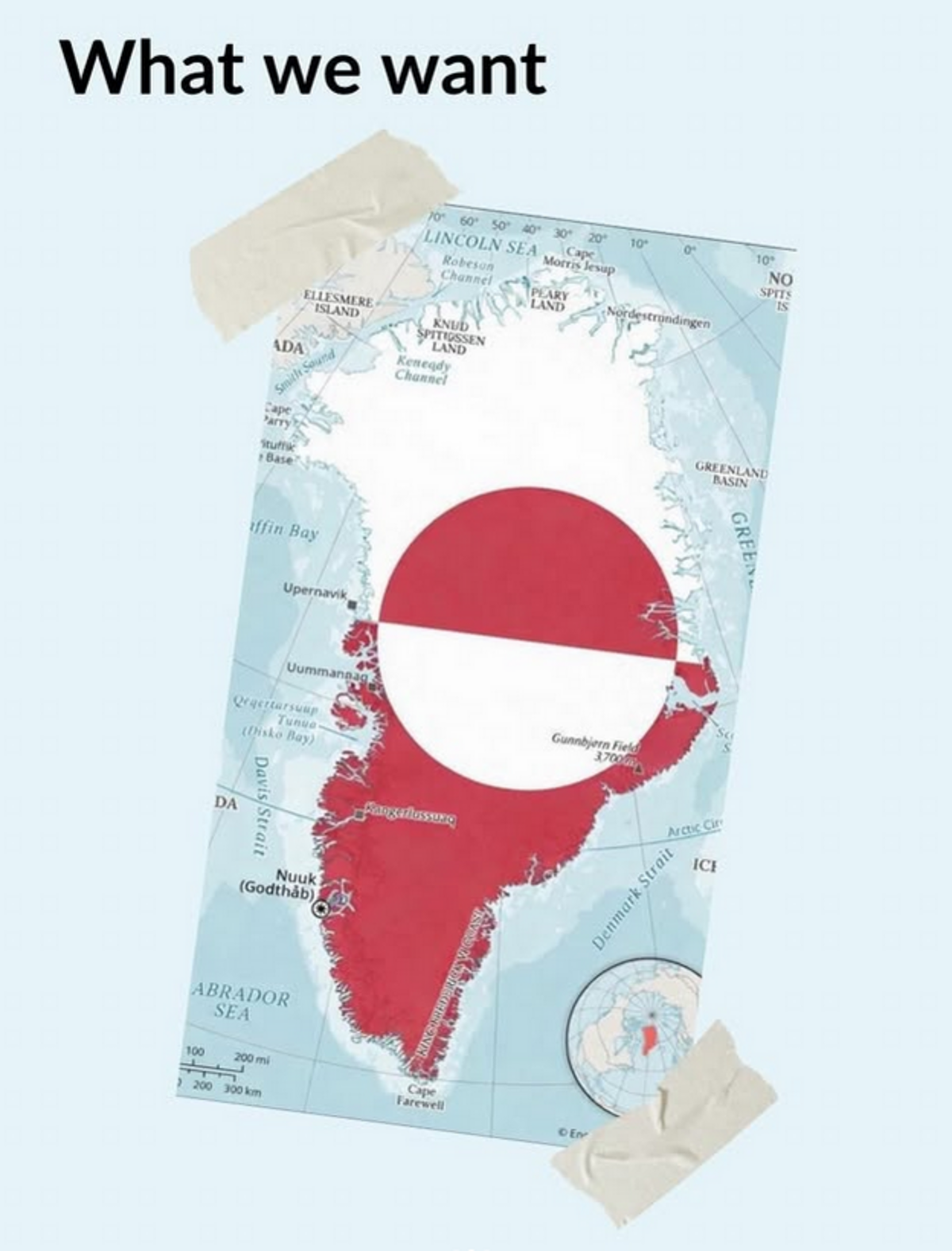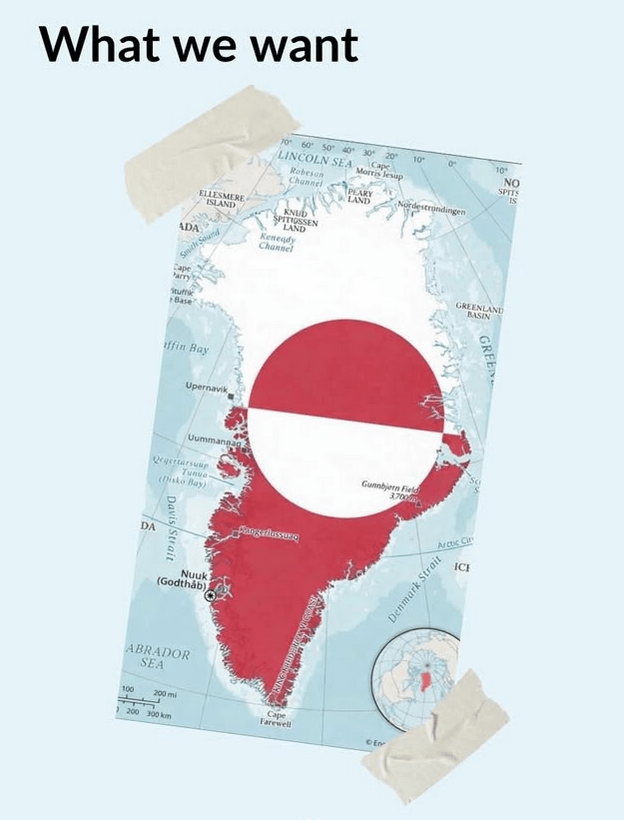
The desires of President Donald Trump in Greenland have taken credibility in recent days following the kidnapping of Venezuelan President Nicolas Maduro and his wife on January 3, illustrating a reaffirmation of an imperialist and interventionist aim freeing himself from international law. Following the intervention in Venezuela, Kate Miller, the wife of the deputy chief of staff of the White House shared a photo of Greenland against a background of the American flag with the caption “soon” (Sermitsiaq, January 4). Deputy Chief of Staff Stephen Miller himself claimed that Greenland should be part of the United States (Sermitsiaq, January 5). The White House would actively develop acquisition plans, including diplomatic, economic and military measures, calling the autonomous territory a “national security priority” and thus reviving an idea long considered rhetorical (High North News, January 7). This Trumpian obsession goes back to the first administration but gains in acuity following the US intervention in Venezuela, and while the use of the U.S. military “is still an option” according to the White House (BBC, January 7). At present, the existing defense agreements already allow the United States to increase its military presence, now limited to about 200 soldiers at the Pituffik base, in the northwest of the territory, which has a ballistic missile detection radar, as well as one of the control centers of the US military satellite network. Silent and then conciliatory after the abduction of Nicolas Maduro, Emmanuel Macron and six other leaders and heads of government of NATO member countries signed a joint declaration affirming that “it is up to Denmark and Greenland, and on their own, to decide on the issues concerning Denmark and Greenland” (SermitsiaqSermitsiaq, January 6). The foreign ministers of the Nordic countries (Finland, Sweden, Norway and Iceland) also defended the self-determination of Greenland and Denmark (Sermitsiaq, 6 January). Altinget underlines the weakening of European positions vis-à-vis international law: “We cannot defend international law in Ukraine and accept its collapse in Venezuela or Gaza. We cannot talk about sovereignty in the Baltic Sea and ignore it in the Caribbean.” (Altinget, January 5). Naalakkersuisut President Jens-Frederik Nielsen said in a statement to Trump that: “This is not how we address a people that has repeatedly shown responsibility, stability and loyalty. Too much, that’s too much. No more pressure. No more insinuations. No more annexation fantasies. We are open to dialogue. We are open to discussion.” (SermitsiaqSermitsiaq, January 4). Earlier in December, Donald Trump appointed a new special envoy to Greenland, the Republican governor of Louisiana state, Jeff Landry. The latter had written on X that it is an honour for him to assume the mission of integrating Greenland into the United States, already triggering a new round of condemnation from Danish, Greenlandic and European representatives (Sermitsiaq, 22 December). While responses to US threats have remained largely rhetorical, Greenland MP Aaja Chemnitz (IA) at the Folketing is now calling on Greenland and Denmark to take concrete steps, including military action, on the preparation and protection of Greenland (Sermitsiaq, 5 January). On the technological front, Starlink’s recent refusal to benefit European satellite solutions illustrates the growing politicization of digital infrastructures (Eye on the Arctic, December 10). In addition, on the climate front, the Arctic Report Card reports that the last ten years have been the ten warmest on record in the Arctic, while the Greenland ice sheet has continued to lose hundreds of billions of tonnes of ice (Hign North News, December 17). Finally, earlier this month, the Danish government announced that it had reached an agreement in Parliament to pay individual compensation to Greenlandic women who were victims of a forced birth control campaign (Eye on the Arctic, 10 December).
Greenland Science Week, Ice Sheets, Indigenous Rights & Arctic Security… November’s Wrap Up
In Greenland, a major scientific conference, the Greenland Science Week, organized by the Arctic Hub, brought together 400 researchers from 20 countries. Several representatives of the new presidency of the Arctic Council—now largely based in Greenland—took part (High North News, 19 November). Greenland’s Minister for Foreign Affairs and Research, Vivian Motzfeldt, reiterated that research conducted in Greenland must primarily benefit local populations, integrate Indigenous knowledge, and ensure meaningful knowledge returns to the communities concerned (High North News, 13 November).
A new scientific report published ahead of COP30 warns of a rapid and potentially irreversible decline of the Greenland and Antarctic ice sheets, which could lead to sea-level rise far exceeding current estimates. The report cautions that even the +1.5°C target would not be sufficient to prevent major damage and calls for global emissions to be halved by 2030 to limit ice-sheet collapse and its global consequences (Eye on the Arctic, 13 November).
At COP, the Inuit Circumpolar Council (ICC) also denounced the interchangeable use of the terms “local communities” and “Indigenous peoples,” a practice which, according to the organization, obscures the specific rights of Indigenous peoples (Eye on the Arctic, 19 November). The ICC is also calling for direct access to funding, the integration of Indigenous knowledge, and a just energy transition (Eye on the Arctic, 13 November).
At the national level, former Greenlandic Prime Minister Múte B. Egede accused Denmark of having committed a “genocide” during the so-called spiral campaign of the 1960s–1970s, sparking controversy. He received the backing of his successor, Jens-Frederik Nielsen (Sermitsiaq, 21 November), despite a now-withdrawn threat of legal action (Sermitsiaq, 23 November) by former Danish minister Tom Høyen, who disputes the accusations.
At the European Parliament, a network of regionalist, separatist, and minority-focused parties across Europe invited two Faroese politicians and former Siumut party secretary in Greenland, Ole Aggo Markussen, to exchange views and expand their network. The group brings together Scottish, Catalan, Basque, Corsican, Flemish, and also Kanak independence movements (Altinget, 24 November).
Also at the European Parliament, a new resolution on the Arctic was adopted, warning against growing militarization and stressing the need for cooperation with Nordic partners, notably Norway. The text highlights the importance of the High North for Europe’s security, energy, connectivity, and geopolitical stability, placing the Arctic at the core of the EU’s diplomatic and security priorities (High North News, 1 December).
Finally, earlier this month, the new US ambassador to Denmark—co-founder of PayPal and a long-time friend of Elon Musk—took up his post in Copenhagen, identifying defense cooperation, trade ties, and Arctic security as priorities (Eye on the Arctic, 5 November). He nevertheless remained evasive about Trump’s ambitions, refusing to rule out past proposals by Donald Trump regarding US sovereignty over Greenland (DR, 18 November). In early December, representatives from Greenland, Denmark, and the United States are set to meet in Greenland to resume official trilateral talks (Sermitsiaq, 26 November).
Inuit Women’s Summit, Minerals, Submarine Cables & Satellites… October’s Wrap Up
In Greenland, while Denmark has apologized and is preparing a compensation plan for women and girls who were victims of the forced sterilization program until 1991 (Sermitsiaq, October 22), the Inuit Circumpolar Council is organizing the first Inuit Women’s Summit in Sisimiut at the end of October. Its president, Sara Olvig, emphasized: “We are all deeply affected by the colonial policies that targeted Inuit women and girls.” More broadly, the Summit will focus on three themes: the rights and roles of Inuit women, the prevention of violence and the improvement of safety, and capacity building through culture (Eye on the Arctic, October 21). In early October, Prime Minister Jens-Frederik Nielsen addressed the European Parliament in Strasbourg. He emphasized the importance of the partnership with the EU and the potential for increased cooperation in areas such as critical raw materials and renewable energy (High North News, October 9). The Danish Export and Investment Fund (EIFO) announced a loan of 39 million kroner to the mining company Green Roc, which is working to reopen the Amitsq graphite mine in southern Greenland, last operated between 1915 and 1922 (Sermitsiaq, October 22). Also in the south, following the abandonment of the Kuannersuit mining project, the dispute between the Greenlandic government and Australian mining company Energy Transition Minerals has just been settled by an arbitration tribunal in favor of the Greenlandic government. The dispute had also been brought by the Australian company before the High Court of Greenland and the Copenhagen Court, which have not yet issued their verdicts (DR, October 29). On the defense front, as part of their efforts to strengthen their presence in the Arctic, Denmark and Greenland have agreed to build a dedicated naval dock in Nuuk (Eye on the Arctic, October 14). Also in this context, a new submarine cable worth 3 billion kroner is included in a new defense agreement, which will complement the two existing cables and Greenland’s infrastructure, which is considered highly vulnerable (Sermitsiaq, October 10). In addition, Tusass, Greenland’s autonomous telecommunications company, has signed an agreement with the French company Eutelsat to provide better internet access in regions without submarine cables, namely Tasiilaq and Ittoqqortoormiit in the east and Qaanaaq in the north. While the territory is considering liberalizing the telecommunications market, the importance of Greenland’s critical infrastructure being controlled by Greenland itself was recently reaffirmed, and a partnership with Starlink, which had been rumored, was ruled out (DR, October 20).
1.6 billion for Greenland, UID’s Apologises & Arctic Light 2025… September’s Wrap Up
Mid-September, Greenland and Denmark signed a framework agreement for infrastructure development in Greenland. Over the next four years, the Danish government will allocate DKK 1.6 billion to initiatives and investments in Greenland, including ports, airports, and healthcare. In particular, the agreement provides for Denmark to finance the construction of a new regional runway in Ittoqqortoormiit, the northernmost town on the east coast, which celebrated its 100th anniversary in early September (Sermitsiaq, September 21). The construction of a deep-water port in Qaqortoq, in the south of the country, is also planned (High North News, September 17). Also in mid-September, the Danish Social Appeals Commission overturned the decision of the Children and Youth Committee to forcibly remove Ivana Nikoline Brønlund’s daughter at birth (Sermitsiaq, September 22). While discrimination against Greenlanders has persisted in recent years (DR, September 25), the issue of historical reparations has also been in the news: on September 24, Danish Prime Minister Mette Frederiksen issued an official apology in Nuuk to Greenlandic women who were victims of forced contraception campaigns between 1966 and 1991 (Sermitsiaq, September 24). This long-awaited gesture is part of a process of recognition of colonial violence and reconciliation. On the security front, Denmark led the Arctic Light 2025 military exercise from September 9 to 19, bringing together more than 550 soldiers from five European countries for joint maneuvers on Greenlandic territory (DR, September 14). The exercise aimed to increase collective preparedness in the Arctic, against a backdrop of growing tensions with the United States and concerns about Russian activity. Finally, the Greenlandic parliament is considering further increasing the tax on cruise ships (currently 50 kroner per passenger, compared to 525 in 2008) in order to curb the growth of cruise tourism and derive greater benefit from it (Sermitsiaq, September 30).
French Consulate, Economic Crisis, Eastern Independence & Protest in Nuuk… Summer’s Wrap Up
Following President Macron’s visit to Greenland last June, the French ambassador to Denmark, Christophe Parisot, is considering opening a French consulate general in Nuuk in 2026, following in the footsteps of the European Union (Sermitsiaq, August 13). In July, as part of the Danish presidency of the EU Council, a delegation of European ambassadors and senior officials visited Ilulissat and Nuuk to strengthen cooperation with Greenland on climate, security, and raw materials issues (Sermitsiaq, July 31). Meanwhile, in an interview with Reuters, the head of the Arctic Command said that Greenland is not that difficult to defend, and that its defense is under control (Sermitsiaq, June 27). That being said, Danish Defence Minister Troels Lund Poulsen has affirmed his commitment to increasing the Danish military presence in Greenland through the construction of a new headquarters for the Arctic Command, as well as the creation of a Greenlandic military unit under the Arctic Command, as part of the Arctic Basic Training, which is located in Kangerlussuaq (DR & DR, August 18). While in Nuuk, he met with Foreign Minister Vivian Motzfeldt and German Deputy Defence Minister Dr. Nils Schmid to work on strengthening cooperation between the three countries in light of developments in security policy. On this occasion, the German supply ship “Berlin” docked in Nuuk (Sermitsiaq, August 18). At the national level, for the former prime minister, and now Minister of Finance, Múte B. Egede, “Greenland is entering an economic crisis,” predicting budget cuts of 864 million kroner over the next four years, notably through a reform of the pension system (Altinget, August 19). The minister attributes, in part, the current economic difficulties in Greenland to the lack of manpower and the weakening of Greenland’s development potential resulting from the campaign of forced sterilization of Greenlandic women and girls in the 1960s (DR, August 19). In this regard, the investigation, which is to reveal the consequences of forced sterilizations and contraception cases from the 1960s to the present day, is running behind schedule and is not expected to be published before the end of January 2026 (Sermitsiaq, June 28). While Greenlandic independence has occupied a central place in recent debates, a new party has just been created in Tasiilaq to defend this time the independence of the eastern part of Greenland (Party for an Independent Eastern Greenland, PSØ.G.). On May 18, a large demonstration took place in Tasiilaq against politicians from the west coast. Anette Nicolaisen, one of the party’s founders, summarized: “We absolutely cannot bear that West Greenland says: ‘Denmark, you are not listening to us, Denmark, you are doing all these things against us,’ and when we then say, you are doing exactly the same thing to us, nobody does anything” (DR, August 2). In Denmark, Ivana Nikoline Brønlund, 18, from Greenland, has just had her child forcibly taken from her at birth by the municipality of Høje-Taastrup. While the removal of Greenlandic children from their families has been the subject of widespread controversy since last year, and the Danish government has finally decided to end the controversial FKU psychological test and create a special unit (VISO), protests have taken place in Nuuk (Sermitsiaq, August 13). It appears that the municipality of Høje-Taastrup has not complied with the new legislation (Sermitsiaq, August 16). Today, several dozen cases are being re-evaluated in light of criticism of institutionalized discrimination through FKU tests (DR, August 10).
Macron in Nuuk, Cooperation within the Kingdom & Near-Ittoqqortoormiit Mining License… June’s Wrap-up
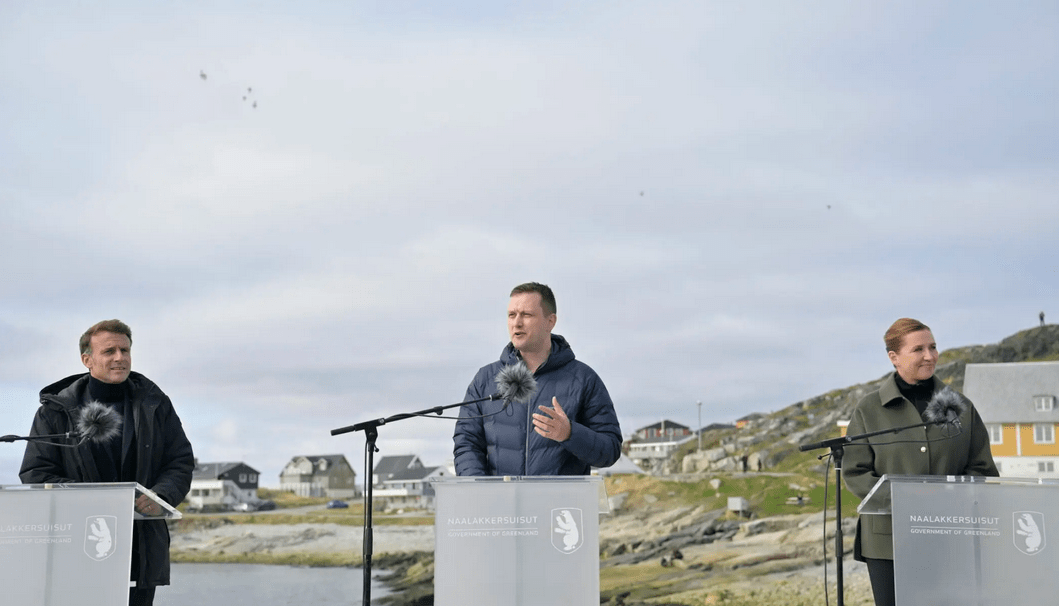
On a visit to Greenland ahead of the G7 in Kananaskis, Canada, the French President met with Danish Prime Minister Mette Frederiksen and Greenlandic Prime Minister Jens-Frederik Nielsen during a visit to Nuuk. Emmanuel Macron affirmed his support for Greenland and announced that France is ready to strengthen its commitment to the Arctic through joint exercises and economic and social partnerships (High North News, June 16). He also announced the opening of a French consulate general in Nuuk, while a European representation was inaugurated in March (Sermitsiaq, June 15). At the end of May, the heads of government of the eight Nordic countries met in Finland. While Greenland, the Faroe Islands, and Åland had been repeatedly excluded in recent months, the eight Nordic countries committed to including them in future Nordic ministerial meetings and to strengthening cooperation on civil preparedness and resilience (High North News, May 30). In mid-June, the heads of government of the Faroe Islands, Greenland, and Denmark convened for their biannual meeting in the Faroese capital, Tórshavn. Beyond increased pressures in the Arctic, the Faroe Islands and Greenland have engaged in dialogue for greater autonomy in foreign affairs, while the Danish prime minister has called for a “modernization of the Kingdom” and greater investment in Greenland (High North News, June 18; Eye on the Arctic, June 17). “We have made it clear that if Greenland wants to amend the Self-Government Act, including ensuring better economic frameworks for Greenland in relation to mineral extraction, we are ready to conclude this agreement on the Danish side,” said Mette Frederiksen (Sermitsiaq, June 17). The head of defense attended this biannual meeting for the first time (Altinget, June 18). In coordination with the Greenlandic government, the Danish armed forces will increase their presence in Greenland this summer, with a frigate and two helicopters now in place to strengthen military operations in the Arctic (High North News, June 11). At the same time, the Danish Parliament approved the installation of US military bases on Danish soil (Eye on the Arctic, June 12). Furthermore, at the NATO summit in The Hague, where the Greenlandic government wanted to meet with their US counterparts (Sermitsiaq, June 23), Denmark formally entered into a partnership with Canada, Germany, and Norway on maritime security and military cooperation in the North Atlantic (Sermitsiaq, June 25). Also in June, Greenland granted a 30-year permit to a European Union-backed project to mine molybdenum, a critical metal used in aerospace, energy, and defense, on which China has imposed export controls. The permit was granted to Greenland Resources, a Toronto-listed company backed by the European Raw Materials Alliance, which holds the license for the Malmbjerg project near Ittoqqortoormiit, the northernmost town on the east coast. The open-pit mine could supply about 25% of Europe’s molybdenum consumption (Sermitsiaq, June 19; Eye on the Arctic , June 19). Regionally, the Kingdom of Denmark held its first session of the Arctic Council; “Engagement with indigenous peoples, focused on promoting knowledge sharing, is a cross-cutting priority for the Kingdom of Denmark,” said Kenneth Høegh, the Greenlandic SAO representing the Kingdom of Denmark (Eye on the Arctic, June 17). Finally, in Denmark, a new organization called Uagut (“us” in Greenlandic) was founded by Greenlanders in Denmark. This organization aims to give a voice to the approximately 17,000 Greenlanders living in Denmark and to combat discrimination against them (Sermitsiaq, June 22).
Arctic Council, US Intelligency, Protest for Eastern citizens… May’s Wrap-Up
On May 12, Greenland assumed the leadership of the Arctic Council on behalf of the Kingdom of Denmark. After a long power struggle between Nuuk and Copenhagen, Vivian Motzfeldt, Greenland’s foreign minister, took over the chairmanship of the Council after two years of Norwegian presidency marked by a desire to foster regional cooperation. “I must say that I think it is entirely appropriate that Greenland takes this on behalf of the Kingdom, as this is the Arctic part of the Kingdom of Denmark,” the Norwegian foreign minister said at the handover session in Tromsø (Altinget , May 13; Sermitsiaq, May 18). Ahead of the handover, the 14th meeting of the Arctic Council was held virtually. The eight member states of the Council and its six permanent participating organizations agreed on a joint statement, which reiterates the commitment to maintaining peace, stability and cooperation in the Arctic, and to maintaining the Arctic Council as the main tool for this commitment (High North News, May 13). The Kingdom of Denmark, whose Senior Arctic Official (SAO) will be Greenlandic Arctic Ambassador Kenneth Høegh, presented the roadmap for its presidency (2025-2027) which is divided into five themes: indigenous peoples and Arctic societies, sustainable economic development and energy transition, ocean, climate change in the Arctic and biodiversity (Sermitsiaq, May 12). In addition, Vivian Motzfeldt met with the EU’s foreign and security policy chief, Kaja Kallas. The raw materials sector was highlighted as an important area for developing cooperation, with Vivian Motzfeldt stressing that “in these difficult times Greenland is facing, it is important to approach reliable partners who share the same values” (Sermitsiaq, 18 May). The foreign minister also met with her French counterpart Jean-Noël Barrot, stating that “France was one of the first countries to significantly express its support for the Greenlandic population” (Sermitsiaq, 21 May); in January, Jean-Noël Barrot confirmed that France was at Denmark’s disposal if it requested support (Sermitsiaq, 22 May). While the Danish-American defense agreement providing for the possibility of stationing American soldiers on Danish soil at the Karup, Skrydstrup and Aalborg bases was discussed in the Folketing (Sermitsiaq, May 15), Foreign Minister Lars Løkke Rasmussen, like the Greenlandic Prime Minister, deemed “unacceptable” the United States’ desire to intensify its espionage activities in Greenland and Denmark, revealed by the Wall Street Journal (Wall Street Journal, May 6; Sermitsiaq, May 8; Sermitsiaq, May 15). The Pentagon is also considering transferring Greenland from the United States European Command (EUCOM) to the United States Northern Command (NORTHCOM). Beyond this unilateral and partly symbolic measure, the White House is also studying the possibility of offering Greenland a zone of free association with the United States, a status hitherto reserved for small island nations in the Pacific Ocean, notably the Marshall Islands and Micronesia (Reuters , May 9). In early May, Nordic defense ministers signed a revised memorandum of understanding on cooperation at a meeting in Rovaniemi. The new version incorporates the significant development of NORDEFCO (Nordic Defense Cooperation) in recent years, particularly following Russia’s war against Ukraine and Finland’s and Sweden’s accession to NATO (High North News, May 12). Regionally, while Greenlandic authorities have repeatedly protested their underrepresentation in regional governance forums, Prime Minister Jens-Frederik Nielsen participated in the Nordic ministerial meeting (Sermitsiaq, May 26). Finally, demonstrations took place in Tasiilaq and Nuuk to denounce the plight of residents of the country’s east coast who face chronic underinvestment, political marginalization and numerous stigmatizations (Sermitsiaq, May 15; Sermitsiaq, May 22; Sermitsiaq, May 22).
New Government, Visit of King Frederik X, Power Outage from Spain to Kalaallit Nunaat… April’s Wrap-Up
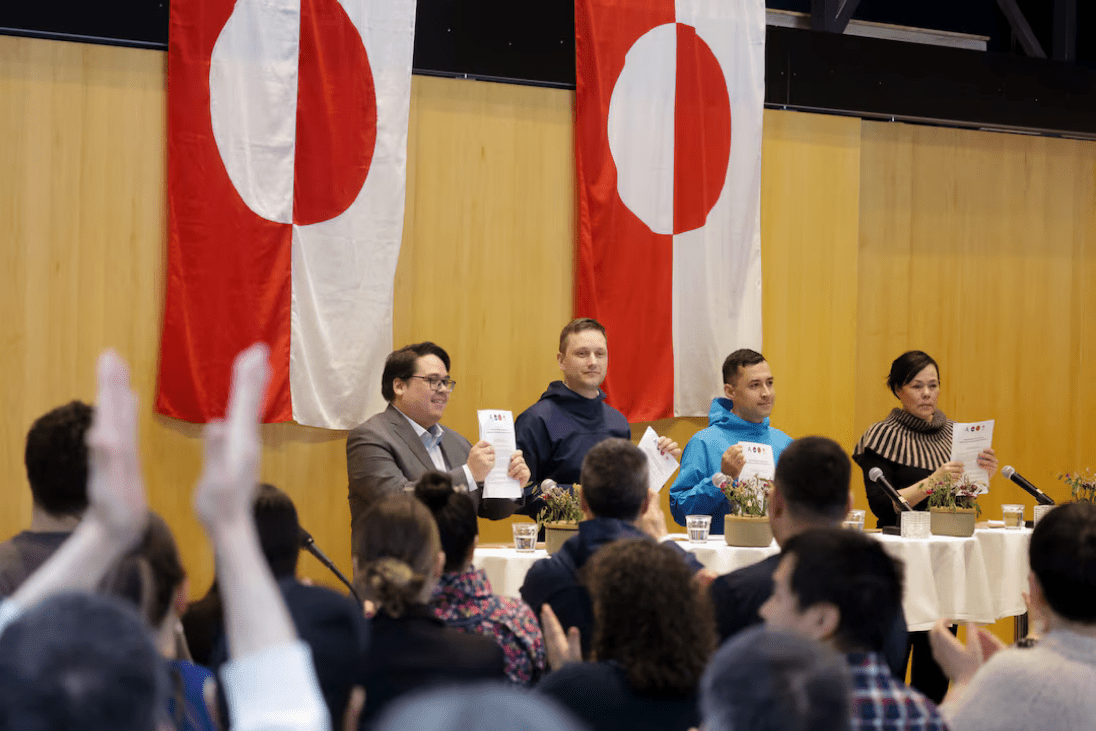
On April 7, the Inatsisartut, the Greenlandic parliament, officially swore in 33-year-old Jens-Frederik Nielsen as prime minister, leading a coalition that includes Demokraatit, Inuit Ataqatigiit, Siumut, and Atassut, excluding Naleraq, which advocates for faster independence. This broad coalition, which represents 75% of the vote, pledges to strengthen infrastructure, particularly on the east coast, improve the health system, and move toward independence, while deferring discussions on controversial issues such as taxation and the exploitation of natural resources to later agreements (KNR, April 7). Earlier, even before the inauguration of the new prime minister, Danish Prime Minister Mette Frederiksen visited Greenland to strengthen relations between the Danish and Greenlandic governments, after the United States significantly escalated its rhetoric regarding the country’s desire to take control of Greenland (DR, April 3; High North News, April 9). In this regard, following J.D. Vance at Pittufik in late March, Susannah Meyers, commander of the US space station, was fired due to a “lack of confidence in her ability to lead” following a critical email to the vice president (DR, April 11). Regionally, while Greenland suspended its participation in the Nordic Council last year, the Nordic governments are now considering granting full membership status to Greenland, the Faroe Islands, and Åland (Sermitsiaq, April 22). That said, like the former prime minister, Jens-Frederik Nielsen remains skeptical about the short-term possibility of seeing Greenland acquire an expanded role within the Council (Sermitsiaq, April 23). The latter also paid a visit to Copenhagen to strengthen relations with Denmark, stating that Greenland would never be for sale and criticizing disrespectful statements from the United States. Following his meeting with Mette Frederiksen, the latter indicated that Denmark was ready to renegotiate the autonomy agreement and also wishes to invest more in Greenland, while the possibility of a reconciliation commission was put forward (Sermitsiaq, April 27). Also in response to American ambitions, King Frederik X of Denmark visited Greenland at the end of April to reaffirm the historical ties between Denmark and his autonomous territory (Eye on the Arctic, April 29). Despite calls for independence and recent tensions, the king enjoys widespread popularity within the autonomous territory, which he knows well and visited several times before his inauguration (DR, April 29). In Copenhagen, the Danish parliament adopted the bill that puts an end to the use by municipalities of psychological tests (FKU) deemed discriminatory against Greenlandic families (Sermitsiaq, April 25). However, earlier in the month, the appeal of Keira Alexandra Kronvold, the Greenlandic mother who had brought these psychological tests to light, was rejected (Sermitsiaq, April 16). At the end of the month, following the massive power outage in Spain, telecommunications services were interrupted for a few hours in isolated communities in Greenland (Sermitsiaq, April 29). Since 2023, the ground station in Maspalomas, Gran Canaria, has played a central role in sending data to satellites that supply the communities of Qaanaaq and surrounding areas, Ittoqqortoormiit and Tasiilaq (Sermitsiaq, April 30). Furthermore, Greenland’s health system remains particularly vulnerable due to staff shortages, which led to the closure of two maternity wards in Qaqortoq and Sisimiut this month (Sermitsiaq , April 16). Finally, on the climate front, 2024 was the third warmest year ever recorded in the Arctic (Sermitsiaq, April 23).
National and Municipal Elections, Protests Against Trump, JD Vance… March’s Wrap-Up
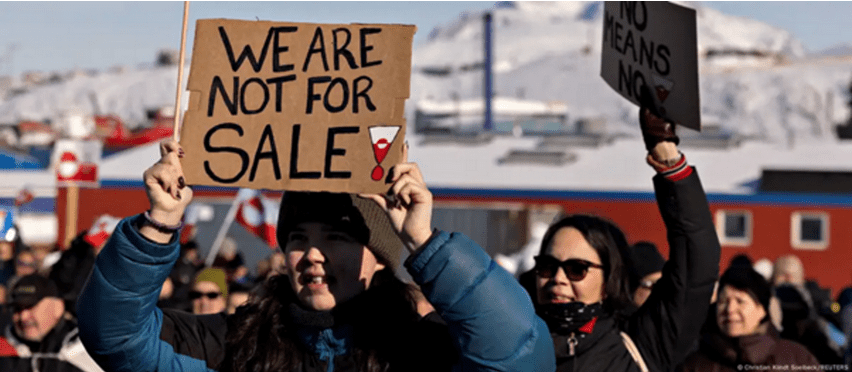
More than 28,000 Greenlanders voted in the March 11 elections to the Inatsisartut, the national parliament, with a turnout of 70.9% (+5 points compared with 2021). A total of six parties competed for the 31 seats in parliament. The social-liberal Demokraatit party (29.9%, 10 seats) (+20.9) came out on top, while the pro-independence Naleraq party won 24.5% of the vote (8 seats) (+12.5). The outgoing coalition of Inuit Ataqatigiit (IA) (15.3%, 7 seats) (-15.3) and Siumut (14.7%, 4 seats) (-14.7) was largely rejected by voters. For its part, Atassut, the only “unionist” party, won 2 seats (7.3% of the vote) (+0.4). Only Qulleq (1.1%), a newly-formed pro-mining, pro-oil extraction party complacent towards Donald Trump, failed to win a seat. The formation of the future government was entrusted to Demokraatit, and its leader Jens Frederik Nielsen, who brought together a broad coalition of all the parties sitting in parliament, with the exception of Naleraq. This coalition agreement, which covers the consolidation of an independence plan, the strengthening of transport, particularly on the east coast, and health, also proposes to defer the most divisive issues, particularly around taxation, raw materials and fisheries, to later agreements (KNR, March 28). On the foreign affairs front, Jens Frederik Nielsen clearly stated the government’s intention to turn its back on Denmark until it can become an independent country (Sermitsiaq, April 1), while he asserted: “Greenland will never be part of the United States. We want to trade. We want a strong national security partnership, of course, but with mutual respect. We will never be for sale and we will never be American” (Reuters, April 1). Parliament will meet on April 7 to approve the coalition agreement, which demonstrates a strong desire for unity in the face of recent external pressure (Sermitsiaq, March 28). Following the coalition agreement, Danish Prime Minister Mette Friederiksen began a three-day visit on April 2, during which she will meet the future Prime Minister (KNR, April 2). This visit has caused a stir within the coalition due to its timing, as the new government has not yet been approved by parliament (KNR, March 31). Earlier, on March 15, a historic demonstration took to the streets of Nuuk, the capital, as well as Sisimiut, the country’s second-largest city, and Qaanaaq, in the north-west of the country, not far from the US military base at Pituffik (formerly Thule) (Sermitsiaq, March 15). A demonstration where numerous signs addressed Trump: “No Means No!” [No means No!], “We Are Not For Sale!” [or “Make America Go Away!” [or “Make America Go Away!] A demonstration described as massive in a country of 57,000 inhabitants, during which many Greenlandic flags were waved by the demonstrators. The demonstration followed Donald Trump’s speech to Congress, in which he reiterated for the umpteenth time since his inauguration that the United States would take control of Greenland “one way or another”, making it clear that he had no intention of letting the autonomous Danish territory down (High North News, March 5). A demonstration with similar slogans also took place on March 31, in front of the American Embassy in Copenhagen (KNR, March 31). This followed on directly from the visit of a US delegation, comprising JD Vance’s wife Usha Vance, US National Security Advisor Mike Waltz, Energy Secretary Chris Wright and Utah Republican Senator Mike Lee, without an official invitation, which further strained diplomatic relations with the USA (KNR, March 28). Although the delegation only visited the US base at Pituffik, and not Nuuk and Sisimiut, Vice President JD Vance joined the delegation at the last minute from March 27 to 29. At a press conference, he declared that Denmark had not “done a good job” for the people of Greenland, nor had it done enough to ensure Greenland’s security (Sermitsiaq , April 1; The Guardian, March 31). Finally, elections for the country’s five municipalities were held on April 1. Siumut, which had largely lost the parliamentary elections, came out on top, while IA lost ground and Demokraatit benefited from the momentum of the parliamentary elections (Sermitsiaq, April 2). The election, which was marked by a feminization of political life (Altinget, April 2), also gave voice to issues that the legislative elections had neglected: the desire for decentralization, education issues and care for the elderly (KNR, April 1).
Cryolite: Denmark censors its colonial history
The article was originally written in French.
No time to read the article? Browse the illustrations of Louise-Marie Jouault.
Over the past few days, DR, the Danish broadcasting corporation, has withdrawn the documentary Orsugiak: The White Gold of Greenland from its catalog. The documentary, produced by DR and originally broadcast on February 9, recounts the investigation by Danish-Kalaaleq (sing. Greenlandic-e) researcher Naja Dyrendom Graugaard, a specialist in colonial issues, into Danish extractivist activities in Kalaallit Nunaat (the indigenous name for the territory referred to as Greenland) during and after the colonial era. The investigation shows that between 1854 and 1987, Denmark extracted around 3.5 million tonnes of cryolite from a fjord in southern Kalaallit Nunaat, with an estimated turnover of 400 billion Danish kroner in 2025 (around 54 billion euros). Cryolite is a rare mineral that forms the basis of the aluminum industry, based on a combination with alumina extracted from bauxite. It is now depleted and produced artificially. The only deposit was at Ivittuut, in south-western Kalaallit Nunaat. The exposure of Danish extractivist activities in Kalaallit Nunaat, but above all the quantification of the revenues derived by the Danish colonial power, provoked great indignation in Kalaallit Nunaat and denial in Denmark. DR’s withdrawal of the documentary illustrates the extent of tensions surrounding the recognition of Danish colonial history, at a time when the March 11 parliamentary elections in Kalaallit Nunaat could bring the autonomous territory closer to independence.

Outrage and denial
Starting from the Ivittuut open-pit cryolite mine in the south-west of the country, which today is nothing more than a huge water-filled crater, the documentary follows the silver trail from the Kalaaleq subsoil to the Danish state’s accounting records. It also explores the origins of the mine and the story of how cryolite was used to produce aluminum for over 200,000 Allied aircraft during the Second World War. While the Ivittuut mine is widely known at Kalaallit Nunaat, the amount of money generated by its operation remains unknown. The documentary also mentions that the colonial authorities isolated the neighboring colony of Arsuk from the rest of the country for years. The reason for this was the fear of Danish doctors that diseases transmitted by Danish mine workers to the local population could spread. More generally, the mobility of local populations in the region was strictly regulated.
In the course of the documentary, and from the account books unearthed by a Danish researcher, we learn that the total revenue shown in the accounts of the company that operated the mine amounts to 400 billion kroner in today’s Denmark (around 54 billion euros). The conversion to present value was carried out by Torben M. Andersen, Professor of Economics at the University of Aarhus and Chairman of the Economic Council of Kalaallit Nunaat. The value of cryolite increased considerably when it was discovered in 1886 that the raw material could be used to produce aluminum. Raw cryolite was transported by ship to Denmark and processed in a plant from where it was sold. As early as 1864, the Pennsylvania Salt Manufacturing Company, also known as PennSalt (now Pennwalt Cooperation), signed a contract with the Danish government to obtain cryolite from Ivittuut. During the Nazi occupation of Denmark, the raw cryolite was sold directly to the American company Pennsalt.
Previewed in Nuuk (the capital of Kalaallit Nunaat), the documentary caused a stir among Kalaallit (pl. Greenlandic) citizens and politicians. For the president of Siumut, one of the main parties in the ruling coalition, Erik Jensen, the documentary shows that the Kalaallit’s desire for independence is not unrealistic: “It has reinforced our feeling that we can stand on our own two feet at Kalaallit Nunaat. That we’re not just an expense.” Reversing the stigma, Prime Minister Kalaaleq questionned: “What would Denmark have become without Kalaallit Nunaat?” For Sara Olsvig, president of the Inuit Circumpolar Council (ICC), “the documentary should give further impetus to Denmark’s journey towards a better understanding of itself as a colonial power.” In Denmark, however, the documentary has triggered fierce criticism, particularly from the Conservative and Liberal parties and the Minister of Culture, Jakob Engel-Schmidt, who called the documentary “disinformation”. While several economists have cast doubt on the figures that have crystallized the criticism, Torben M. Andersen clearly emphasizes in the documentary that it is a calculation of total sales, not profits. For economist Arindam Banerjee, who also takes part in the documentary, it’s important to factor the colonialist relationship into the equation. The fact that Denmark had a monopoly in Kalaallit Nunaat (until 1950), that mining was run by a Danish company, and that Danish workers ran and participated in the operation, all contributed to benefiting the Danish economy in the end. This is why the 400 billion figure can be considered a profit for the Danish company at the expense of Kalaallit Nunaat.
However, in the face of controversy, DR finally decided on February 19 to delete the controversial documentary, which was said to offer an “overly one-sided” and “biased” view of the facts, and to sack its editor-in-chief. A “shameful” decision for Prime Minister Kalaaleq and seen as “serious interference in the independent press, which could threaten press freedom” by the Kalaallit Nunaat Media Association. Nonetheless, the documentary helps to document Denmark’s colonial history, and in particular the role of mining, but also, and perhaps more importantly, highlights a “colonial denial” of it.
Exceptionalism and censorship
The documentary’s value can be measured by the debate it has provoked. If the denial of the story told in The White Gold of Greenland is so strong, it’s because the myth of benevolent colonialism in Kalaallit Nunaat firmly persists. This myth of “Scandinavian exceptionalism” perpetuates ignorance and denial of Scandinavian participation in the atrocities of colonization, presenting colonial actions accomplished through “collaboration rather than extortion and subjugation” (Naum & Monié Nordin, 2013, p. 4). Unlike France, Great Britain, Spain or Portugal, the Nordic countries are less frequently regarded as colonial powers. Moreover, as Norway, Finland and Iceland only became sovereign nations in the twentieth century, their national identities have not been shaped by consideration of their colonial past (Volquardsen & Körber, 2023). However, the Kingdom of Denmark-Norway did carry out colonial expansions in Kalaallit Nunaat, Iceland, the Faroe Islands and on three different continents: India (1620-1845), Africa (1659-1850) and the Caribbean (1672-1917). According to historian Soren Rud (2017), the Denmark-Kalaallit Nunaat relationship is characterized by denial, shame and pride, which Jensen (2018a) describes as “whitewashing and national self-glorification” (p. 132). As Naum & Monié Nordin (2013) point out, “administrators and travelers visiting northern Scandinavia and Greenland produced an image of the Sami and Inuit population that was essentially no different from representations of Native Americans or Africans in the early modern era” (p. 11). Unlike tropical colonies, Denmark’s relationship with Kalaallit Nunaat was never completely severed (see Jensen, 2018a), which necessitates a close examination of how colonial legacies persist in the present.
In recent years, the revelation of the colonial violence of the Kalaallit women’s sterilization campaign in the 1960s, described as genocide by Prime Minister Kalaaleq, has helped to document colonial remnants and challenge the myth of “benevolent colonialism”. More recently, the Danish Parenting Assessment Test (FKU), one of the psychometric tests widely used in Denmark to assess parenting skills, has been strongly criticized for reproducing racist discrimination. At the end of February, a demonstration against Danish racism was held in Nuuk, with the Prime Minister in attendance. In 2023, the Special Rapporteur on the Rights of Indigenous Peoples, José Francisco Calí Tzay, highlighted the discrimination suffered by the Kalaallit in accessing their rights, calling for “a process of reconciliation to address the legacy of colonialism and racism and, with the participation of the Inuit, to develop effective solutions and policies”.
In 2009, the Self-Government Act marked an important step towards greater autonomy for Kalaallit Nunaat from Denmark. The Act extended the powers granted to Kalaallit Nunaat under the 1979 Self-Government Act, allowing greater control over domestic affairs, including mining and petroleum rights. Denmark retained authority over foreign affairs, defense and monetary policy. The law also recognized the Kalaallit as a distinct people with the right to self-determination under international law, paving the way for possible future negotiations on full independence.
While relations with Denmark have seriously deteriorated in recent years, and US ambitions have once again been pressing since Donald Trump’s return to the White House, Kalaaleq Prime Minister Mute B. Egede has announced that general elections will be held on March 11. Some in Denmark believe that the documentary could prove disastrous for the Kalaallit, leaving them open to the designs of the United States. However, it seems that the United States’ best ally, if any, is more than ever colonial denial and refusal to acknowledge colonial history. As researcher Marine Duc points out, this would be to deny the Kalaallit’s capacity for action, but also to obliterate the history of their struggles in the face of imperialism. While the main campaign themes should revolve around aspirations to independence, as well as relations with Denmark and the United States, Prime Minister Kalaaleq recently declared forcefully: “We don’t want to be Americans, and we don’t want to be Danes either. We will be Kalaallit”. So, although they differ on the modalities and calendar for implementation, all six parties involved in the March 11 campaign are now in favor of Kalaallit Nunaat’s independence.
The documentary is now available on Faroese TV, but without subtitles. A version with English subtitles has been circulating, but is nowhere to be found.
In solidarity with the team behind the documentary, a petition has been set up here.
References
- Jensen, L. (2018). Postcolonial Denmark: Nation narration in a crisis ridden Europe. Routledge Taylor and Francis Group.
- Naum, M., & Monié Nordin, J. (Eds.). (2013). Scandinavian colonialism and the rise of modernity: Small time agents in a global arena. Springer.
- Rud, S. (2017). Colonialism in Greenland: Tradition, Governance and Legacy. Palgrave Macmillan.
- Volquardsen, E., & Körber, L.-A. (2023). Kolonialismus und Dekolonisierung [Colonialism and decolonization]. In B. Henningsen & U. F. Brömmling (Eds.), Nordeuropa: Handbuch für Wissenschaft und Studium (1. Auflage). Nomos, Rombach Wissenschaft.