
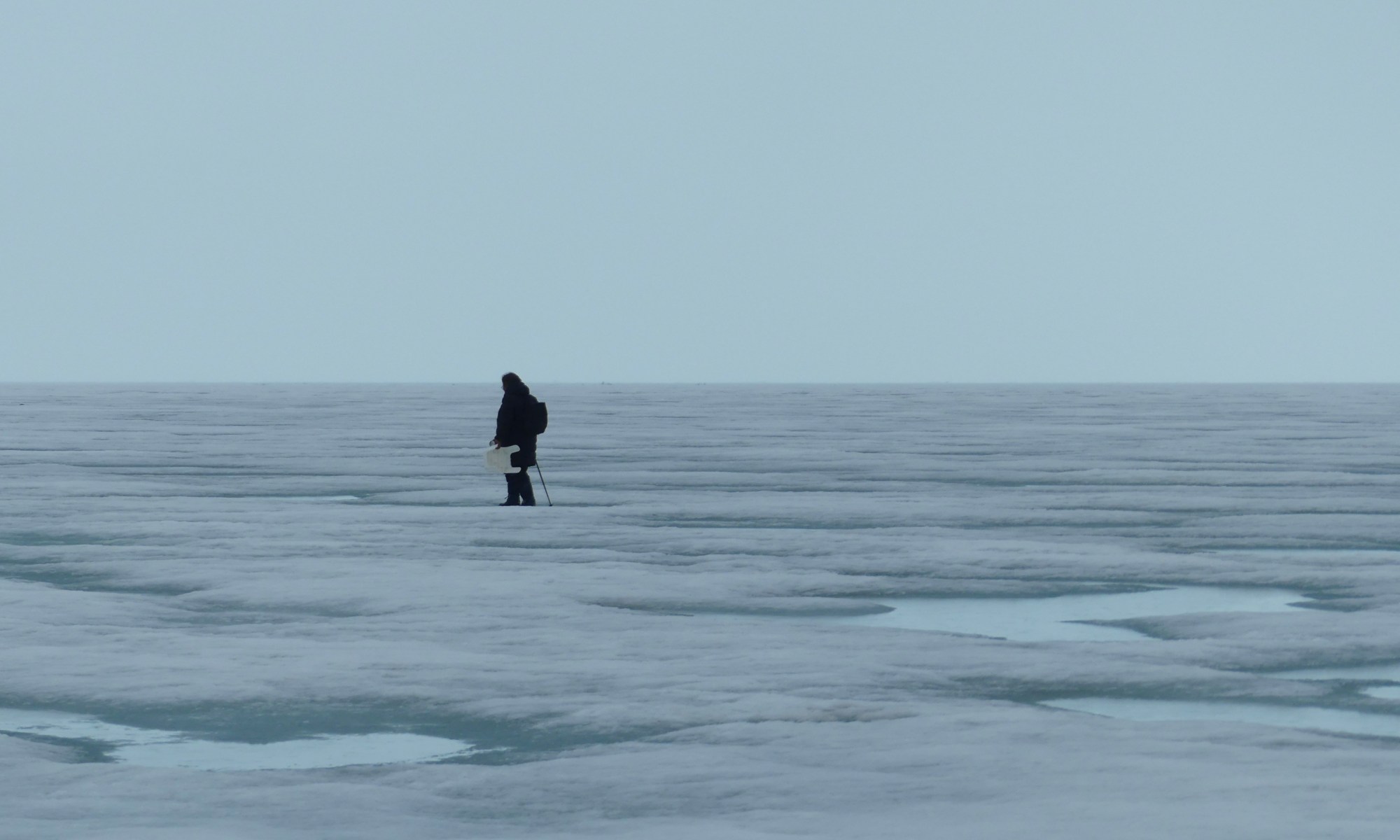
In Greenland, a major scientific conference, the Greenland Science Week, organized by the Arctic Hub, brought together 400 researchers from 20 countries. Several representatives of the new presidency of the Arctic Council—now largely based in Greenland—took part (High North News, 19 November). Greenland’s Minister for Foreign Affairs and Research, Vivian Motzfeldt, reiterated that research conducted in Greenland must primarily benefit local populations, integrate Indigenous knowledge, and ensure meaningful knowledge returns to the communities concerned (High North News, 13 November).
A new scientific report published ahead of COP30 warns of a rapid and potentially irreversible decline of the Greenland and Antarctic ice sheets, which could lead to sea-level rise far exceeding current estimates. The report cautions that even the +1.5°C target would not be sufficient to prevent major damage and calls for global emissions to be halved by 2030 to limit ice-sheet collapse and its global consequences (Eye on the Arctic, 13 November).
At COP, the Inuit Circumpolar Council (ICC) also denounced the interchangeable use of the terms “local communities” and “Indigenous peoples,” a practice which, according to the organization, obscures the specific rights of Indigenous peoples (Eye on the Arctic, 19 November). The ICC is also calling for direct access to funding, the integration of Indigenous knowledge, and a just energy transition (Eye on the Arctic, 13 November).
At the national level, former Greenlandic Prime Minister Múte B. Egede accused Denmark of having committed a “genocide” during the so-called spiral campaign of the 1960s–1970s, sparking controversy. He received the backing of his successor, Jens-Frederik Nielsen (Sermitsiaq, 21 November), despite a now-withdrawn threat of legal action (Sermitsiaq, 23 November) by former Danish minister Tom Høyen, who disputes the accusations.
At the European Parliament, a network of regionalist, separatist, and minority-focused parties across Europe invited two Faroese politicians and former Siumut party secretary in Greenland, Ole Aggo Markussen, to exchange views and expand their network. The group brings together Scottish, Catalan, Basque, Corsican, Flemish, and also Kanak independence movements (Altinget, 24 November).
Also at the European Parliament, a new resolution on the Arctic was adopted, warning against growing militarization and stressing the need for cooperation with Nordic partners, notably Norway. The text highlights the importance of the High North for Europe’s security, energy, connectivity, and geopolitical stability, placing the Arctic at the core of the EU’s diplomatic and security priorities (High North News, 1 December).
Finally, earlier this month, the new US ambassador to Denmark—co-founder of PayPal and a long-time friend of Elon Musk—took up his post in Copenhagen, identifying defense cooperation, trade ties, and Arctic security as priorities (Eye on the Arctic, 5 November). He nevertheless remained evasive about Trump’s ambitions, refusing to rule out past proposals by Donald Trump regarding US sovereignty over Greenland (DR, 18 November). In early December, representatives from Greenland, Denmark, and the United States are set to meet in Greenland to resume official trilateral talks (Sermitsiaq, 26 November).
 Tanguy Sandré