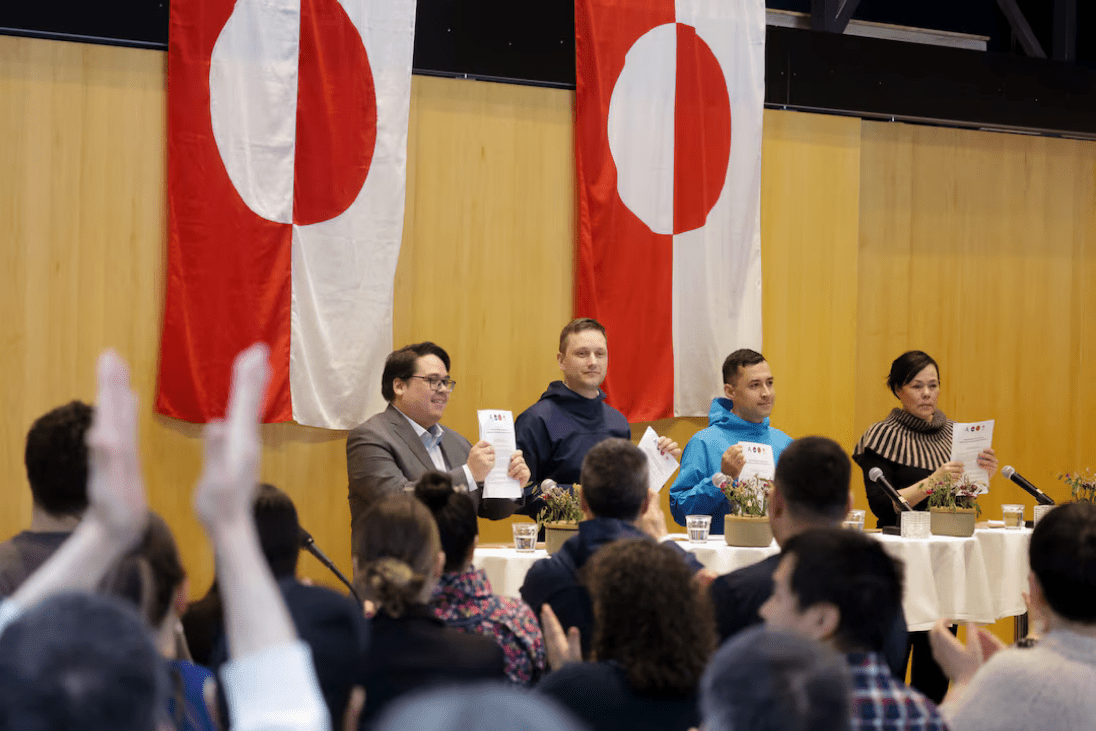
On April 7, the Inatsisartut, the Greenlandic parliament, officially swore in 33-year-old Jens-Frederik Nielsen as prime minister, leading a coalition that includes Demokraatit, Inuit Ataqatigiit, Siumut, and Atassut, excluding Naleraq, which advocates for faster independence. This broad coalition, which represents 75% of the vote, pledges to strengthen infrastructure, particularly on the east coast, improve the health system, and move toward independence, while deferring discussions on controversial issues such as taxation and the exploitation of natural resources to later agreements (KNR, April 7). Earlier, even before the inauguration of the new prime minister, Danish Prime Minister Mette Frederiksen visited Greenland to strengthen relations between the Danish and Greenlandic governments, after the United States significantly escalated its rhetoric regarding the country’s desire to take control of Greenland (DR, April 3; High North News, April 9). In this regard, following J.D. Vance at Pittufik in late March, Susannah Meyers, commander of the US space station, was fired due to a “lack of confidence in her ability to lead” following a critical email to the vice president (DR, April 11). Regionally, while Greenland suspended its participation in the Nordic Council last year, the Nordic governments are now considering granting full membership status to Greenland, the Faroe Islands, and Åland (Sermitsiaq, April 22). That said, like the former prime minister, Jens-Frederik Nielsen remains skeptical about the short-term possibility of seeing Greenland acquire an expanded role within the Council (Sermitsiaq, April 23). The latter also paid a visit to Copenhagen to strengthen relations with Denmark, stating that Greenland would never be for sale and criticizing disrespectful statements from the United States. Following his meeting with Mette Frederiksen, the latter indicated that Denmark was ready to renegotiate the autonomy agreement and also wishes to invest more in Greenland, while the possibility of a reconciliation commission was put forward (Sermitsiaq, April 27). Also in response to American ambitions, King Frederik X of Denmark visited Greenland at the end of April to reaffirm the historical ties between Denmark and his autonomous territory (Eye on the Arctic, April 29). Despite calls for independence and recent tensions, the king enjoys widespread popularity within the autonomous territory, which he knows well and visited several times before his inauguration (DR, April 29). In Copenhagen, the Danish parliament adopted the bill that puts an end to the use by municipalities of psychological tests (FKU) deemed discriminatory against Greenlandic families (Sermitsiaq, April 25). However, earlier in the month, the appeal of Keira Alexandra Kronvold, the Greenlandic mother who had brought these psychological tests to light, was rejected (Sermitsiaq, April 16). At the end of the month, following the massive power outage in Spain, telecommunications services were interrupted for a few hours in isolated communities in Greenland (Sermitsiaq, April 29). Since 2023, the ground station in Maspalomas, Gran Canaria, has played a central role in sending data to satellites that supply the communities of Qaanaaq and surrounding areas, Ittoqqortoormiit and Tasiilaq (Sermitsiaq, April 30). Furthermore, Greenland’s health system remains particularly vulnerable due to staff shortages, which led to the closure of two maternity wards in Qaqortoq and Sisimiut this month (Sermitsiaq , April 16). Finally, on the climate front, 2024 was the third warmest year ever recorded in the Arctic (Sermitsiaq, April 23).

Researcher in Social & Transdisciplinary Sciences · Critical Environmental Justice & Ethnographies
 Tanguy Sandré