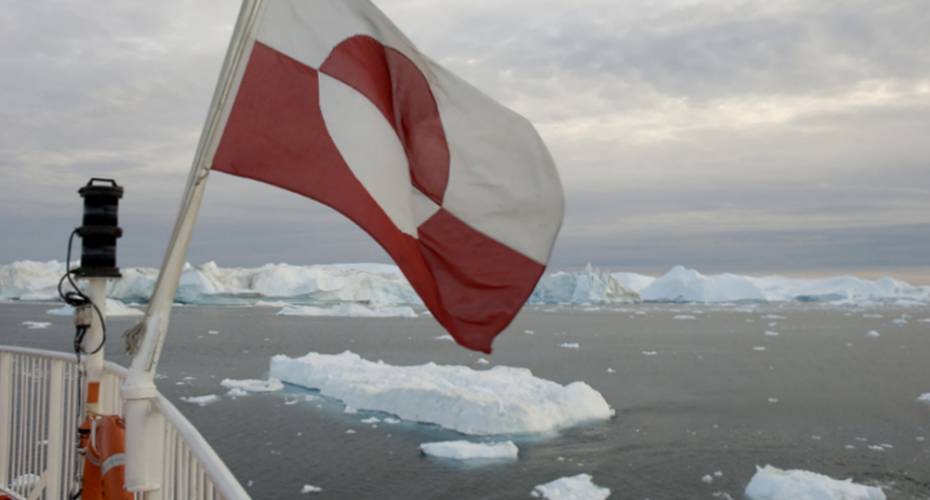
As Donald Trump reiterated his desire to take over Greenland on the sidelines of his inauguration speech, Secretary of State Marco Rubio declared that the US President’s interest was “no joke” and a matter of “national interest” (Altinget, January 21; Eye on the Arctic, January 31). Donald Trump Jr.’s recent visit to Nuuk has put Greenland even more in the international spotlight. As a sign of unity, Greenland Prime Minister Múte B. Egede called for the Greenlandic flag to be raised on January 24 (Sermitsiaq, January 24), while he had repeatedly stressed that the island belonged to Greenlanders and was not for sale, that they would decide their own future and that they remained faithful to their quest for independence (KNR, January 8). This is what he hammered home during his appearance on the ultra-conservative US Fox News channel: “We don’t want to be Americans, and we don’t want to be Danes either. We will be Greenlanders,” he declared (Sermitsiaq, January 17). Echoing this, Danish Prime Minister Mette Frederiksen asserted that “Greenlanders must decide for themselves on the future of Greenland” (Berlingske, January 7), a point she reaffirmed in mid-January during a telephone exchange with the president-elect (Sermitsiaq, January 15). According to a poll for the Greenlandic newspaper Sermitsiaq, 85% of Greenlanders unequivocally reject the idea of an American Greenland (Altinget, January 31). Against the backdrop of US ambitions, a defense agreement was signed between the Danish, Faroese and Greenlandic governments, providing 1.6 billion euros for military capabilities, including three new Arctic patrol ships, two long-range drones and improved surveillance (Altinget, January 27). However, this agreement is considered to be largely inadequate both to enable a defense that does not depend solely on the United States (Altinget, January 29; Altinget, January 30), and to take account of Greenland’s desire for independence (Altinget, January 29). Siumut political spokeswoman Doris J. Jensen declared that Article 21 of the Self-Government Act, which leads to Greenlandic independence, must be activated immediately: “Activating Article 21 is not only a necessary first step, but also a clear demonstration that Greenland is ready to take responsibility for its own future” (DR, January 29). Greenland MP Aki-Matilda Høegh-Dam (Siumut) has also called for the creation of a “Greenland state with its own sovereignty” (Sermitsiaq, January 12). Meanwhile, the Danish government has just presented a plan to combat racism against Greenlanders, which has been criticized for not involving Greenland’s elected representatives (DR, January 15). That said, for Greenland MP Aaja Chemnitz (IA), “recently, it has been clearly demonstrated that racism against Greenlanders exists in certain circles and notably on social networks. It is therefore important that we recognize politically that racism exists and is deeply unacceptable” (Altinget, January 27). On this subject, Denmark has announced that it is abandoning the use of highly controversial “parental competence” (FKU) tests for Greenlandic families, following anger at the way in which these tests have been regularly used for people of Inuit origin, often resulting in the separation of children from their parents (see here) (The Guardian, January 20; Sermitsiaq, January 17). For Inuit filmmaker Aka Hansen, this decision is motivated above all by Denmark’s desire to rehabilitate the myth of “the good settler”, as emphasized by ICC President Sara Olvig (High North News, February 2), in the face of the US offensive. At the Arctic Frontiers conference in Tromsø, Norway, the Nordic Council of Ministers launched a new 4 million euro program to build resilience and support local Arctic communities (Eye on the Arctic, January 24). Last but not least, Greenland’s biggest influencer Qupanuk Olsen (1.5 million subscribers) announced her candidacy for the forthcoming Greenlandic parliamentary elections in the spring, representing the pro-independence Naleraq party (Sermitsiaq, January 15).

Researcher in Social & Transdisciplinary Sciences · Critical Environmental Justice & Ethnographies
 Tanguy Sandré